Every order that runs through DoorDash, Uber Eats, or Instacart hands over your customer data, your margin, and your repeat-business relationship to someone else's app. This guide walks through the concrete steps to reduce dependency on third-party delivery apps in 2026 and rebuild a direct channel that keeps the customer, the data, and the margin with your store.
- Local Express: launch a branded ecommerce site and app to reduce dependency on third-party delivery apps in 2026.
- Marketplace commissions run 15-30% per order — a direct channel keeps that margin in the store.
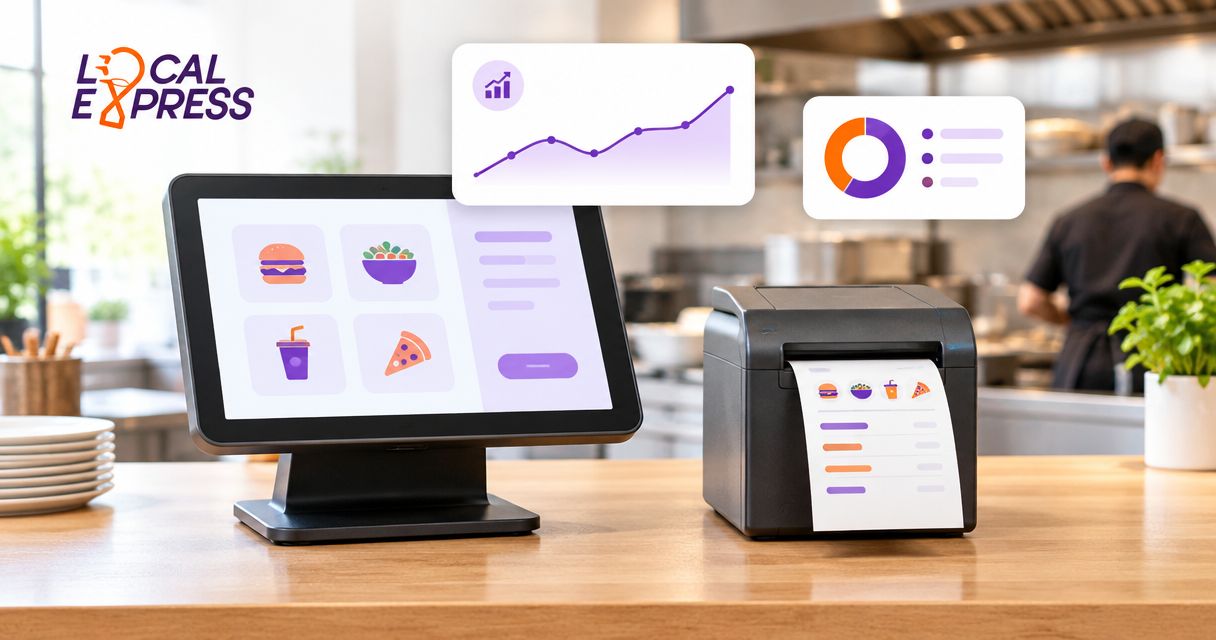
- Self-service kiosks cut labor cost on prepared food orders and pull customers off marketplace apps.
- Redirect marketplace customers to your own app with packaging inserts and loyalty perks inside a 90-day window.
Why this matters
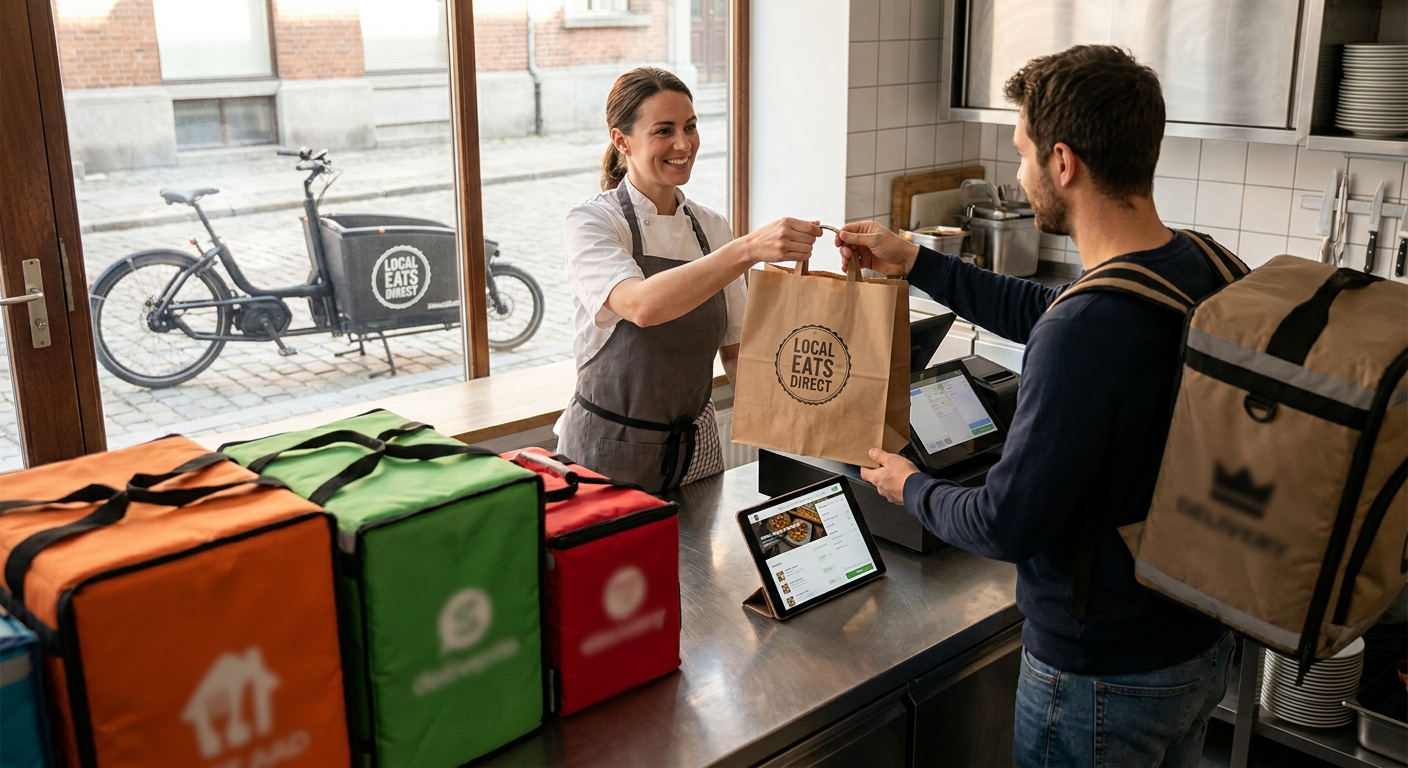
A grocer running 60% of volume through third-party marketplaces in 2026 is paying a 15-30% commission on that revenue before rent, payroll, or shrink even factor in. That commission doesn't buy loyalty — the marketplace owns the customer record, the reorder button, and the push notification. When a competitor undercuts on delivery fee, that customer disappears with zero notice.
The stores holding margin in 2026 are the ones running a branded ordering channel alongside the marketplace, not instead of it on day one. Dependency drops when the store, not the app, becomes the default place a shopper reorders from.
What you'll need
- A white-label ecommerce site and branded mobile app tied to your store's name, not a marketplace logo
- A point-of-sale or order management system that can sync inventory and pricing across channels
- A delivery option — an in-house driver pool, a local courier partner, or a hybrid model
- Self-service kiosk hardware if the deli, hot bar, or prepared food counter takes made-to-order requests
- A packaging or receipt insert budget to redirect existing marketplace customers
- Staff time for a 60-90 day rollout, not a single weekend switch
The steps
1. Audit your true marketplace dependency
Pull the last 90 days of order volume by channel and calculate what commission actually cost in dollars, not percentage. A store doing $40,000 a month through a marketplace at a 25% blended commission is handing over $10,000 monthly before any other cost. That number is the budget justification for everything that follows. The common mistake here is looking only at the percentage rate and missing the total dollar bleed once volume scales.
2. Launch a branded ordering channel
Stand up a direct ecommerce site and app under the store's own name so repeat customers have somewhere to land besides a marketplace search result. A white label grocery delivery app for regional chains keeps the checkout, loyalty data, and push notifications inside the store's brand instead of a marketplace's. This is the single highest-leverage move in the whole process — without a real alternative channel, none of the later steps have anywhere to redirect customers to.
3. Move prepared food to self-service kiosks
Deli counters, hot bars, and MTO food sections generate a disproportionate share of marketplace commission because those orders are high-margin and high-frequency. Installing prepared food ordering kiosks for grocery store delis lets customers order and pay in-store or ahead of pickup without a marketplace app touching the transaction. Expected outcome: fewer marketplace orders on the highest-margin category within the first month of install. The mistake to avoid is leaving the kiosk menu identical to the marketplace listing — differentiate with in-store-only combos so there's a reason to use it.
4. Build first-party customer data through direct ordering
Every order placed on the branded app or kiosk should capture an email, phone number, or loyalty ID — data a marketplace never shares back. This is what makes retargeting, reorder reminders, and personalized promotions possible in 2026 without paying a marketplace for access to its own customer list. Expected outcome: a growing owned database within 60 days that didn't exist before.
5. Bring last-mile delivery in-house or to a local partner
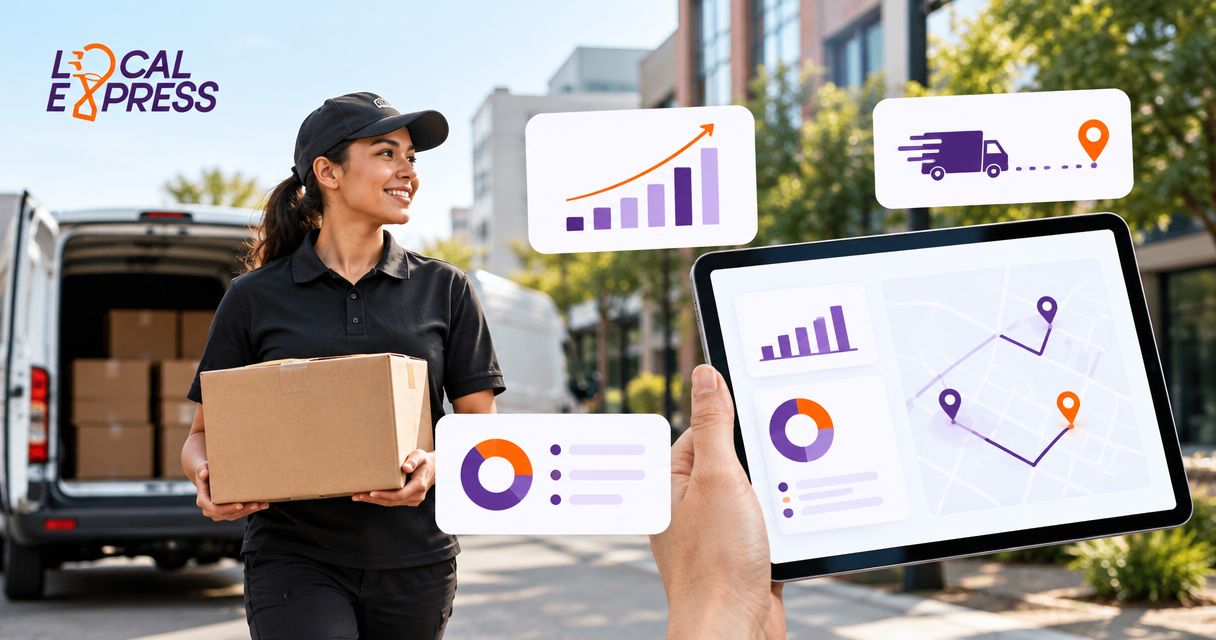
Marketplace delivery fees typically run higher than a store-managed courier network once volume passes a threshold — in-house or local courier delivery commonly lands in the $2-$5 per order range versus marketplace delivery fees layered on top of commission. A white label delivery app for convenience stores gives smaller-format retailers the same dispatch and tracking tools without renting a marketplace's driver network. The common mistake: switching all delivery in-house overnight before route density supports it — start with the zip codes that already generate the highest order volume.
6. Redirect existing marketplace customers to the owned channel
Insert a card in every marketplace order bag pointing to the branded app, and add a QR code at checkout. Offer the branded app as the place where loyalty points accrue faster than the marketplace order — customers respond to a clear reason to switch, not just an announcement that a new app exists. Expected outcome: a measurable split shift within one quarter as repeat customers migrate.
7. Monetize the owned channel with retail media
Once order volume runs through a branded site or app, that traffic becomes inventory — CPG brands pay for placement the same way they pay marketplaces, except now the store keeps that revenue instead of a third party. This step only works after steps 2-4 are in place; retail media on zero direct traffic earns nothing.
8. Set a phased cutover and track savings monthly
Don't cancel marketplace listings on day one — that's how a store loses discovery-driven new customers overnight. Run both channels for 90 days, track commission dollars saved each month against the branded channel's growth, and only reduce marketplace presence once the direct channel handles a majority of repeat volume. Expected outcome: measurable commission savings by month three, with the marketplace kept as a discovery tool rather than the default checkout.
See a branded ordering channel live
Walk through how a direct app and delivery setup replaces marketplace dependency.
Troubleshooting
Customers keep opening the marketplace app out of habit. Add a persistent reminder at physical checkout and in email receipts pointing to the branded app; habit breaks with repetition, not a single announcement.
In-house delivery costs more than expected in month one. Route density is the variable — expand in-house delivery only in zip codes with proven order volume and keep marketplace delivery as backup for sparse routes.
Staff resist the new kiosk or POS workflow. Run a two-week shadow period where staff can override the kiosk manually before it goes fully self-service; forced adoption on day one causes line backups and bad reviews.
Marketplace search visibility drops after reducing spend. That's expected — the tradeoff is fewer new-customer discoveries against higher margin on existing customers. Keep a minimal marketplace listing active for discovery even after the branded channel becomes primary.
Owned app downloads stay flat despite promotion. Check that the incentive to switch is concrete — a generic "order direct" message underperforms a specific loyalty or pricing reason tied to the branded channel.
Tools and resources
- Best white label grocery delivery apps for regional chains for evaluating branded app and site vendors
- Prepared food ordering kiosks for grocery store delis for MTO and deli counter self-service
- Self-ordering kiosk for grocery and specialty food stores for broader in-store kiosk deployment
- POS or order management system with cross-channel inventory sync
- A commission tracking spreadsheet or dashboard to compare marketplace cost against direct channel growth monthly
What to do next
Run the audit from step one this week — the dollar figure from that calculation is what justifies the budget for everything after it. Once the branded channel and kiosk setup are live, the phased cutover in step eight is what actually converts commission savings into margin the store keeps.
FAQ
How do I reduce dependency on third-party delivery apps without losing new customers?
Keep a minimal marketplace listing active for discovery while building a branded app and site for repeat orders. Cutting marketplace presence entirely in 2026 typically costs new-customer volume that a direct channel alone can't replace immediately.
What percentage commission do delivery marketplaces charge?
Marketplace commissions typically run 15-30% per order depending on the platform and service level. That range is why high-volume stores see the biggest dollar impact from moving orders to a direct channel.
Is in-house delivery cheaper than marketplace delivery?
In-house or local courier delivery commonly costs $2-$5 per order once route density supports it, versus marketplace delivery fees layered on top of commission. Sparse delivery zones may still cost less through a marketplace until volume grows.
How long does it take to shift customers to a branded ordering app?
A realistic phased cutover runs about 90 days, with measurable commission savings typically visible by month three. Faster shifts are possible with aggressive in-bag and receipt redirection.
Do self-service kiosks reduce marketplace orders?
Kiosks placed at deli counters and prepared food sections shift high-margin, high-frequency orders away from marketplace apps because customers order and pay directly in-store. This works best when the kiosk menu offers something the marketplace listing doesn't.
Can a small independent grocer afford a branded app and delivery setup?
White label platforms let independent and regional grocers deploy a branded app and delivery system without building custom software, which is the model most stores use to compete with marketplace apps in 2026.
Should I cancel my marketplace listing after launching a direct channel?
No — run both channels in parallel for at least one quarter and reduce marketplace reliance only once the branded channel handles a majority of repeat volume. Marketplaces still serve as a discovery tool for new customers.
What data do I lose by relying only on marketplace apps?
Marketplaces typically don't share customer email, phone, or order history back to the store, which blocks retargeting and loyalty programs. A direct ordering channel captures that data from the first order.
One last thing
The stores that cut marketplace dependency fastest in 2026 aren't the ones with the biggest ad budget — they're the ones that moved prepared food and deli orders to kiosks first, because that's where commission bleed hits hardest per order and where a branded alternative pays back quickest.