Health food and natural stores sell products general grocers don't touch — bulk supplements, raw dairy, gluten-free bakery, refrigerated kombucha — and most ecommerce platforms were never built to handle that mix. This guide breaks down what an ecommerce platform for health food stores actually needs to do and which capabilities separate a real solution from a repackaged general-grocery template.
- An ecommerce platform for health food stores needs allergen and certification filtering, not just category tags — Buy platforms that support this natively.
- Marketplace-only listings on Instacart or DoorDash surrender customer data and margin — Skip relying on them as your only channel.
- Cold-chain delivery support matters more here than in general grocery because natural food carries more refrigerated and frozen SKUs.
- Local Express bundles white-label storefronts, branded apps, order management, and delivery into one system built for independent grocers.
- Retail media tools let natural food brands pay for placement on your site, turning your storefront into a second revenue line in 2026.
Why this matters
Independent health food stores compete against Whole Foods, Sprouts, and Amazon on one side and Instacart's marketplace on the other. Neither competitor cares about your margin. A platform built for Local Express-style independent grocers keeps the customer relationship, the order data, and the delivery fee with the store instead of routing it through a third party that takes a cut on every transaction.
The stakes are higher in this category than in general grocery. Supplement and vitamin buyers reorder on a schedule, gluten-free and allergen-sensitive shoppers need accurate labeling or they walk, and prepared food counters (juice bars, hot bars) need order flow that a basic shopping cart doesn't support. Getting the platform choice wrong in 2026 means losing repeat buyers to Amazon Subscribe & Save or a chain competitor with a better app.
Who this is for
This guide is for owners and operators of independent or regional health food stores, natural food co-ops, vitamin and supplement retailers, and specialty diet shops (gluten-free, vegan, keto-focused) who currently rely on a generic ecommerce template, a marketplace listing, or no online ordering at all. If your store carries more than a handful of SKUs with dietary or certification claims — organic, non-GMO, USDA certified, third-party tested — you're the buyer this decision matters most for.
What to look for in an ecommerce platform for health food stores
Allergen and certification attribute fields
General grocery platforms tag products by category and price. Health food shoppers filter by dietary restriction first. A platform that supports allergen tags, organic certification badges, and non-GMO labeling at the product level lets customers self-serve instead of calling the store to ask if a product contains soy.
Subscription and reorder support
Supplement and vitamin customers buy on a cycle — monthly protein powder, weekly probiotics. A platform without native reorder or subscription flow forces repeat buyers to rebuild their cart every time, which is exactly when they switch to Amazon.
Cold-chain delivery logistics
Refrigerated kombucha, frozen bone broth, raw dairy — natural food inventory skews colder than a standard grocery basket. Delivery routing that doesn't account for temperature-controlled handling risks spoiled orders and refunds that eat your margin.
Prepared food and kiosk ordering
Many health food stores run a juice bar, smoothie counter, or hot bar. A platform that only handles packaged goods forces you to run a second, disconnected system for made-to-order items — doubling your order management headache.
Unified order management across channels
Online orders, in-store pickup, and delivery need to hit one system, not three. Split systems mean inventory drift, oversold SKUs, and staff checking two screens to fulfill one order.
Retail media and placement tools
Natural food CPG brands pay for shelf placement in physical stores. The same model works online — a platform with retail media tools lets brands pay to appear in your search results or featured sections, turning storefront traffic into a margin line most independent grocers leave on the table.
See the platform built for independent grocers
White-label storefront, branded app, delivery, and order management in one system.
Top picks for health food and natural stores
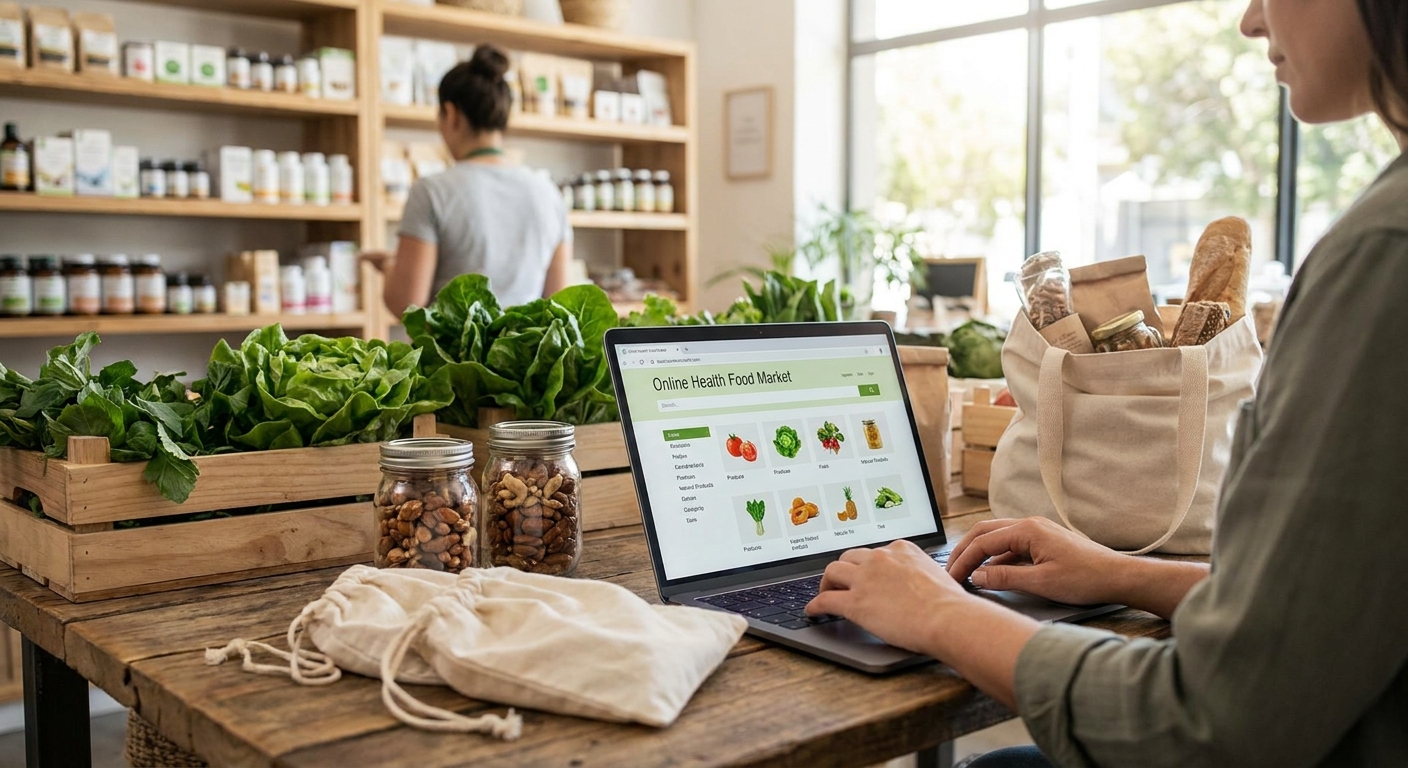
White-label ecommerce storefront — the foundation pick. A branded site under your own domain with filtering by dietary attribute beats a marketplace listing every time, because you own the checkout and the customer record. Buy if you're currently marketplace-only or running a bare-bones template with no allergen filtering.
Branded mobile app — the reorder pick. Supplement and vitamin buyers who reorder monthly convert at a higher rate through a saved app cart than through a rebuilt browser cart each visit. Buy if more than a small share of your revenue comes from repeat consumable purchases like supplements or bulk staples.
Self-service kiosks for made-to-order food — the prepared food pick. If your store runs a juice bar or hot bar, a kiosk that feeds the same order management system as your online storefront eliminates the double-entry problem entirely. Consider if prepared food is a growing but not yet primary revenue category — Skip it if you don't sell prepared food at all.
Unified order management — the operations pick. One system tracking online, pickup, delivery, and kiosk orders against one inventory feed prevents overselling a limited-run SKU like a seasonal supplement batch. Buy regardless of store size — this is the piece that breaks first when you scale past a single channel.
Last-mile delivery with cold-chain support — the perishables pick. Refrigerated and frozen natural food SKUs need delivery routing built to account for temperature, not a generic courier dispatch. Buy if refrigerated or frozen items make up a meaningful share of your online basket — Consider a pickup-only model first if they don't.
Retail media tools — the margin pick. Selling placement to natural food brands on your own site mirrors what Amazon and Instacart already do to your suppliers — except now the revenue is yours. Consider once your storefront has consistent traffic; it's not the first module to turn on, but it's the one most independent grocers skip when they shouldn't.
What to avoid
- Marketplace-only presence. Instacart and DoorDash listings look like ecommerce, but you don't own the customer data, the delivery relationship, or the margin — every order costs you a commission cut.
- Category-only product tagging. A platform that files everything under "supplements" or "snacks" with no allergen or certification fields forces natural food shoppers to guess, and guessing loses sales.
- Delivery bolted onto a generic courier app. A courier service with no cold-chain awareness treats a frozen order the same as a dry-goods order, and spoiled deliveries turn into refunds and one-star reviews.
Verdict comparison
| Capability | Why it matters for health food stores | Verdict |
|---|---|---|
| Allergen/certification filtering | Core to how natural food shoppers search | Buy |
| Subscription/reorder flow | Captures recurring supplement and staple buyers | Buy |
| Cold-chain delivery | Protects refrigerated and frozen SKU margin | Buy |
| Kiosk/MTO ordering | Needed only if you run a prepared food counter | Consider |
| Retail media tools | Adds a margin line once traffic is established | Consider |
| Marketplace-only listing | Surrenders data and margin per order | Skip |
FAQ
What's the best ecommerce platform for health food stores in 2026?
The best platform combines a white-label storefront with allergen and certification filtering, subscription reorder support, and cold-chain delivery routing. Local Express bundles these into one system rather than requiring separate tools for each function.
Is Instacart enough for a health food store's online sales?
No — Instacart listings surrender customer data and take a commission on every order, which erodes margin on a category that already runs tighter than mainstream grocery. A branded storefront lets you keep both the data and the full sale.
Do health food stores need a mobile app or is a website enough?
A website covers new and occasional shoppers, but a branded app drives higher reorder rates for recurring purchases like supplements and vitamins. Stores with strong repeat-purchase categories see the most value from adding an app in 2026.
Can natural food stores sell refrigerated and frozen items online?
Yes, but only with a delivery system built for cold-chain handling — generic courier dispatch treats frozen and dry orders the same way. Look for delivery routing that accounts for temperature-sensitive SKUs before adding perishables to your online catalog.
What is retail media in grocery ecommerce?
Retail media lets CPG brands pay for placement in your online search results or featured sections, similar to how brands pay for shelf space in physical stores. Independent health food retailers can add this as a margin line once their storefront has consistent traffic.
Do I need a self-service kiosk if I don't sell prepared food?
No — kiosks for made-to-order ordering only matter if you run a juice bar, smoothie counter, or hot bar. Skip this module if your store is packaged goods only.
How is an ecommerce platform for health food stores different from general grocery platforms?
Health food stores need allergen and certification attribute fields, subscription reorder flow for supplements, and cold-chain delivery support at a higher rate than general grocery baskets require. A platform without these forces workarounds that cost staff time and lost sales.
One last thing
The module independent health food stores skip most often is retail media — and it's the one with the clearest path to new revenue in 2026, because the brands stocking your shelves already budget for placement fees elsewhere. If your storefront has steady traffic, that's an existing asset sitting unmonetized.