Convenience stores lose margin and customer data every time an order routes through a third-party marketplace instead of a branded app — this guide breaks down what a delivery app for convenience stores actually needs to protect both in 2026.
- A delivery app for convenience stores works best white-labeled — your brand stays in front of the customer, not a marketplace's.
- Skip aggregator marketplaces charging per-order commission; a branded app plus last-mile delivery protects margin instead.
- Add a self-ordering kiosk only if hot food, coffee, or MTO items already drive foot traffic in your store.
- Rollout for a single location typically runs 2-4 weeks when the platform is already built for grocery and food retail.
Why this matters
Convenience stores run on thin baskets and repeat visits — a $6 average ticket only works if the customer comes back three times a week. Hand that relationship to a national delivery marketplace and you lose the repeat-visit data along with a cut of every order.
By 2026, most c-store operators have already tested at least one aggregator listing. The complaint is consistent: the app shows your store next to five competitors, the commission eats the margin on a $4 coffee, and you never see who actually bought it. A delivery app for convenience stores needs to solve for brand ownership and margin protection, not just "getting online."
Who this is for
This guide is for independent convenience store owners and regional chains running anywhere from a single forecourt location to 200-plus corner stores, especially those with a deli counter, hot food bar, or made-to-order (MTO) items driving a real share of daily sales. If your current online presence is a listing on a gig-delivery marketplace and nothing else, this is written for you.
What to look for in a delivery app for convenience stores
Brand ownership, not marketplace placement
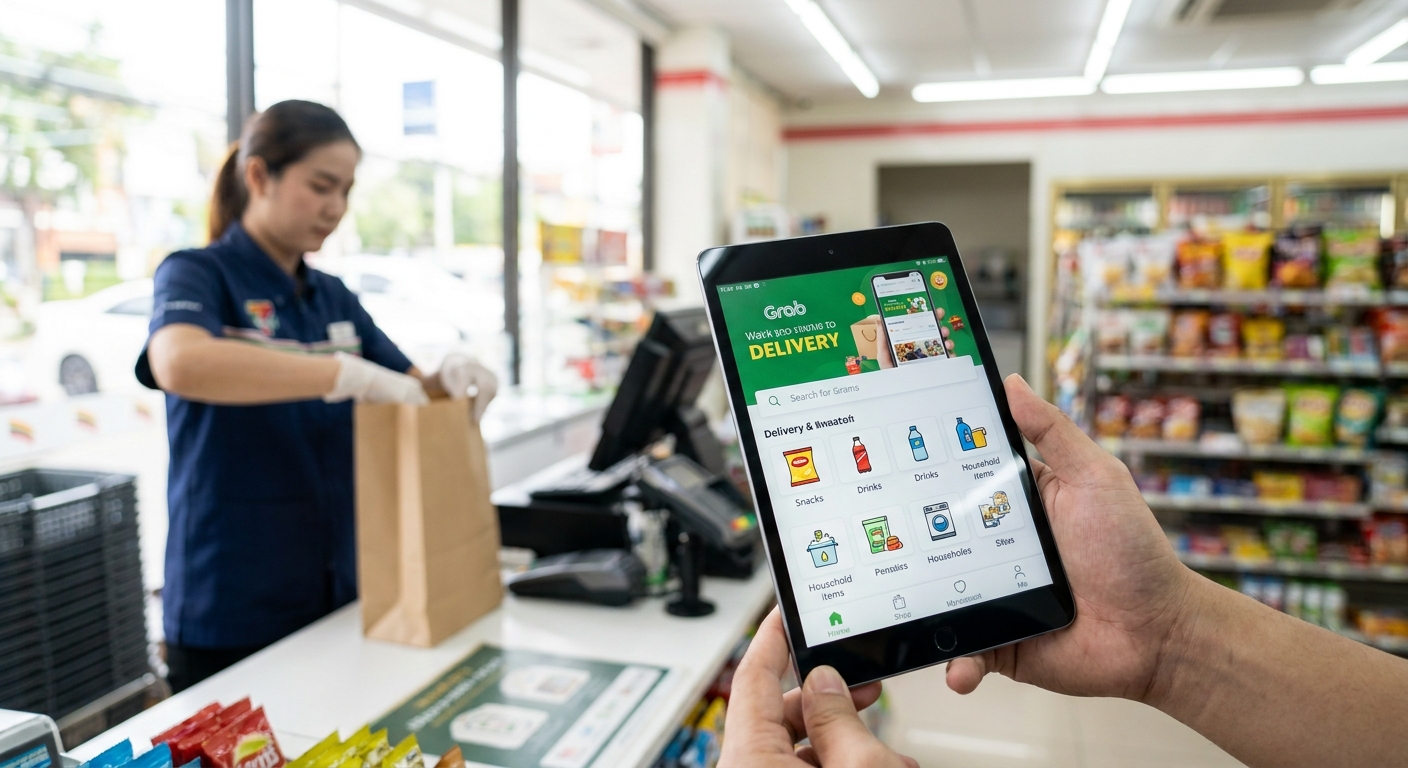
A white-labeled app puts your logo, your colors, and your store name on the customer's home screen — not a marketplace icon next to four competitors. Every order lands in your customer database, not a platform you're renting shelf space from. This is the single biggest difference between a branded delivery app and a marketplace listing.
Commission and margin structure
Marketplace commissions commonly run as a percentage of every order, which compounds against convenience-store margins that are already thin on grocery and beverage items. A platform built for independent retailers should let you control delivery fees and markup directly instead of absorbing a cut set by someone else.
Integration with prepared and MTO food ordering
Hot food, coffee, and deli items are where c-stores actually make money — not center-store grocery. A delivery app that can't route a hot dog or a made-to-order sandwich through the same order flow as packaged goods is solving half the problem.
Last-mile delivery coverage
A 3 to 5 mile delivery radius covers most convenience store trade areas, but only if the delivery network can actually staff it during your busiest dayparts — morning coffee rush, lunch, and late-night snack runs. Ask whether delivery is built into the platform or bolted on through a third party.
Multi-location rollout speed
A single-store pilot should take 2-4 weeks to launch in 2026 if the platform is purpose-built for grocery and food retail. Chains with 10, 50, or 200 locations need a rollout plan that doesn't require rebuilding the menu and catalog store by store.
Data ownership and retention tools
Every order through a branded app generates first-party data — purchase history, repeat visit frequency, basket size. A platform that also offers retail media and loyalty tools turns that data into a second revenue stream instead of a spreadsheet nobody uses.
See the platform behind the app
Branded ordering, kiosks, and delivery built for independent and regional retailers.
The core pieces of a convenience-store delivery stack
Branded mobile app and ecommerce site — the retention engine
This is the customer-facing layer that replaces the marketplace listing. It carries your store name, your loyalty offers, and your product catalog, and it's the piece most operators underestimate until they see repeat-order rates climb. The Local Express platform builds this as a fully branded app and web store rather than a listing inside someone else's marketplace. Buy if you currently have zero branded online presence — this is the foundation everything else sits on.
Self-ordering kiosk for hot food and MTO — the margin multiplier
If your hot food bar, deli, or coffee counter already accounts for a meaningful share of daily transactions, a self-ordering kiosk style setup cuts line wait and captures MTO orders digitally instead of losing them to a slow counter. Look specifically at platforms built for grocery and specialty food kiosks rather than generic restaurant kiosk software repurposed for retail. Buy if hot food drives foot traffic; Skip if your store is packaged goods only — the hardware cost isn't worth it without an MTO menu behind it.
Order management system — the operational backbone
Orders from the app, the kiosk, and delivery all need to land in one queue, not three disconnected systems your staff has to check separately. A unified order management layer is what keeps a busy morning rush from turning into missed tickets. Buy for any store running more than one order channel at once — which by 2026 is most convenience stores with an online presence.
Last-mile delivery network — the fulfillment layer
Delivery only works if drivers are actually available during peak hours, not just listed as a feature. A network built specifically for grocery and convenience delivery handles the short-hop, small-basket orders that national gig platforms often deprioritize in favor of restaurant orders. Consider this piece once your branded app is live and generating order volume — delivery without demand behind it is a wasted setup.
Retail media and loyalty tools — the revenue layer
Once first-party order data is flowing through a branded app, retail media tools let you sell shelf placement and promoted listings to CPG brands and beverage suppliers — a revenue stream marketplace listings never offer independent retailers. Consider this once you have consistent order volume; Skip it in month one when you're still building the customer base.
What to avoid
- Generic multi-restaurant marketplace apps — your store gets buried next to five competitors and you never own the customer relationship or the data behind it.
- Delivery-only apps with no prepared food or kiosk integration — this misses the actual margin driver for most convenience stores, which is hot food and beverages, not packaged grocery.
- One-size ecommerce templates built for big-box grocery — convenience store shopping is fast, small-basket, and impulse-driven; a template designed for a 40,000-item grocery catalog slows down a 2,000-item c-store menu instead of speeding it up.
Verdict comparison
| Stack piece | Brand control | Typical setup time | Best for |
|---|---|---|---|
| Branded mobile app + ecommerce site | Full | 2-4 weeks | Any store with zero branded online presence |
| Self-ordering kiosk | Full | 2-4 weeks | Stores with hot food, deli, or MTO counters |
| Order management system | Full | Bundled with app launch | Stores running 2+ order channels |
| Last-mile delivery network | Shared with delivery partner | Live at app launch | Stores with proven order volume |
| Retail media / loyalty tools | Full | After 3+ months of order data | Stores with steady repeat customers |
FAQ
What's the best delivery app for convenience stores in 2026?
The best option in 2026 is a white-labeled app that keeps your store's brand and customer data instead of listing you inside a shared marketplace. Look for one that also integrates prepared food and kiosk ordering, since that's where c-store margin actually sits.
Is a white-label app better than DoorDash or Uber Eats for a convenience store?
A white-label app protects your brand and customer data, while marketplace listings put you next to competitors and take a commission on every order. Marketplaces can still add order volume, but they shouldn't be your only channel.
How much does it cost to launch a branded convenience store delivery app?
Cost varies by platform and store count, and pricing details should be confirmed directly with the provider rather than assumed from a generic figure. Ask specifically about setup fees versus per-order or subscription pricing.
Do I need a kiosk if I already have a delivery app?
Only if hot food, coffee, or made-to-order items make up a meaningful share of your daily sales. A kiosk speeds up counter service and captures MTO orders digitally, but it's not necessary for a packaged-goods-only store.
How long does it take to launch a delivery app for a single convenience store?
A single-location rollout typically takes 2 to 4 weeks in 2026 when the platform is already built for grocery and food retail rather than adapted from restaurant software.
Can a convenience store chain roll out a delivery app across multiple locations at once?
Yes, platforms built for multi-location grocery and convenience retail support catalog and menu templates that speed up rollout across 10, 50, or 200+ stores without rebuilding each one from scratch.
What delivery radius should a convenience store expect to cover?
Most convenience store trade areas fall within a 3 to 5 mile radius, though actual coverage depends on driver availability during peak dayparts like morning coffee and late-night snack runs.
Does a delivery app help with customer retention, not just new orders?
Yes — a branded app captures purchase history and visit frequency that marketplace listings never share with the retailer, which is the data needed to build loyalty offers and repeat-visit campaigns.
One last thing
Most convenience store operators evaluating a delivery app for convenience stores focus entirely on delivery radius and driver availability, and skip the piece that actually moves margin: the hot food and MTO counter. A branded app without kiosk or prepared-food integration digitizes packaged goods that already carry the thinnest margin in the store, while the coffee bar and deli case — where the real profit sits — stay stuck at the counter. Fix the order flow for hot food first in 2026, and the delivery radius question gets a lot less important.