Underprice a catering platter and you lose money every time someone hits "add to cart." Overprice it and the order goes to the supermarket down the street with a $39.99 veggie tray. Getting pricing catering platters online orders right means building the math into your online ordering page before the first order comes in, not after a $200 order comes back a $60 loss.
- Price platters at 2.8x-3.2x true food cost, not just ingredient cost, to protect margin on pricing catering platters online orders.
- Build three fixed sizes (small/medium/large) into checkout instead of custom quantities — it cuts kitchen errors and speeds up online ordering.
- Add a 24-48 hour cutoff rule at checkout or MTO kitchens absorb same-day orders they can't staff for.
- Packaging and ice packs run 4-8% of platter cost — bake that into the sticker price, don't absorb it.
- Delivery fees for platters need their own tier separate from grocery basket fees because weight and breakage risk are higher.
Why this matters
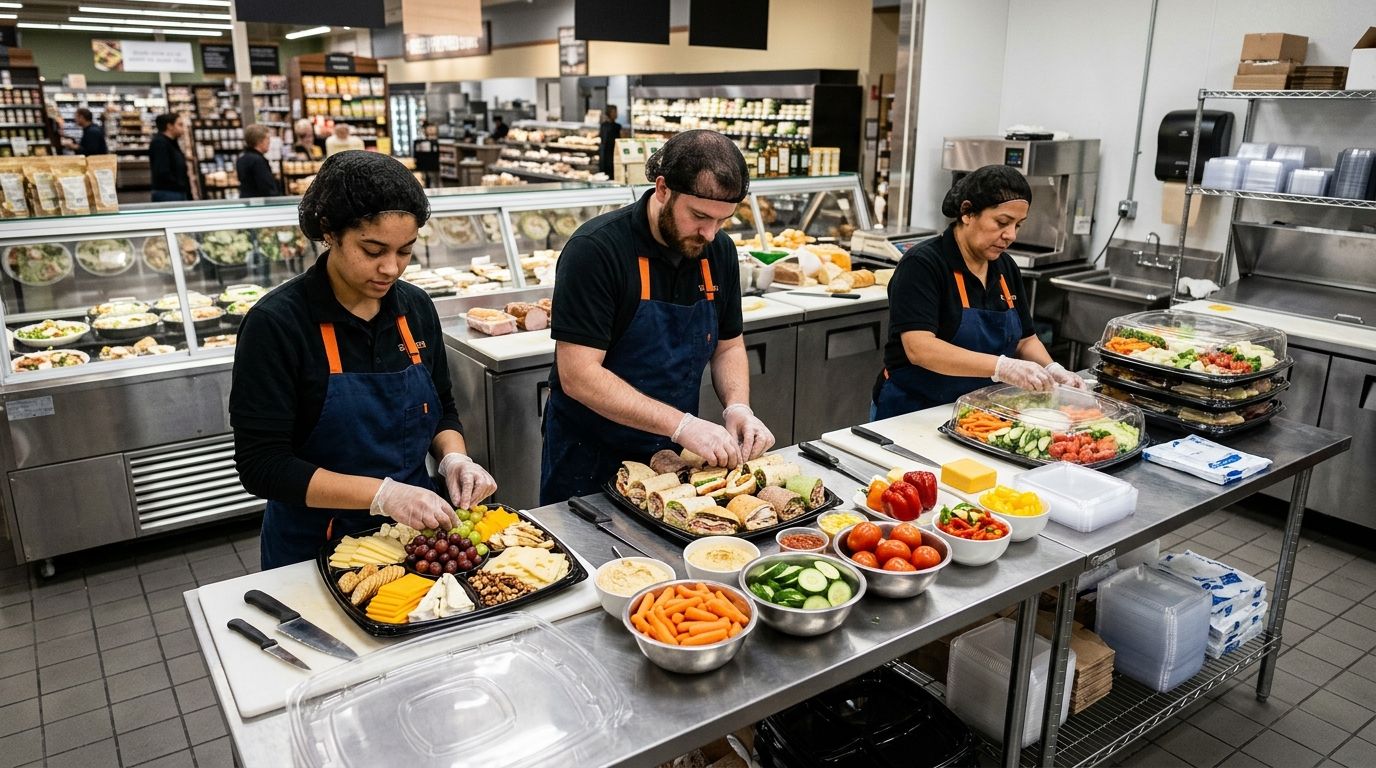
A platter isn't a bundle of grocery items — it's a made-to-order product with labor, packaging, and spoilage risk baked in. Retailers who price it like a basket of deli meat and cheese lose the labor cost every single time.
Independent grocers and specialty food shops selling catering online in 2026 are competing against national chains with dedicated catering apps and against local caterers with lower overhead. The store that wins isn't the cheapest — it's the one whose online ordering page makes pricing, sizing, and lead time obvious before checkout, so there's no phone call to "confirm the order."
What you'll need
- A documented recipe cost sheet for each platter (ingredients, portion counts, packaging)
- A fixed markup target (2.8x-3.2x food cost is standard for prepared food retail in 2026)
- Order management software that separates MTO kitchen orders from standard grocery fulfillment
- Packaging inventory: trays, lids, ice packs, tamper seals
- A defined delivery zone and fee structure for heavier, breakable orders
- A cutoff time your kitchen can actually hit without overtime
The steps
1. Calculate the real food cost per platter, not just ingredient cost
Most retailers price platters off ingredient cost alone and wonder why margin disappears. Ingredient cost is only part of the number — labor to assemble, packaging, and shrink from trimming (cheese rinds, produce ends) all belong in the base.
For a 12-person deli platter, add: raw ingredients, 10-15 minutes of prep labor at your hourly kitchen rate, tray and lid cost, and a 3-5% shrink allowance. A platter with $22 in raw ingredients often lands closer to $28-30 in true cost once labor and packaging are counted. Skip this step and every platter you sell is quietly underpriced.
Common mistake: using last year's ingredient cost sheet. Produce and protein prices move month to month — recheck the sheet quarterly at minimum.
2. Set your markup and build three fixed price tiers
Once you know true cost, apply a consistent multiplier — 2.8x to 3.2x is standard for prepared and MTO food in grocery retail, versus 1.4x-1.8x for packaged grocery items. That gap exists because platters carry labor and same-day production risk that a can of beans doesn't.
Build three sizes instead of custom quantities: small (6-8 servings), medium (12-15 servings), large (20-25 servings). Fixed tiers cut decision fatigue for the customer and cut prep errors for the kitchen — a custom "serves 18" request forces staff to eyeball proportions mid-shift.
Retailers running order management software for grocery stores with MTO kitchens can route each tier to a separate prep ticket automatically, so kitchen staff aren't recalculating portions from a free-text order note.
3. Build sizing and serving-count logic into the online ordering page
A customer ordering a platter for 20 people needs to see "serves 20" next to a price, not a weight in pounds. Serving count sells better than weight because it answers the buyer's actual question: will this be enough food.
Put serving count, allergen notes, and a photo of the actual tray size on the product page. Vague listings drive support calls and refund requests — a platter that arrives smaller than expected is the single biggest source of catering complaints in grocery retail.
Expected outcome: clearer sizing cuts "where's the rest of my order" tickets and reduces phone-based order confirmation, which is the whole point of moving catering online in the first place.
4. Add lead-time and order-cutoff rules at checkout
A platter ordered at 10am for noon delivery breaks kitchen staffing every time. Set a hard cutoff — 24 hours for small platters, 48 hours for large catering orders — and enforce it in the ordering system, not with a sign nobody reads.
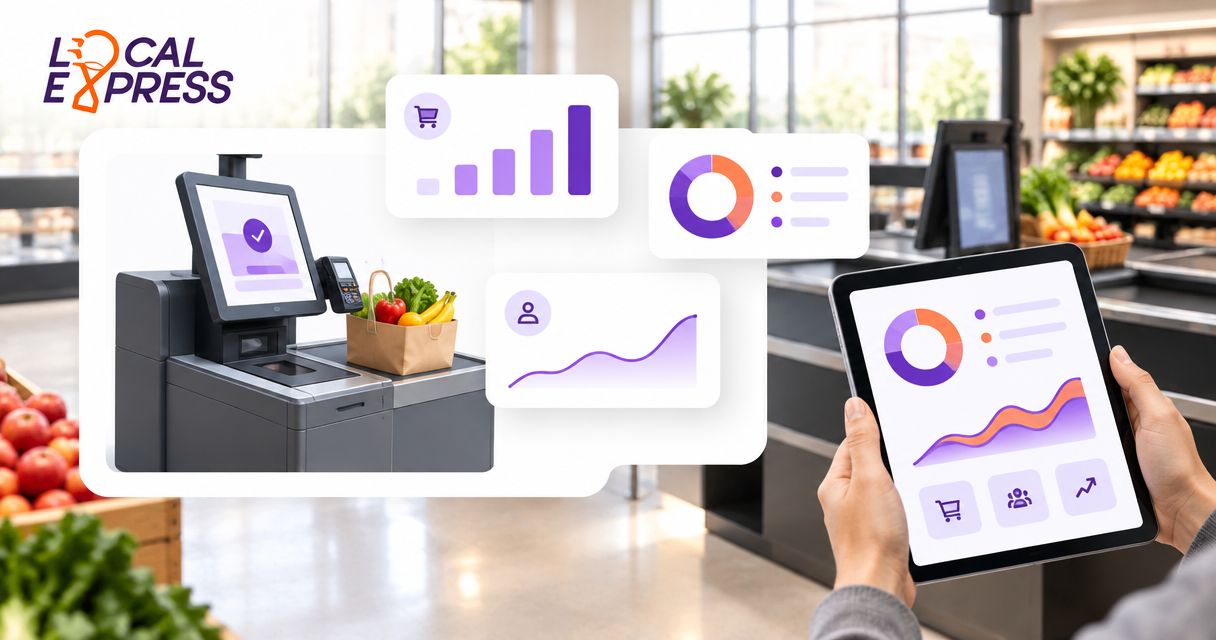
Stores running prepared food ordering kiosks for grocery store delis can apply the same cutoff logic in-store and online, so a customer can't walk up to the kiosk and order what the website already blocked.
Common mistake: letting same-day large orders through because a manager wants the sale. One rushed 30-person platter can blow out an entire lunch prep shift and delay every other online order that day.
5. Price packaging and transport into the sticker price
Trays, lids, ice packs, and tamper seals typically run 4-8% of total platter cost, and retailers routinely forget to fold that into the price because it doesn't feel like "food cost." It's a real cost — treat it like one.
For cold platters going out for delivery, budget for insulated packaging or a gel pack, which adds $0.75-$1.50 per order but prevents the spoilage complaint that costs far more in refunds and reputation.
6. Structure delivery fees and minimums separately from grocery basket delivery
A 20-pound platter riding in the same delivery zone logic as a bag of groceries gets mispriced almost every time — it's heavier, harder to stack, and more likely to arrive damaged if the fee structure doesn't account for handling. Catering orders need their own delivery tier, often with a higher flat fee and a same-store minimum order value.
Retailers building this out should review how to structure delivery zones and fees for multi-store chains before setting catering-specific rates, since platter delivery radius is often tighter than standard grocery delivery to protect food safety and presentation.
7. Test the full checkout flow before launch
Run a test order through every size tier, confirm the cutoff time blocks same-day orders correctly, and check that the delivery fee calculates against the platter's weight class, not the standard grocery basket rate. A pricing error caught in testing costs nothing. The same error caught by a customer costs a refund and a bad review.
Troubleshooting
- Platters keep selling below cost: recheck the cost sheet — packaging or labor is likely missing from the base calculation.
- Kitchen gets slammed by last-minute large orders: the cutoff rule isn't enforced at checkout, or a manager override is bypassing it.
- Customers complain the platter looks smaller than the photo: update product photos every time the tray size or vendor changes — stock photos age fast.
- Delivery drivers report damaged platters: packaging spec is too thin for the delivery radius or drive time; add rigid trays for orders over 30 minutes out.
- Online price doesn't match in-store kiosk price: the two channels aren't syncing off the same catalog — centralize the price source.
- Refund requests for wrong serving counts: the product page lists weight instead of servings; switch the primary sizing label.
Tools and resources
- Centralized order management across web, app, and kiosk channels keeps platter pricing consistent no matter where the order originates.
- Order management software that routes catering tickets separately from standard grocery fulfillment.
- Prepared food ordering kiosks that apply the same cutoff and sizing rules in-store as online.
- A recipe costing spreadsheet, reviewed quarterly against current ingredient prices.
- A packaging vendor with volume pricing on insulated trays for delivery orders.
See the platform behind this workflow
Unified commerce for grocery retailers selling prepared food online.
What to do next
Once platter pricing is locked, the next bottleneck is usually delivery, not the kitchen. Getting delivery zones and catering fees right matters as much as the price on the platter itself — a $65 platter with a botched $25 delivery fee still loses the sale.
FAQ
What markup should I use for pricing catering platters online orders?
Apply a 2.8x to 3.2x multiplier on true food cost, which includes ingredients, prep labor, and packaging. Standard grocery items run 1.4x-1.8x, but prepared platters carry labor and same-day risk that packaged goods don't.
How much should packaging cost add to a platter's price?
Packaging typically runs 4-8% of total platter cost in 2026, covering trays, lids, and ice packs for cold delivery. Fold this into the sticker price instead of treating it as a separate line item customers see.
Is a 24-hour cutoff enough for online catering orders?
A 24-hour cutoff works for small platters, but large catering orders serving 20 or more people need 48 hours to avoid overtime and prep errors. Enforce the cutoff in the ordering system itself, not just as a posted policy.
Should platter delivery fees match standard grocery delivery fees?
No, platter delivery needs its own fee tier because the orders are heavier and more prone to damage in transit. A separate flat fee and order minimum protects margin better than folding platters into standard basket delivery rates.
How do I decide platter sizes for an online menu?
Three fixed tiers work best: small for 6-8 servings, medium for 12-15, and large for 20-25. Fixed sizing cuts kitchen prep errors compared to accepting custom serving counts through a text field.
Why do my platters keep losing money even with a markup applied?
The markup is likely applied to ingredient cost alone instead of true cost. Add prep labor, packaging, and a 3-5% shrink allowance to the base before multiplying, or the markup understates the real number.
Does serving count or weight sell better on a platter product page?
Serving count sells better because it directly answers whether the platter will feed the group. Weight in pounds forces the customer to do math they don't want to do at checkout.
Can I use the same catalog for in-store kiosk and online catering orders?
Yes, and you should — running platters through a centralized catalog prevents the online price from drifting away from the in-store kiosk price, which is a common source of customer complaints in 2026.
One last thing
The platter that loses the most money is almost never the cheapest one on the menu — it's the mid-size tray nobody re-costed after last quarter's ingredient price jump. Recheck the cost sheet on your best-selling platter size before touching anything else.