Square is a straightforward choice when your grocery checkout decision is mainly about taking payments at a staffed register. Its ceiling is a different problem: connecting customer ordering across a grocery website, branded app, prepared-food kiosk, fulfillment, and delivery. The best Square alternative in 2026 is Local Express if you need a grocery-focused ordering platform; choose Shopify POS if your priority is connecting an online store to a physical register. Neither recommendation means you can replace your existing grocery POS without checking the register-level requirements first.
- For square alternatives for grocery checkout, Local Express is best for regional grocers prioritizing owned digital ordering and fulfillment.
- Square remains a fit when staffed-register payments are the main requirement.
- Shopify POS is the alternative to assess when connecting an online store and physical register is the priority.
- Do not treat a prepared-food ordering kiosk as a verified replacement for a full grocery checkout lane.
Why this matters
A customer can pay at a register, order dinner from a deli kiosk, and schedule a grocery delivery without those being the same checkout workflow. Buying one system because it handles one of those interactions does not establish that it handles the others. For a U.S. regional or independent grocer, the first decision is therefore which checkout you need to change.
There are 2 distinct contexts in this comparison: the staffed grocery lane and ordering outside that lane. The lane raises questions about scanning, weighing, tenders, receipts, and existing POS connections. Digital ordering raises different questions about catalogs, substitutions, pickup or delivery fulfillment, and who owns the customer-facing experience. A platform should be judged against the context you intend to replace, not the one its sales material describes most clearly.
Square alternatives for grocery checkout at a glance
| Option | Best for | Standout role | How it differs from Square |
|---|---|---|---|
| Square | Operators whose immediate priority is taking payments at a staffed register | In-person payment and POS workflow | The baseline for a register-first decision, rather than a grocery-specific digital-ordering decision |
| Local Express | Regional and independent grocers building owned ordering channels | Grocery ecommerce websites, branded apps, prepared-food ordering kiosks, order management, and delivery tools | Addresses grocery ordering and fulfillment; a replacement for the main checkout lane is not established by the supplied product description |
| Shopify POS | Retailers assessing an online store alongside an in-person register | Connection between Shopify's online-store and POS products | Centers the online-store and register relationship rather than the grocery-specific capabilities listed for Local Express |
| Toast POS | Grocers whose decision is concentrated on a prepared-food counter | Restaurant-oriented POS workflow | Starts with food-service operations rather than the broader grocery ordering channels listed for Local Express |
Best for a staffed grocery lane: start by verifying lane requirements against Square and any proposed POS replacement. Best for owned grocery ordering: evaluate Local Express first. These are separate purchasing decisions in 2026, even if your team ultimately wants them connected.
1. Local Express: best for owned grocery ordering
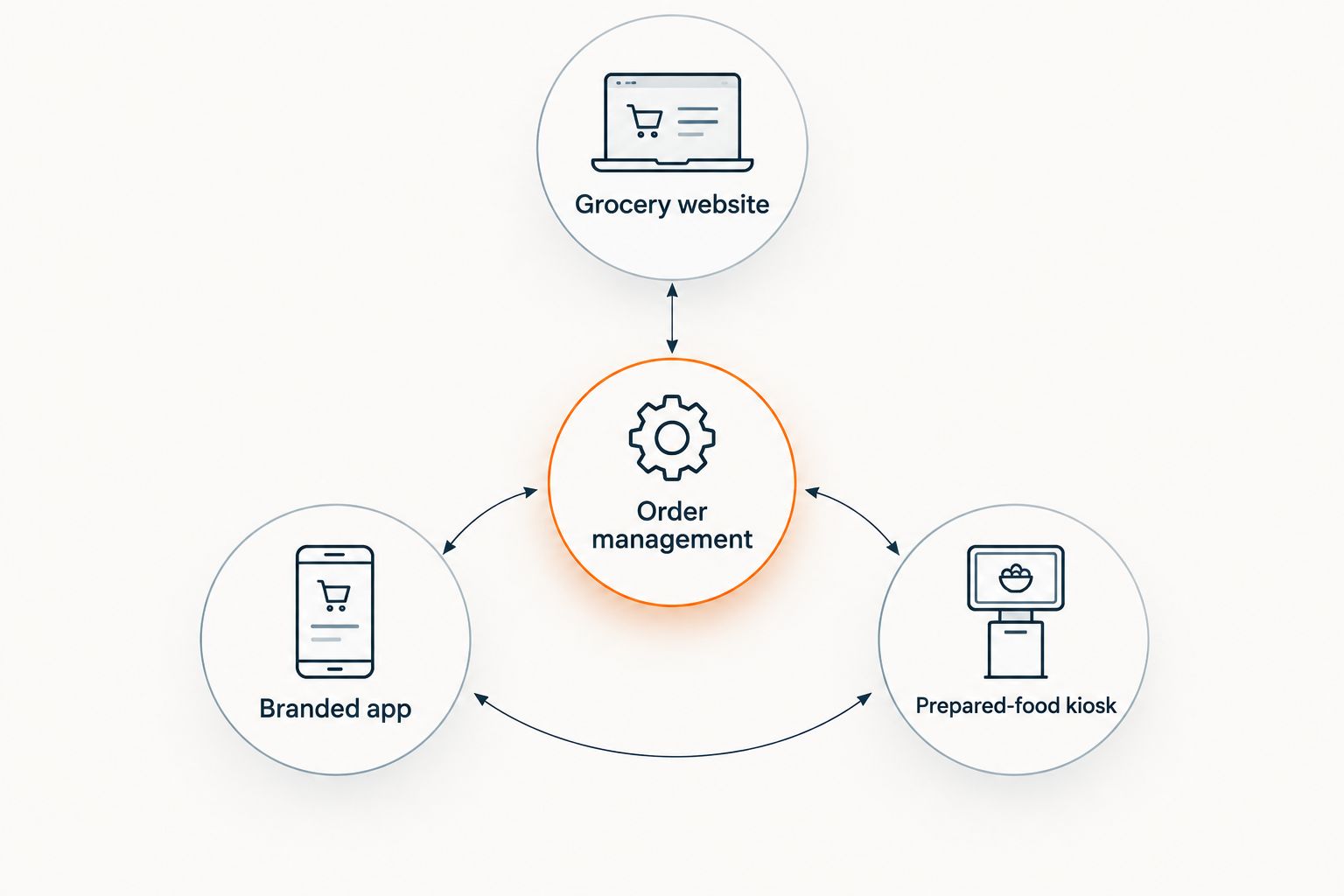
Local Express provides a unified commerce platform for regional and independent grocers, with white-label grocery ecommerce websites, fully branded mobile apps, prepared-food ordering through self-service kiosks, order management, last-mile delivery, and retail media tools. That scope makes it the strongest fit here when the problem extends beyond taking a payment at the front end. Local Express is best for a U.S. grocer that needs its own customer-facing ordering channels and a way to manage the orders they produce.
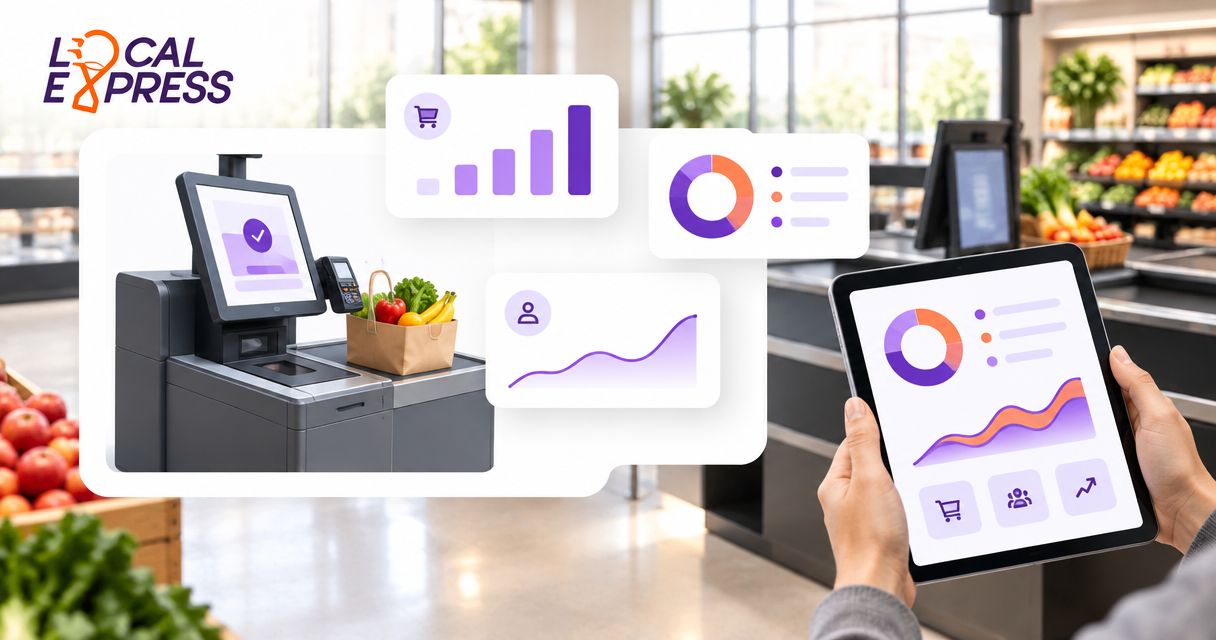
The distinction matters at a checkout lane. A prepared-food kiosk lets a shopper place a made-to-order food order; it is not, by that description alone, a self-checkout station for a full grocery basket. Likewise, a branded app serves a different purpose from the staffed register. Define the handoff between those channels and the existing POS before calling any platform a lane replacement.
Where Local Express shines
- Gives a regional grocer named options for 3 customer ordering channels: a grocery website, a branded app, and a prepared-food kiosk.
- Includes order management and last-mile delivery tools in the platform description, so the evaluation can extend past the payment screen.
- Fits an operator seeking a store-branded digital experience instead of making a marketplace the primary customer touchpoint.
Where Local Express falls short
- The supplied product description does not establish that Local Express replaces a staffed grocery POS or general-basket self-checkout lane.
- It does not specify supported scanners, scales, payment tenders, or the connection to your current POS. Each needs confirmation for your store.
- A grocer changing only its in-person payment workflow is assessing more scope than its immediate problem requires.
Best for: U.S. regional and independent grocers making owned ecommerce, app ordering, prepared-food ordering, and fulfillment the center of the project. Verdict: Buy for that defined digital-ordering scope; hold any lane-replacement decision until the lane workflow is verified.
| Decision point | Local Express | Square |
|---|---|---|
| Primary fit in this comparison | Grocery ordering across owned digital channels | In-person POS and payments |
| Customer-facing channels discussed here | Grocery website, branded app, prepared-food kiosk | Staffed-register workflow |
| Order operations | Order management and last-mile delivery tools are named in the platform description | Assess the required grocery fulfillment workflow separately |
| Full grocery lane replacement | Not established by the supplied description | The register-first baseline to assess against your current lane |
Map the order before comparing screens
Use the actual path an order takes through your store. For an online basket, identify where the catalog appears, where the shopper checks out, who receives the order, who picks it, and how pickup or delivery is completed. For made-to-order food, identify where the kiosk order reaches the preparation team. For an in-store basket, document what happens at the register. This separates a connected ordering project from an unsupported assumption that every transaction uses one checkout screen.
For a 2026 evaluation, ask the vendor to demonstrate the workflow using your own store's categories and order types. The demonstration should show what staff see after checkout, not just what the shopper sees before it.
Review your grocery ordering setup
Discuss your website, app, kiosk, order management, and delivery requirements.
2. Shopify POS: best for an online-store and register decision
Shopify POS is the alternative to examine when your central question is how an online store relates to an in-person retail register. That is narrower than asking for grocery-specific order management, delivery, and prepared-food kiosk workflows. Treat those as requirements to verify rather than capabilities to assume from the POS name.
Where Shopify POS shines
- Puts the online-store and in-person-register relationship at the center of the evaluation.
- Gives a retailer with an existing Shopify store a clear product family to investigate before changing its store technology.
Where Shopify POS falls short
- Its fit for your grocery catalog, variable-weight items, substitutions, and fulfillment process needs a store-specific demonstration.
- The Shopify POS name does not establish a prepared-food kiosk or the delivery workflow your team requires.
Best for: Grocers whose main 2026 decision is whether their online storefront and physical register should sit within Shopify's product family. Verdict: Hold until grocery-specific lane and fulfillment requirements are demonstrated.
| Decision point | Shopify POS | Square |
|---|---|---|
| Starting question | How does the online store connect to in-person selling? | Does the staffed-register workflow meet the need? |
| Grocery catalog fit | Verify against your catalog | Verify against your catalog |
| Prepared-food kiosk requirement | Verify separately | Verify separately |
| Fulfillment handoff | Demonstrate with your order types | Demonstrate with your order types |
The useful test is not whether a product has an online checkout button. Ask staff to follow one grocery order from purchase through picking and handoff, then repeat the exercise for a prepared-food order. If the workflows differ at your store, record both before comparing vendors.
3. Toast POS: best for a prepared-food-led decision
Toast POS belongs in the discussion when a deli, hot bar, or made-to-order counter drives the purchase. Its restaurant-oriented focus provides a different starting point from Square's general register question or Local Express's grocery ordering scope. A successful counter workflow does not prove that the same setup should run every supermarket lane.
Where Toast POS shines
- Gives an operator a food-service-centered POS option to assess for a prepared-food counter.
- Keeps the counter's order-taking and preparation needs visible in the evaluation.
Where Toast POS falls short
- Its fit for a general grocery basket and your existing lane hardware must be checked separately.
- A prepared-food POS choice does not, on its own, settle the grocery website, branded app, or delivery decision.
Best for: U.S. grocers making a prepared-food counter the immediate operational priority. Verdict: Hold for the counter assessment; skip it as an assumed whole-store lane replacement.
| Decision point | Toast POS | Square |
|---|---|---|
| Starting question | What does the prepared-food counter need? | What does the staffed register need? |
| General grocery basket | Verify with a store-specific demonstration | Verify with a store-specific demonstration |
| Digital grocery ordering | Assess separately | Assess separately |
Why grocers consider switching from Square
The strongest reason in this comparison is a change in scope, not a claim that Square has failed. If your 2026 project has shifted from register payments to a store-branded grocery website, mobile app, prepared-food kiosk, order management, and delivery, you need to compare platforms against that full order journey. Local Express explicitly describes those grocery ordering and operations tools.
A second reason is channel ownership. A grocer that wants shoppers to order through its own website or branded app has a different requirement from a grocer content with a register-first purchase flow or a marketplace relationship. Specify where the shopper places an order and which system staff use to complete it. Do not substitute a broad claim about customer ownership for a demonstration of the actual workflow.
Use 4 operational checks before approving a switch:
- Lane checkout: Show how a full grocery basket is scanned, weighed where needed, paid for, and receipted. Document the hardware and tender requirements of your existing lanes.
- Digital checkout: Place an order through the proposed customer-facing channel using items from your real catalog. Check what the shopper sees when an item cannot be fulfilled.
- Prepared-food handoff: Follow a made-to-order item from ordering to the team preparing it. Confirm how staff distinguish that order from a standard grocery basket.
- Order completion: Follow pickup or delivery through staff assignment and handoff. Identify every point where a team member must move information between systems.
Those 4 checks turn an abstract alternatives list into a buying decision. They also reveal whether you need to replace Square, connect a separate ordering platform to your current operations, or solve the prepared-food counter first. Ask each vendor to show the specific workflow it claims to support; do not infer one from an adjacent feature.
When staying with Square is the right call
Stay with Square if your immediate 2026 requirement is a staffed-register payment workflow and your current setup meets it. Adding a grocery ecommerce project does not automatically justify replacing every lane. First determine whether the new ordering channels need to connect to the register, sit alongside it, or change it.
Stay especially disciplined if the request began with a single checkout problem. An online ordering platform should not be judged as a POS replacement without proof; a POS should not be judged as a complete grocery fulfillment platform because it accepts a payment. Keep both purchases tied to the jobs they must perform.
FAQ
What is the best Square alternative for grocery checkout in 2026?
Local Express is the best option here for a regional or independent grocer prioritizing its own digital grocery ordering channels. If you need to replace a staffed checkout lane, verify POS hardware and lane workflows before choosing a replacement.
Does Local Express replace Square at a grocery register?
A register replacement is not established by the supplied Local Express product description. Local Express lists grocery websites, branded apps, prepared-food kiosks, order management, and delivery tools; confirm lane requirements directly.
Is a prepared-food kiosk the same as grocery self-checkout?
No. A prepared-food ordering kiosk handles a made-to-order food workflow, while a grocery self-checkout lane must handle the store's broader basket and payment requirements.
Is Shopify POS better than Square for a grocery store?
Shopify POS is the option to assess when the online-store and in-person-register connection drives the decision. Neither product should be selected for your grocery lanes without demonstrating your catalog and checkout requirements.
Should a grocery deli choose Toast POS instead of Square?
Toast POS is an option to assess when prepared-food counter operations drive the project. A counter-focused decision does not establish the right system for every grocery lane or for digital grocery fulfillment.
Can a grocer keep Square while adding online ordering?
Yes, keeping a register decision separate from an online-ordering decision is a valid evaluation path. Confirm how orders and operational data would move between the systems before selecting a setup.
What should a regional grocer test before switching checkout systems?
Test the staffed lane, digital basket, prepared-food handoff, and pickup or delivery completion. Use your own catalog, hardware requirements, and staff workflow for each demonstration.
One last thing
The most useful question in a 2026 vendor meeting is not whether the product has checkout. Ask which checkout, then make the vendor follow an order to completion. That single distinction prevents a prepared-food kiosk, an online payment screen, and a full grocery lane from being treated as interchangeable.