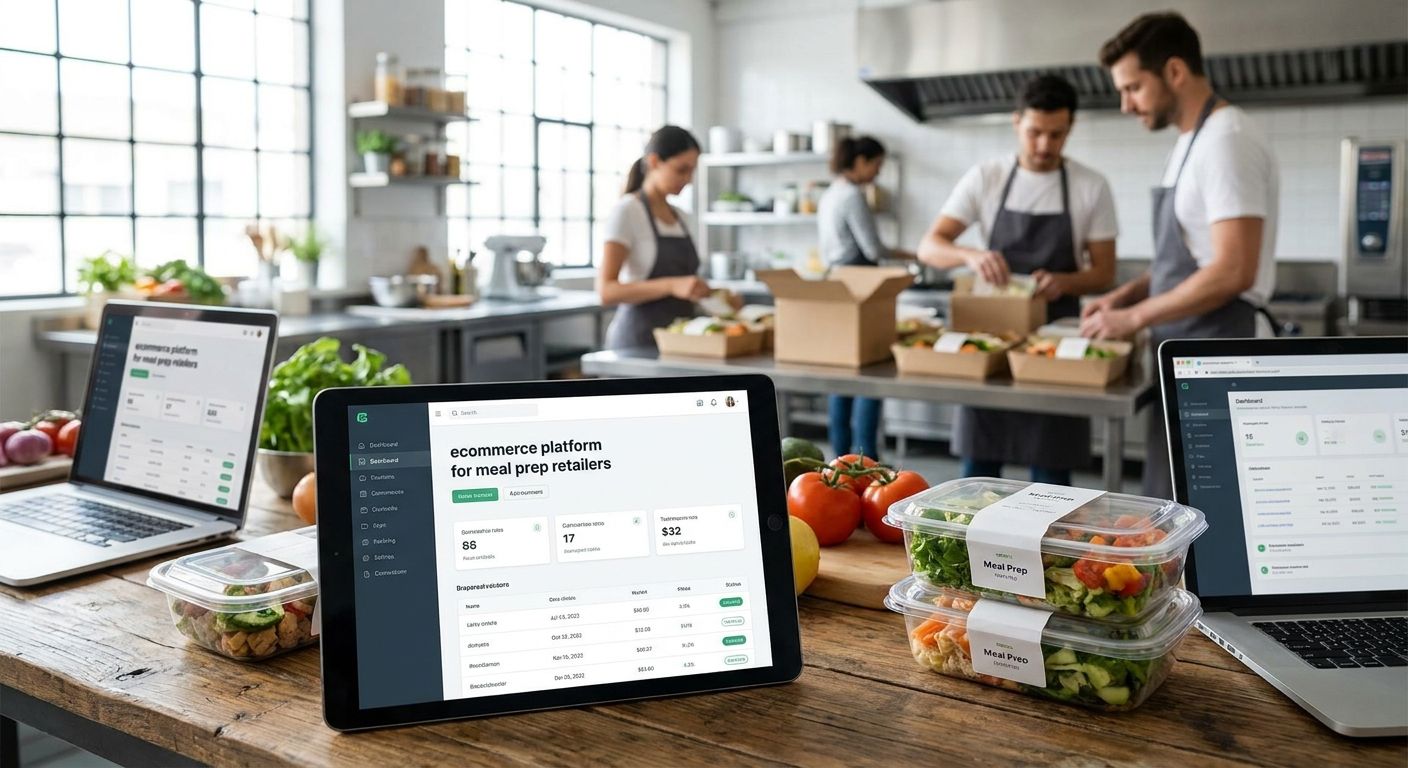
Meal prep and prepared-food retailers run two businesses under one roof — a working kitchen and a digital storefront — and most ecommerce platforms were built for neither. Here's what actually matters when you're choosing an ecommerce platform for meal prep retailers running made-to-order lines across one or more locations in 2026.
- An ecommerce platform for meal prep retailers needs kiosk-to-kitchen ordering, not a bolted-on shopping cart — Local Express holds 99% order accuracy on MTO lines.
- Skip generic checkout builders for prepared food; they don't sync prep-time inventory across kitchens or locations.
- Owning same-day delivery instead of routing through a marketplace protects margin that platform fees would otherwise eat.
- Multi-location order management earns its cost once you run 3 or more prep kitchens or storefronts.
- Self-service kiosks paired with online ordering return $3.50 for every $1 invested, based on aggregated 2026 retail data.
Why this matters
A prepared-meal business doesn't sell SKUs off a shelf — it sells a dish that has to be cooked, packed, and handed off within a prep window that's usually under 30 minutes. Bolt a standard ecommerce cart onto that workflow and you get double-entered orders, kitchens that don't know what's coming until it's too late, and refunds when the app says "in stock" but the walk-in cooler says otherwise.
The fix isn't a better shopping cart. It's self-service kiosk ordering built for prepared food that talks directly to the kitchen queue, so an order placed at 11:42 a.m. shows up on the make line at 11:42 a.m., not five minutes later after someone re-keys it. That single connection point is the difference between a meal prep retailer that scales past one location and one that stays stuck managing spreadsheets.
Who this is for
This guide is for independent and regional meal prep sellers, prepared-food delis, and specialty grocers running made-to-order kitchens — one storefront or a dozen — who sell through a counter, a kiosk, or an app and need those channels to share one inventory and order queue. If you're running a single-location cafe with no delivery ambitions, most of this won't apply. If you're managing prep across two or more kitchens, or you're tired of third-party delivery apps taking a cut of every order, keep reading.
What to look for in an ecommerce platform for meal prep retailers
1. Made-to-order kitchen integration, not just a checkout
A meal prep retailer's ecommerce platform has to route orders into a kitchen ticket, not just a confirmation email. If the platform treats a hot entree the same way it treats a bag of chips, expect prep delays and mismatched pack times. Kiosk-driven ordering closes that gap and, based on aggregated 2026 retail data, holds order accuracy around 99% on MTO lines.
2. Real-time inventory sync across kitchens and storefronts
Meal prep inventory isn't static — a tray of lasagna sells out mid-shift, and every channel needs to know instantly. Platforms syncing inventory in real time report accuracy near 95%, which matters more here than in packaged grocery because there's no backstock to fall back on once a batch is gone.
3. Delivery control that doesn't eat your margin
Third-party marketplaces charge 15-30% commission on every order, which is brutal on a $12 meal with $4 of food cost already baked in. An ecommerce platform for meal prep retailers should let you run same-day delivery without routing through a third-party app, keeping the customer relationship and the margin in-house.
4. Order management built for prep timelines
A meal that's ready at 12:00 and picked up at 12:45 is a food safety and quality problem, not just a scheduling inconvenience. Order management needs to route by pickup window, prep station, and location, not just by timestamp.
5. ROI transparency on kiosk and tech spend
Before you sign a contract, you should be able to model payback in months, not guess. Platforms with published methodology for calculating kiosk ROI let you plug in your own order volume and see the number before you commit any budget.
Top picks: what actually moves the needle
The kitchen queue killer. Self-service kiosk ordering for prepared food routes orders straight into the make line, cutting the manual re-entry step that causes most order errors. Based on aggregated 2026 data, kiosk-driven MTO ordering holds 99% order accuracy. Buy if your kitchen runs a counter or deli case and orders currently get called out or handwritten.
The margin math. Calculating ROI on a self-service kiosk before you buy tells you whether the $3.50-per-$1 return figure floating around the industry actually applies to your order volume. Buy — this is a spreadsheet exercise, not a purchase decision, and it costs nothing to run first.
The delivery owner. Running same-day delivery yourself instead of through DoorDash or Uber Eats means you keep the 15-30% commission that would otherwise disappear on every ticket. It takes route planning and driver coordination you don't need with a marketplace. Consider if you're doing more than 50 delivery orders a week; Skip if delivery is a rare add-on to walk-in traffic.
The multi-kitchen brain. Order management software built for multiple prep locations keeps pickup windows, kitchen tickets, and inventory aligned across every site instead of forcing managers to compare spreadsheets by phone. Buy once you're running three or more kitchens; Skip for a single storefront where a shared queue at one counter already works.
The inventory sync layer. Real-time inventory sync across kitchens and storefronts stops a sold-out tray in one location from still showing as available on the app. Retailers running this sync report inventory accuracy near 95%. Buy for any operation selling the same prepared items across more than one site.
See the platform behind these picks
One system for kiosk ordering, delivery, and inventory across every kitchen.
What to avoid
- Generic checkout builders retrofitted for food. They handle payment fine but don't route orders into a kitchen ticket, which means someone is still manually relaying orders to the make line.
- Marketplace-only presence. Listing exclusively on a third-party delivery app hands over your customer data and 15-30% of every order — fine as a discovery channel, dangerous as your only channel.
- Single-SKU inventory tools. Software built for shelf-stable packaged goods doesn't handle a tray that sells out in an hour and needs to disappear from every channel at once.
Verdict comparison
| Pick | Best for | Key number | Verdict |
|---|---|---|---|
| Kiosk ordering for MTO | Counter or deli kitchens | 99% order accuracy | Buy |
| Kiosk ROI calculation | Anyone before signing a contract | $3.50 return per $1 | Buy |
| Owned same-day delivery | 50+ delivery orders/week | 15-30% commission avoided | Consider |
| Multi-location order management | 3+ prep kitchens | Unified pickup windows | Buy at scale |
| Real-time inventory sync | Multi-site prepared food sellers | 95% inventory accuracy | Buy |
FAQ
What's the best ecommerce platform for meal prep retailers?
The best ecommerce platform for meal prep retailers connects kiosk or app ordering directly to the kitchen queue and syncs inventory in real time across every location. Platforms that treat prepared food like packaged goods create order errors and stockout mismatches.
Is kiosk ordering better than a mobile app for prepared meals?
Kiosk ordering and mobile apps solve different problems and work best together — kiosks capture walk-in and pickup traffic while apps handle repeat delivery customers. Aggregated 2026 data puts kiosk-driven order accuracy at 99%, which matters most for in-store pickup lines.
How much does an ecommerce platform for meal prep retailers cost?
Cost varies by order volume, number of locations, and whether you need kiosk hardware, so check current pricing directly with a provider before budgeting. Running an ROI calculation on kiosk spend first shows whether the investment pays back in months or years.
Should meal prep retailers use third-party delivery apps?
Third-party delivery apps work as a discovery channel but commissions of 15-30% per order erode already-thin meal prep margins. Owning same-day delivery keeps that margin and the customer relationship in-house once order volume justifies the operational lift.
How does inventory sync work across multiple prep kitchens?
Real-time inventory sync updates stock across every kitchen and storefront the moment an item sells out, so the app or kiosk never shows a tray that's actually gone. Retailers running this sync report inventory accuracy near 95%.
When does multi-location order management make sense?
Multi-location order management pays off once a retailer runs three or more prep kitchens or storefronts and managers can no longer track pickup windows manually. Below that threshold, a single shared queue at one counter usually covers the volume.
Can a meal prep retailer launch online ordering without a developer?
Yes — white-label ecommerce platforms let meal prep retailers launch a branded ordering site and app without writing code, connecting directly to existing kitchen and inventory systems. Setup timelines depend on the number of locations and menu items being migrated.
One last thing
The operators who struggle most with an ecommerce platform for meal prep retailers aren't the ones with old technology — they're the ones running three separate systems that don't talk to each other: a POS for the counter, a marketplace app for delivery, and a spreadsheet for inventory. Fixing the sync problem first, before adding more sales channels, is what actually protects margin in 2026.