Grocery self-checkout kiosk system cost breaks into four separate line items — hardware, software licensing, payment processing, and installation — and in 2026 the total swings from a few thousand dollars per unit to a full platform contract depending on which pieces you buy outright versus rent monthly.
- Grocery self-checkout kiosk system cost in 2026 depends on component pricing, not one sticker figure — budget hardware, software, and payment fees separately.
- Kiosk hardware alone typically lands in the low thousands per unit; software licensing and processing add ongoing monthly cost.
- Independent grocers get the clearest return when kiosks connect to order management instead of running as a standalone screen.
- Local Express prices self-service kiosks inside a unified commerce platform, not as a bolted-on hardware line item.
Why this matters
Most grocers who ask about grocery self-checkout kiosk system cost get a single number from one vendor and assume it's the whole picture. It usually isn't. Hardware quotes rarely include payment processing rates, POS integration work, or the software subscription that keeps the kiosk synced with inventory.
Labor costs keep climbing in 2026, and self-checkout kiosks are one of the few line items that shrink a payroll problem instead of adding to it — but only when the total cost of ownership is priced correctly upfront. Get the budget wrong at the quote stage and the kiosk either sits underused or bleeds margin through processing fees nobody flagged before signing.
What you'll need before you request quotes
- Current POS and back-office system details, including whether it exposes an API for kiosk sync
- Floor plan measurements for kiosk footprint, power drops, and network access
- A payment processor account or a willingness to shop new processing rates
- Clean SKU and pricing data that can sync to a kiosk catalog without manual re-entry
- A staffing plan for the transition period — someone still needs to monitor the front end
- A budget range, not a single number, before you contact vendors
Before comparing vendors, look at what self-checkout kiosks for independent grocery stores actually include in their base package versus what gets quoted as an add-on. That single comparison saves most of the surprise later.
The steps
1. Price out the kiosk hardware first
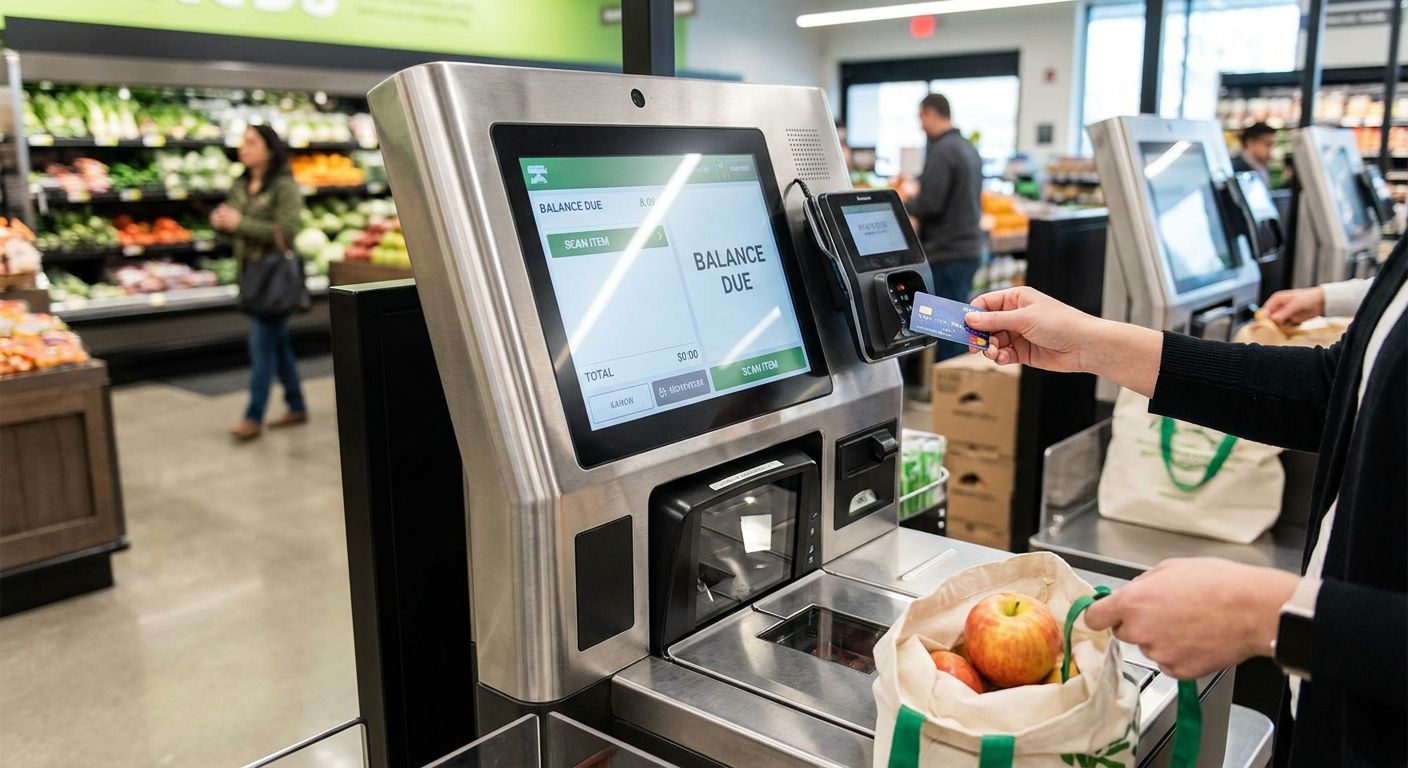
Hardware is the visible cost and the one every vendor leads with. A self-checkout unit typically bundles a touchscreen, barcode scanner, card reader, and enclosure — cash acceptors and printers cost extra when included at all.
The common mistake here is comparing a screen-only quote from one vendor against a fully-loaded unit from another. Ask each vendor to itemize scanner, reader, enclosure, and any cash-handling hardware separately before you set a per-unit number in your head.
2. Add software licensing and platform fees
Hardware is the one-time or leased cost. Software is the recurring one, and it's usually priced as either a flat monthly subscription per kiosk or a percentage of kiosk-processed sales.
A platform-based model — where the kiosk software is part of the same system running your online store and app — tends to cost less over 24 months than a standalone kiosk license, because you're not paying for a second integration layer. Confirm which model you're quoted before comparing two vendors side by side.
3. Budget contactless and card processing separately
Card processing rates get buried in the fine print more often than any other line item in a kiosk quote. The terminal itself might cost a few hundred dollars, but the per-transaction rate compounds fast at grocery volume.
Compare the processing rate against your existing merchant account before assuming the kiosk vendor's built-in processor is the cheaper option. Contactless payment setup for grocery self-checkout kiosks covers what a compliant setup requires in 2026, including tap-to-pay hardware and PCI scope.
4. Factor installation, networking, and integration
Networking, POS integration, and staff training rarely appear on the initial hardware quote, and they're where most budgets get blown. Running a network drop to a new kiosk location, syncing the kiosk to your existing POS, and training front-end staff on exception handling all take time and, often, a separate line-item fee.
Get the integration scope in writing before signing anything. A vendor who can't tell you exactly how the kiosk talks to your POS hasn't scoped the job.
5. Plan for ongoing maintenance and support
A kiosk that goes down during a Saturday rush costs more in lost throughput than the monthly support fee that would have prevented it. Maintenance contracts typically cover software updates, remote diagnostics, and a service window for hardware failures.
Ask what happens if a scanner fails on a Friday — same-day replacement, next-business-day, or a support ticket queue. That answer changes the real cost of downtime, which never shows up on the original quote.
6. Run the ROI math before you sign anything
Grocery self-checkout kiosk system cost only makes sense against what it replaces: front-end labor hours, checkout throughput, and basket size at self-checkout versus staffed lanes. How to calculate ROI on a self-service kiosk for your store walks through the payback math using your own labor and volume numbers instead of a vendor's generic case study.
Do this math before comparing final quotes, not after. It changes which features are worth paying extra for.
7. Compare per-kiosk pricing against platform pricing
Two pricing models dominate the market in 2026: pay per kiosk unit (hardware plus a flat software fee), or a platform subscription that covers your ecommerce site, app, and kiosk under one contract. The platform model usually wins for grocers who already run or plan to run online ordering, because the catalog, inventory, and order data sync once instead of three separate times.
“A kiosk quote that doesn't specify the integration scope isn't a real quote yet.”
Get a kiosk cost breakdown for your store
See hardware, software, and payment costs mapped to your volume.
Troubleshooting
- The quote came back higher than expected. Ask for an itemized breakdown by hardware, software, processing, and installation — a bundled number hides which line item moved.
- The vendor bundles hardware and software into one price. Request separate line items so you can compare against a competing quote that prices them apart.
- Integration fees appeared after signing. Get the POS integration scope, including data fields synced and update frequency, written into the contract before you sign.
- Processing rates are buried in the fine print. Run the vendor's rate against your current merchant account processor before assuming the built-in option is cheaper.
- The kiosk sits idle and the cost doesn't pencil out. Idle kiosks usually mean poor placement or no staff prompt at checkout — revisit both before blaming the hardware.
- Maintenance costs weren't in the original budget. Add a maintenance line at 8-12% of hardware cost annually as a planning placeholder until the vendor quotes an actual support tier.
Tools and resources
- A written, itemized quote from each vendor covering hardware, software, processing, and install
- Your existing POS export to confirm integration compatibility
- A labor cost breakdown for front-end staff to run the ROI comparison
- Prepared food ordering kiosks for grocery store delis if the kiosk needs to handle made-to-order items alongside standard checkout
- A 2026 processing rate comparison from your current merchant account provider
What to do next
Run the ROI calculation from step 6 before you request a final quote from any vendor — it tells you which features are worth paying for and which are padding. The biggest cost swing in a grocery self-checkout kiosk system isn't the hardware; it's whether the kiosk talks to the same order management system running your online store, or sits as a disconnected island that duplicates data entry every shift.
FAQ
How much does a grocery self-checkout kiosk system cost in 2026?
Grocery self-checkout kiosk system cost in 2026 depends on hardware, software licensing, payment processing, and installation priced as separate line items rather than one figure. A platform subscription covering kiosk, app, and ecommerce together usually costs less over time than paying for each piece separately.
Is buying kiosk hardware cheaper than a subscription model?
Buying hardware outright lowers the recurring bill but shifts maintenance and replacement cost onto the store. A subscription model spreads the cost and usually includes support, which matters more once a kiosk is a few years old.
What's included in a typical self-checkout kiosk quote?
A typical quote covers the touchscreen, scanner, and card reader, but often excludes installation, POS integration, and payment processing rates. Ask for those as separate line items before comparing vendors.
How long does it take to install a grocery self-checkout kiosk?
Installation timelines depend on networking and POS integration complexity more than the physical hardware setup. A store with a modern POS and existing network infrastructure moves faster than one needing new wiring or a system migration.
Do self-checkout kiosks work with SNAP/EBT payments?
Kiosk compatibility with SNAP/EBT depends on the payment processor and kiosk software configuration, not the hardware alone. Confirm EBT support with your processor before finalizing a kiosk vendor.
What's the biggest hidden cost in a kiosk purchase?
Payment processing rates and POS integration fees are the two costs most often left off an initial hardware quote. Both compound over time and change the real total cost of ownership more than the sticker price on the kiosk itself.
Should independent grocers buy kiosks separately from their ecommerce platform?
Buying kiosks separately from an ecommerce platform usually means paying for two integrations and syncing inventory twice. A unified platform that runs kiosk, app, and website together avoids that duplicate cost.
How do I calculate ROI on a grocery self-checkout kiosk?
ROI on a self-checkout kiosk compares the labor hours it offsets against the total monthly cost of hardware, software, and processing. Running that math against your own volume and wage data gives a more accurate payback period than a vendor's generic case study.
One last thing
The hardware price is the smallest lever in grocery self-checkout kiosk system cost — the integration decision is the biggest one. A kiosk that syncs live with your order management system avoids the double data entry that quietly eats hours every week, and that labor cost never shows up on the original vendor quote.