Multi-location grocery chains lose margin every time orders, inventory, and customer data live in five different systems instead of one. This guide breaks down what order management software for grocery chains actually needs to do across stores, apps, kiosks, and delivery — and which capabilities to prioritize first.
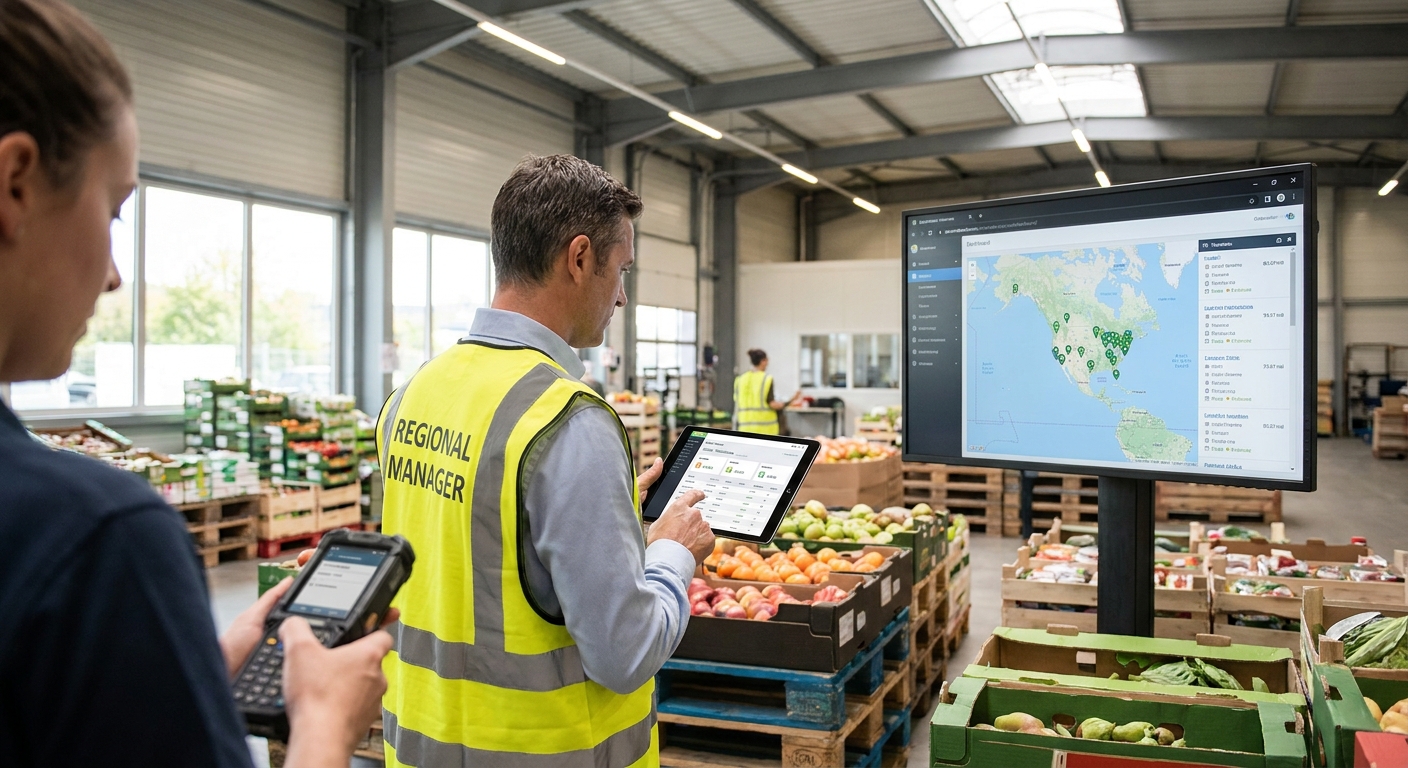
- Order management software for grocery chains must sync inventory and orders across every store in real time — Local Express centralizes this in one dashboard.
- White-label delivery apps beat third-party marketplaces for chains that want to keep customer data in 2026.
- Self-ordering kiosks at the deli counter cut phone-order chaos during peak hours — Consider for chains with 10+ locations.
- Avoid POS add-ons rebranded as 'multi-location' tools — they rarely handle cross-store inventory sync.
Why this matters
A regional chain running 8 to 40 stores in 2026 typically juggles a POS system, a third-party delivery app, a separate ecommerce cart, and maybe a kiosk vendor for the deli. None of them talk to each other. Inventory drifts between stores, order data gets fragmented across four dashboards, and margin leaks out through marketplace commissions nobody tracks in one place.
Order management software built for multi-location grocery chains fixes the fragmentation problem specifically — not the single-store POS problem. That distinction decides whether the software actually saves labor hours or just adds a fifth login. The order management platform built for this use case routes orders from web, app, kiosk, and delivery into one operational view per location and across the chain.
Who this is for
This guide is for operations leads and IT decision-makers at regional or independent grocery chains running anywhere from 5 to 50+ stores — the kind of retailer big enough to feel the pain of disconnected systems but too lean to build custom software in-house. If you're comparing whether to bolt delivery marketplaces onto each store or centralize order flow across the chain, this is the buyer profile the criteria below were written for.
What to look for in order management software for grocery chains
Centralized order routing across locations
Every order — whether placed on the website, the branded app, a kiosk, or a delivery partner — needs to land in one queue per store without a staff member re-keying it. Chains running 10+ locations lose real labor hours reconciling orders manually across separate tablets and printers. One routing layer is the difference between a manager checking one screen and checking four.
Real-time inventory sync per store
A chain with stores that carry different assortments (produce availability, regional SKUs, deli case items) needs inventory that updates per location, not one blanket count across the chain. Without this, online orders get cancelled after checkout because the item sold out on the floor 20 minutes earlier — a fast way to lose repeat customers in 2026's crowded online grocery market.
Unified customer data across channels
A shopper who orders delivery on Tuesday and picks up in-store on Friday should be one customer record, not two. Chains that keep customer data siloed by channel can't run loyalty programs or personalized promotions that actually work across the business.
White-label branding control
Third-party marketplaces put their logo on the receipt and their app icon on the customer's phone — not yours. For chains trying to build direct customer relationships instead of renting them from a delivery marketplace, white-label branding across web, app, and kiosk keeps the brand relationship with the store, not the platform.
Last-mile delivery integration
Delivery needs to plug into the same order and inventory system as the storefront, not run as a bolted-on afterthought through a separate marketplace account. When delivery is part of the core order management flow, a chain can route drivers by store location instead of managing delivery logistics as a disconnected side business.
Retail media and margin tools
Multi-location chains increasingly monetize their own digital shelf — supplier placements, sponsored search results, banner ads on the app and website. This only works if the order management layer already has unified product and customer data to sell against.
See order management across your stores
One dashboard for orders, inventory, and delivery across every location.
Top picks for multi-location grocery chains
The foundation — centralized order management. Every pick below depends on this layer existing first: one system routing orders from every channel into a per-store queue. The order management software built for chains handles this as the base layer, not an add-on module. Buy if you're running more than one location and still reconciling orders across separate tablets.
The retention play — white-label delivery app for regional chains. A chain that routes delivery through a marketplace app loses the customer relationship to that marketplace's logo and notification system. The white-label delivery app for regional chains keeps the order, the customer profile, and the delivery data under the chain's own brand. Buy for chains with 10+ stores already fielding delivery demand through a third party.
The margin recovery — prepared food kiosks for the deli. Phone orders and verbal deli requests during lunch and dinner rush are where labor hours disappear fastest. Prepared food ordering kiosks for grocery store delis push order-taking to a self-service screen and route the ticket straight into the same order queue as web and app orders. Consider for any chain with a full-service deli counter running more than one shift a day.
The labor offset — self-ordering kiosk for grocery and specialty food stores. Beyond the deli, a broader self-ordering kiosk for grocery and specialty food stores handles walk-in MTO orders across prepared foods, juice bars, or hot food stations without adding staff during peak hours. Consider if labor cost per transaction at the counter is climbing faster than sales.
Order management software for grocery chains that doesn't route deli and kiosk orders into the same queue as web and app orders isn't multi-location software — it's four single-location tools with one invoice.
What to avoid
- Single-location POS software with a "multi-store" label bolted on. Ask directly whether inventory syncs per store in real time or just aggregates at the end of the day — many don't, and the daily-batch version causes cancelled orders.
- Third-party delivery marketplaces as the primary order channel. They own the customer relationship, the app icon, and often 15-30% of the order value in commission — fine as a secondary channel, risky as the only one.
- Kiosk vendors that don't integrate with the online order queue. A kiosk that prints its own separate ticket instead of feeding the same order system just adds a fifth screen for staff to check, not a labor saver.
Verdict comparison
| Capability | Best for | Verdict |
|---|---|---|
| Centralized order routing | Chains with 5+ locations on separate order systems | Buy |
| White-label delivery app | Chains losing customer data to marketplace apps | Buy |
| Prepared food deli kiosks | Full-service deli counters with peak-hour phone chaos | Consider |
| Self-ordering kiosk | Chains with rising labor cost per counter transaction | Consider |
| Retail media tools | Chains with unified product/customer data already in place | Consider |
FAQ
What is order management software for grocery chains?
It's a system that routes and syncs orders from every channel — website, app, kiosk, and delivery — into one queue per store and across a chain. In 2026, chains use it to replace separate systems for each channel with one operational view.
How many locations justify centralized order management?
Chains running 5 or more locations typically feel enough operational pain from disconnected systems to justify centralizing order flow. Below that, a single well-run POS may still be manageable.
Is a white-label delivery app better than a third-party marketplace?
For chains that want to keep the customer relationship and data in-house, yes — a white-label app keeps the brand on the receipt and the app icon. Third-party marketplaces typically charge commission and retain the customer data.
Do self-ordering kiosks replace deli staff?
No, they offset order-taking labor during peak hours rather than replacing staff entirely. Staff still prepare the order; the kiosk just removes the verbal order-taking step.
Does order management software work for independent grocers, not just chains?
Yes, independent grocers running even 2-3 locations use the same centralized order routing to avoid managing separate systems per store. The value scales with location count but starts mattering at 2 stores.
What's the risk of skipping real-time inventory sync?
Orders get placed online for items that already sold out in-store, leading to cancellations and refunds. This is one of the most common complaints from shoppers using grocery apps for chains without real-time sync.
Can order management software handle both delivery and in-store kiosk orders?
Yes, the system should route both into the same per-store order queue rather than treating delivery and kiosk orders as separate workflows. That's the core difference between multi-location software and single-channel tools.
One last thing
The chains that struggle most in 2026 aren't the ones with old software — they're the ones running four newer systems that never talk to each other. Before adding another point solution for delivery or kiosks, check whether it plugs into the same order queue as everything else. If it doesn't, it's not multi-location order management software, no matter what the sales page calls it.