Grocery orders spoil, melt, and go warm inside a delivery window that most parcel-routing software was never built to protect, and picking the wrong route optimization software costs you drivers, margin, and repeat orders before you even notice the pattern.
- Route optimization software for grocery delivery must handle perishables, tight windows, and multi-store zones, not just shortest-path routing.
- Built-in routing inside a unified delivery management platform is the buy for independent and regional grocers running their own fleet in 2026.
- Standalone route optimization bolted onto a separate POS or order system is a consider, not a default, once you factor integration overhead.
- Marketplace-managed delivery routing from Instacart or DoorDash is a skip if you want to own the customer relationship long term.
- Manual dispatch by text or spreadsheet is a skip past roughly a dozen daily delivery routes.
Why this matters
Parcel and freight routing software optimizes for distance and fuel. Grocery delivery has a second constraint that most general-purpose tools ignore: a perishable order held past its window is a refund, not a late package. A dairy or produce basket that sits in a hot van for an extra 40 minutes turns into a complaint, and independent grocers running thin margins can't absorb that as a cost of doing business in 2026.
The platforms that already process $2.1B+ in annual grocery operations through Local Express show a consistent pattern: grocers who route delivery inside the same system that manages orders, inventory, and driver pay cut the handoff errors that generic routing tools introduce. That's the lens for everything below.
Who this is for
This guide is for independent grocers, regional supermarket chains, and specialty food retailers running their own last-mile delivery fleet, or planning to move off a third-party marketplace and take that fleet in-house. If you're dispatching drivers for same-day or next-day grocery orders across one store or a handful of locations, and you're deciding between building routing into your order system versus bolting on a separate tool, the criteria below apply directly to you.
What to look for in route optimization software for grocery delivery
Real-time re-routing for time-sensitive orders
A route planned at 9am is wrong by 11am once same-day orders, driver call-outs, and traffic hit the schedule. Route optimization software for grocery last-mile delivery needs to re-sequence stops live, not just once a day, because a frozen or refrigerated basket can't wait for the next planning cycle.
Integration with order management and driver apps
If routing lives in a separate system from your order queue, someone is retyping addresses or exporting spreadsheets between two tools every morning. That gap is where delivery windows slip. Route optimization that reads directly from your order management system removes a manual step that independent grocers can't staff for.
Multi-store and multi-zone routing logic
A regional chain running delivery out of three or five locations needs routing that assigns each order to the nearest fulfilling store, not one that treats every location as a single pool. Get this wrong and you're driving a Tuesday order across town past two closer stores. Planning delivery staffing and vehicle needs for a grocery fleet only works if the routing engine respects store-level fulfillment first.
Delivery zone and fee configuration you control
Route optimization software should let you draw and adjust delivery zones as your fleet capacity changes, not lock you into fixed radii set by a vendor. Grocers expanding a delivery area by even a few blocks need that change live the same day, not on the next contract renewal.
Driver pay and tip visibility tied to the route
Drivers paid per stop or per mile need routing that doesn't quietly stack them with the longest, lowest-tip runs. Software that surfaces pay and tip data alongside the route assignment keeps dispatch fair and keeps drivers from quitting mid-shift.
Dispatch visibility and reporting
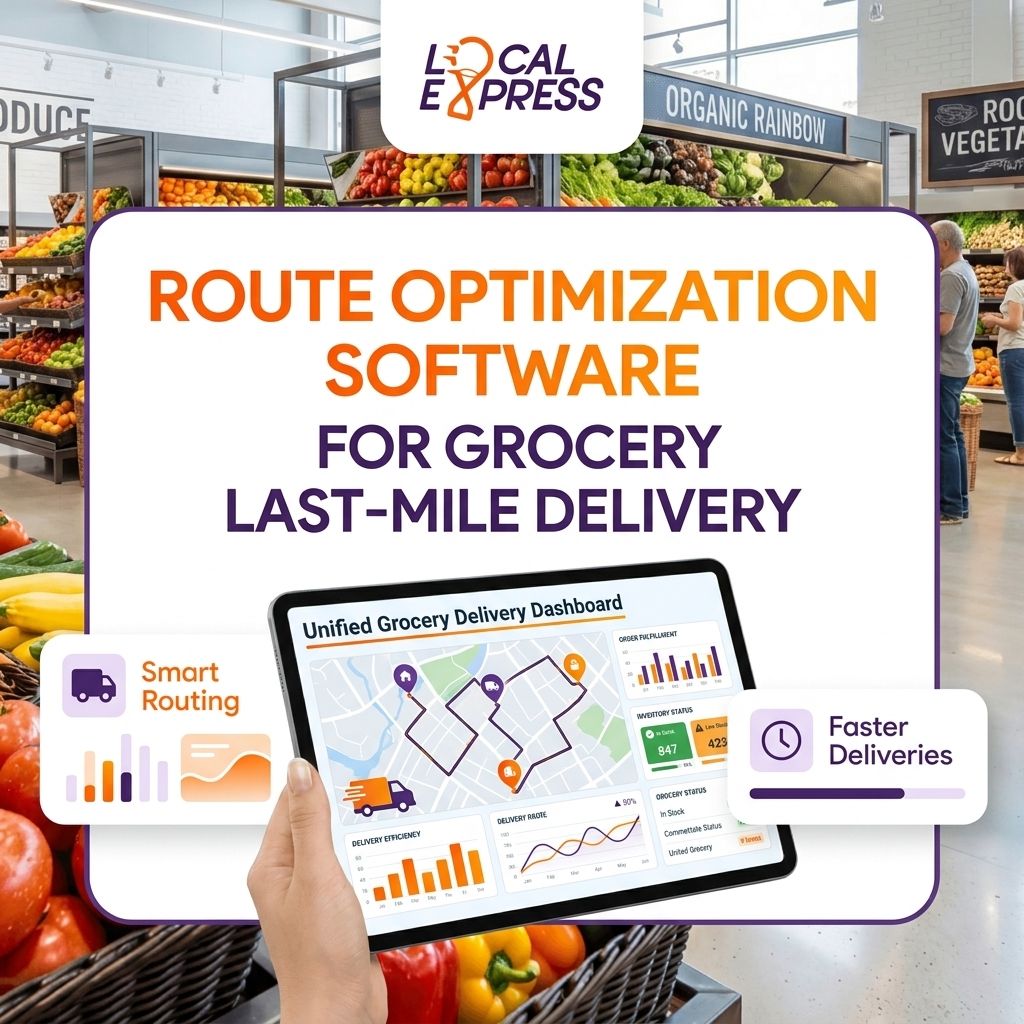
A dispatcher needs to see every active route, every delayed stop, and every driver location on one screen. Tools that require switching between a routing dashboard and a separate order system slow down the exact moment speed matters most: a stalled delivery on a hot afternoon in 2026.
Route delivery inside one platform
See how order management, driver dispatch, and routing work as one system.
Top picks: route optimization approaches for grocery delivery
The integrated pick: routing built into a unified delivery platform
This is routing that lives inside the same system running your online orders, inventory, and driver pay, instead of a bolt-on tool reading a CSV export. The spec that matters: one login, one data source, zero manual handoff between order intake and route assignment. For independent and regional grocers running their own fleet in 2026, this is the setup that scales without adding a dispatcher for every new store. Grocers evaluating driver management software built for independent retailers should start here. Verdict: Buy.
The add-on pick: standalone route optimization software
A dedicated routing tool layered on top of your existing POS or order system. The spec that matters: how it ingests order data, and whether that's an API connection or a manual export someone runs every morning. It can work for a single-store operation with a small fleet, but every added store multiplies the integration work. Verdict: Consider if you already have a solid order management system and only need routing logic added on top.
The hands-off pick: marketplace-managed delivery
Instacart, DoorDash, and similar marketplaces route the order for you using their own driver network and their own logic. The spec that matters: you don't see the route, you don't own the driver relationship, and you don't own the customer data generated by that delivery. It removes routing as a problem entirely, at the cost of the customer relationship the delivery itself creates. Verdict: Skip as a long-term strategy if you're trying to reduce dependency on third-party delivery marketplaces and keep repeat customers as your own.
The bootstrap pick: manual dispatch by text or spreadsheet
A dispatcher assigns stops by hand and texts drivers their route for the day. The spec that matters: this works below roughly a dozen daily routes and breaks down fast past that, because nobody is re-sequencing stops when a driver calls out or an order comes in late. Verdict: Skip once your fleet runs more than a handful of routes a day.
The scale pick: centralized routing for multi-store chains
Built for regional chains assigning orders across several fulfilling locations at once, with zone and fee rules set per store. The spec that matters: whether the tool understands store-level inventory and fulfillment, not just geography. Chains structuring delivery zones and fees across multiple locations need this layer before adding a fourth or fifth store to the delivery network. Verdict: Buy for any chain running delivery from more than two locations.
What to avoid
- Parcel-routing tools rebadged for grocery. They optimize for shortest distance, not for a 60-90 minute perishable delivery window, and that gap shows up as spoiled orders, not software bugs.
- Routing tools with no live re-sequencing. A route locked at the start of the day is already wrong by mid-morning once real orders start coming in.
- Any system that separates routing data from your order and driver pay data. Every handoff between systems is a place where a delivery slips through in 2026, and grocers rarely staff a role just to babysit that gap.
Verdict comparison
| Approach | Real-time re-routing | Multi-store logic | Owns customer data | Verdict |
|---|---|---|---|---|
| Integrated platform routing | Yes | Yes | Yes | Buy |
| Standalone add-on routing | Sometimes | Limited | Yes | Consider |
| Marketplace-managed delivery | Yes (theirs) | Yes (theirs) | No | Skip |
| Manual dispatch | No | No | Yes | Skip |
| Centralized multi-store routing | Yes | Yes | Yes | Buy (3+ stores) |
FAQ
What's the best route optimization software for grocery delivery?
For independent and regional grocers running their own fleet, routing built inside a unified order and delivery management platform is the strongest choice in 2026, because it removes the manual handoff between order intake and route assignment. Standalone routing tools work only if your existing order system connects to them without manual data entry.
Is route optimization software worth it for a single grocery store?
It's worth it once you're running more than a handful of delivery routes a day, since manual dispatch by text or spreadsheet breaks down past that volume. Below that volume, a simpler integrated system with basic routing still beats spreadsheets on driver reliability.
Can route optimization software handle multi-store grocery chains?
Yes, but only software built with store-level fulfillment logic, meaning it assigns each order to the nearest location that can fill it, not just the nearest point on a map. Chains running delivery from more than two stores should confirm this before signing a contract.
How is grocery route optimization different from parcel delivery routing?
Grocery routing has to protect a perishable delivery window, typically 60 to 90 minutes, while parcel routing optimizes purely for distance and fuel cost. A tool built for packages will route efficiently on paper and still deliver a warm or spoiled grocery order.
Does route optimization software integrate with delivery driver pay?
The strongest platforms tie routing directly to driver pay and tip visibility so dispatch can see who's getting the longest or lowest-paying routes. Systems that separate routing from pay data make it harder to catch unfair stacking until drivers start quitting.
Should grocers use Instacart or DoorDash instead of their own route optimization software?
Marketplace delivery removes routing as a problem but hands over the customer relationship and the delivery data to the marketplace. Grocers trying to build repeat online customers and reduce dependency on third-party delivery apps should route delivery on their own platform instead.
What size grocery fleet needs dedicated route optimization software?
Once dispatch is managing more than roughly a dozen delivery routes a day, manual assignment starts causing missed windows and uneven driver workloads. That's the point to move to software that re-sequences routes live rather than planning them once each morning.
How much does route optimization software cost for a grocery store?
Cost varies by whether routing is a standalone add-on tool or built into a broader order and delivery management platform, so check current pricing directly with the vendor. Bundled platforms often reduce total cost by eliminating the second system you'd otherwise pay for separately.
One last thing
The grocers who struggle most with route optimization software aren't the ones with the wrong routing algorithm, they're the ones running routing and order management as two disconnected systems. Fix that gap before shopping for a smarter algorithm, and most of the delivery-window problems independent grocers complain about in 2026 disappear on their own.