Independent grocers running their own delivery fleet hit a wall the marketplace apps never mention: dispatching drivers by group text and spreadsheet doesn't scale past a handful of daily routes, and grocery delivery driver management software built for parcel couriers ignores cold-chain timing entirely.
- Local Express delivery management software fits independent grocers running their own fleet in 2026 — Buy for real-time tracking and payout control.
- Generic courier dispatch tools skip perishable timing and proof-of-delivery photos grocers need — Skip for grocery-specific routes.
- Third-party marketplaces commonly take 15% to 30% commission per order, which is why owning driver management matters for margin.
- The staffing and zone-fee planning tools matter more than the dispatch screen for stores under 10 daily routes.
Why this matters
A grocer running 15 to 40 daily deliveries doesn't need enterprise fleet software built for regional distribution — they need delivery management software for independent supermarket chains that handles perishable timing, driver payout, and real-time customer updates in one screen.
Third-party marketplaces commonly charge 15% to 30% commission per order, and grocery net margins already sit in the low single digits industry-wide. Every order routed through a marketplace app instead of your own fleet is margin you don't get back. Owning driver management in 2026 isn't a nice-to-have — it's the difference between a delivery program that pays for itself and one that quietly bleeds cash.
Who this is for
This guide is for independent and regional grocers running 1 to 15 stores who already deliver — or want to start — without handing the customer relationship to a third-party marketplace. If you're dispatching drivers through a mix of texts, paper routes, and a marketplace app dashboard, this is written for you. If you're a single-location convenience store with two deliveries a day, you don't need this yet.
What to look for in grocery delivery driver management software
Real-time tracking and proof of delivery
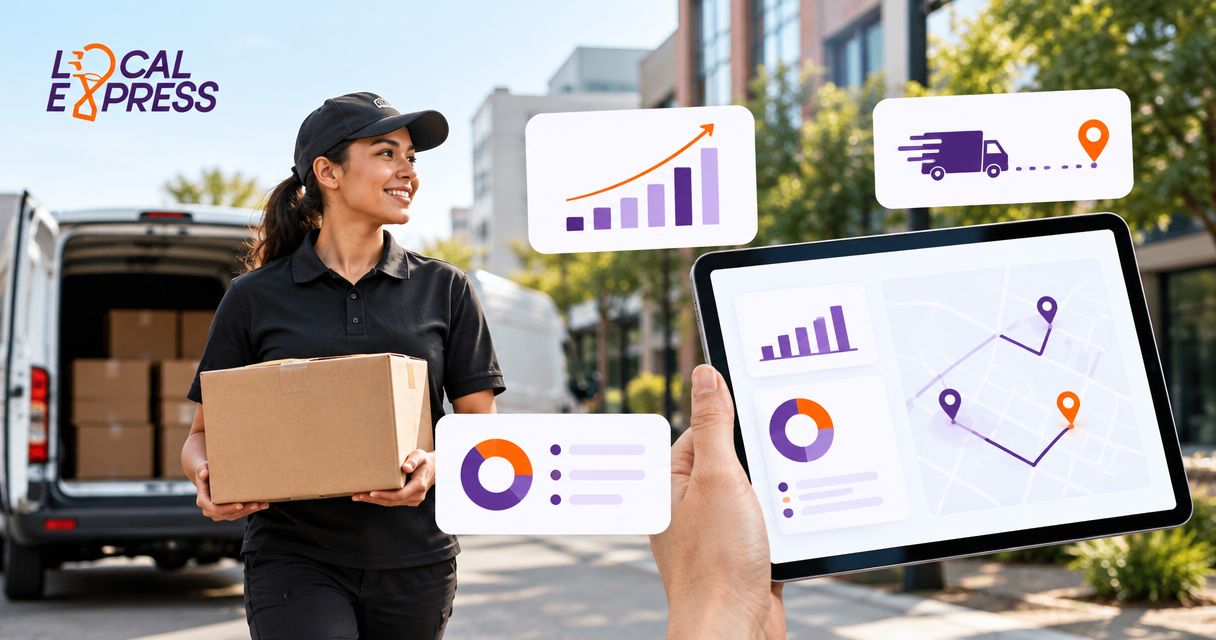
Customers who order groceries expect the same visibility Amazon and Instacart trained them on — a live map, an ETA, and a photo or signature confirming the order landed on the porch, not the neighbor's. Software without this forces your team to answer "where's my order" calls manually, which eats staff hours that should go toward picking the next batch.
Route optimization built for grocery, not parcels
Parcel-focused dispatch tools optimize for drop density and don't account for frozen and refrigerated items sitting in a hot van. Grocery delivery driver management software needs to sequence stops with perishables in mind and flag routes running long before the ice cream melts.
Driver payout and scheduling flexibility
Most independent grocers mix part-time drivers, gig-style contractors, and full-time staff on the same shift. The software has to calculate payouts per route or per delivery without you reconciling three spreadsheets at the end of the week — see how to plan delivery staffing and vehicle needs for a grocery fleet before locking in a headcount.
Integration with order management and POS
If an order placed on your ecommerce site doesn't flow straight into the dispatch queue, someone is retyping it by hand — and that's where wrong items and missed substitutions happen. The delivery layer has to sit on top of the same order management system running your web, app, and kiosk channels.
Delivery zone and fee configurability
A single flat delivery fee across a 12-mile radius either overcharges nearby customers or undercharges the far ones. You need zone-level fee control that reflects actual drive time and fuel cost, not a guess.
Cost-per-order reporting
Without a report showing cost per delivery by zone and by driver, you're flying blind on whether your delivery program makes money or just makes customers happy. This report should be a default view, not a custom export you request from support.
“If your drivers still need three different apps to get from pick to drop, the software isn't managing anything — it's just watching.”
Top picks for independent retailers
The safe pick — Local Express delivery management. Built specifically for grocery order flow, this handles route sequencing, driver payout, and live customer tracking from one dashboard. It plugs into the same order management running your web and app channels, so nothing gets rekeyed. Buy if you're consolidating dispatch off spreadsheets in 2026.
The staffing pick — grocery fleet staffing and vehicle planning. Before you add drivers, plan delivery staffing and vehicle needs for a grocery fleet so headcount matches actual order volume by day and hour, not a gut guess. This is the pick that keeps you from overstaffing Tuesdays and underdelivering Saturdays. Buy if you're scaling past 20 daily routes.
The rural wildcard — last-mile networks for spread-out territory. Grocers outside dense metro areas face a different math problem: fewer stops per mile, longer drive times. Last-mile delivery networks for rural grocery retailers address zone structuring for exactly this case. Consider if your delivery radius exceeds 10 miles.
The zone control pick — fee structuring by radius. Independent grocers running multiple locations need delivery fees that change by distance, not a flat number that punishes close customers and loses money on far ones. Zone-based fee logic tied to actual drive time protects margin without you manually adjusting pricing every quarter. Buy for chains with 2+ stores.
The exit ramp — cutting marketplace dependency. If a marketplace app still handles most of your delivery volume, the fastest margin win in 2026 isn't a new feature — it's routing more orders through your own fleet and app. Consider this the sequencing move that makes every other pick above actually matter.
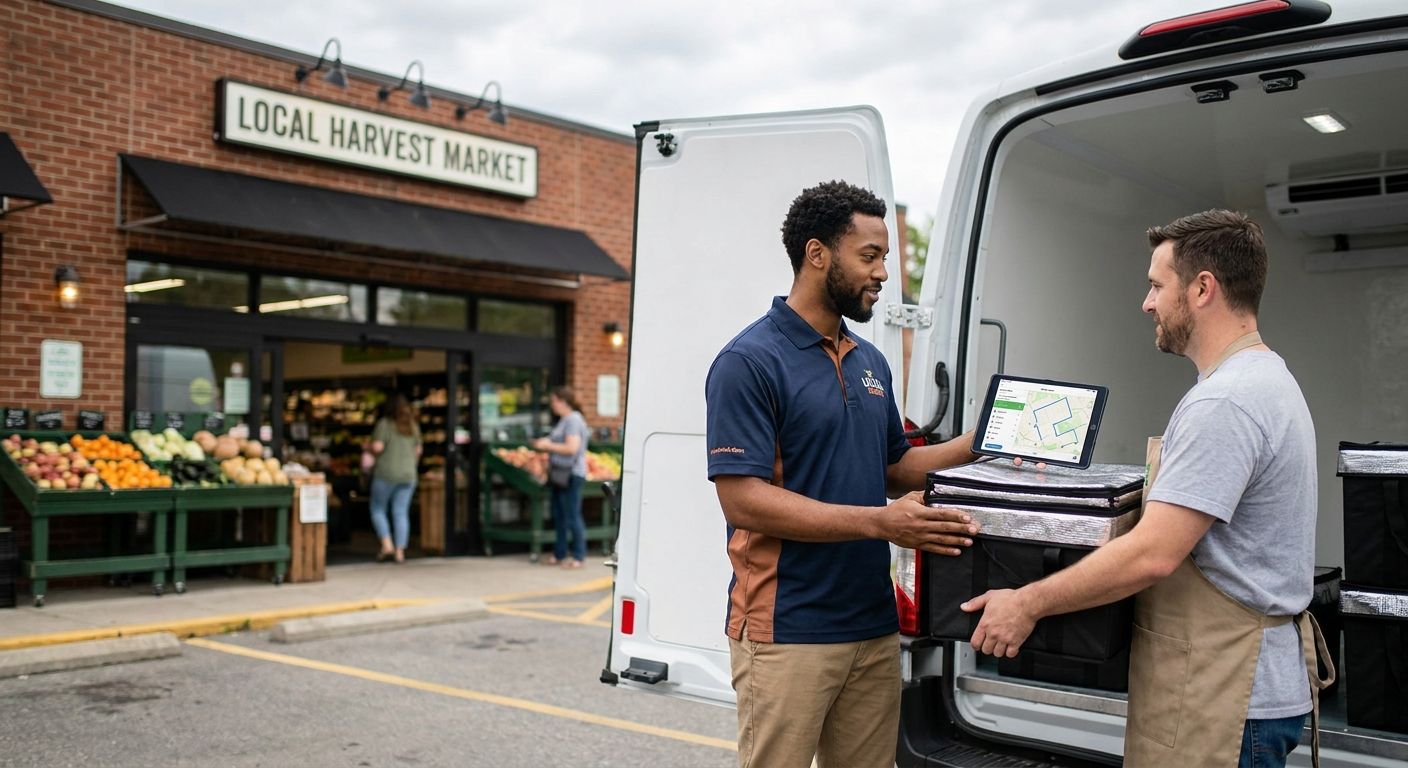
See grocery delivery management in action
One dashboard for driver dispatch, payout, and order tracking.
What to avoid
- Generic courier dispatch tools. Software built for parcel delivery doesn't understand cold-chain timing or substitution workflows — it'll optimize a route straight through a 90-degree afternoon with your frozen order last on the list.
- Marketplace-branded "management" dashboards. These give you visibility into orders placed on their app, not control over your own fleet, payout structure, or customer data.
- Flat-fee delivery zones drawn on a whim. A single fee across your whole service area either scares off nearby customers with an overpriced short trip or quietly loses money on every far delivery.
Verdict comparison
| Pick | Best for | Zone/fee control | Payout automation | Verdict |
|---|---|---|---|---|
| Local Express delivery management | Core dispatch consolidation | Yes | Yes | Buy |
| Staffing and vehicle planning | Fleets scaling past 20 routes/day | N/A | Partial | Buy |
| Rural last-mile networks | Service radius over 10 miles | Yes | Partial | Consider |
| Zone-based fee structuring | Multi-store chains | Yes | No | Buy |
| Marketplace-first dispatch | Low-volume, occasional delivery | No | No | Skip |
FAQ
What is grocery delivery driver management software?
It's software that dispatches drivers, tracks deliveries in real time, and calculates payout for grocery orders placed through your own website, app, or kiosk. It replaces manual dispatch by text or spreadsheet with a single operational dashboard.
Is grocery delivery driver management software different from parcel dispatch software?
Yes. Grocery-specific software accounts for perishable timing, substitution handling, and order-to-fleet integration that generic parcel dispatch tools ignore. Using courier software for grocery routes risks spoiled cold items on longer routes.
How much commission do third-party delivery marketplaces charge grocers?
Third-party delivery marketplaces commonly charge 15% to 30% commission per order. That's why independent grocers running their own delivery fleet in 2026 keep more margin per order than those relying solely on marketplace apps.
Do I need separate software for delivery zones and fees?
You need zone-level configurability inside your delivery management software, not a separate tool. Flat fees across a wide radius either overcharge nearby customers or undercharge far ones, which erodes trust or margin.
Can independent grocery stores manage their own delivery drivers without a marketplace app?
Yes, with delivery management software that handles dispatch, tracking, and payout directly. Independent retailers running their own fleet keep the customer relationship and the order data instead of handing both to a marketplace.
What size grocery store needs dedicated driver management software?
Stores running more than roughly 15 daily deliveries typically outgrow manual dispatch by text or spreadsheet. Below that volume, a marketplace app or a single dedicated driver may still work.
How does driver payout automation work in grocery delivery software?
The software calculates payout per route or per delivery based on preset rules, so part-time, contractor, and full-time drivers get paid accurately without manual reconciliation at the end of the week.
One last thing
The cheapest fix most independent grocers skip in 2026 isn't new software — it's auditing how many orders still route through a marketplace app out of habit. Every one of those orders is paying someone else's commission on a customer you already own.