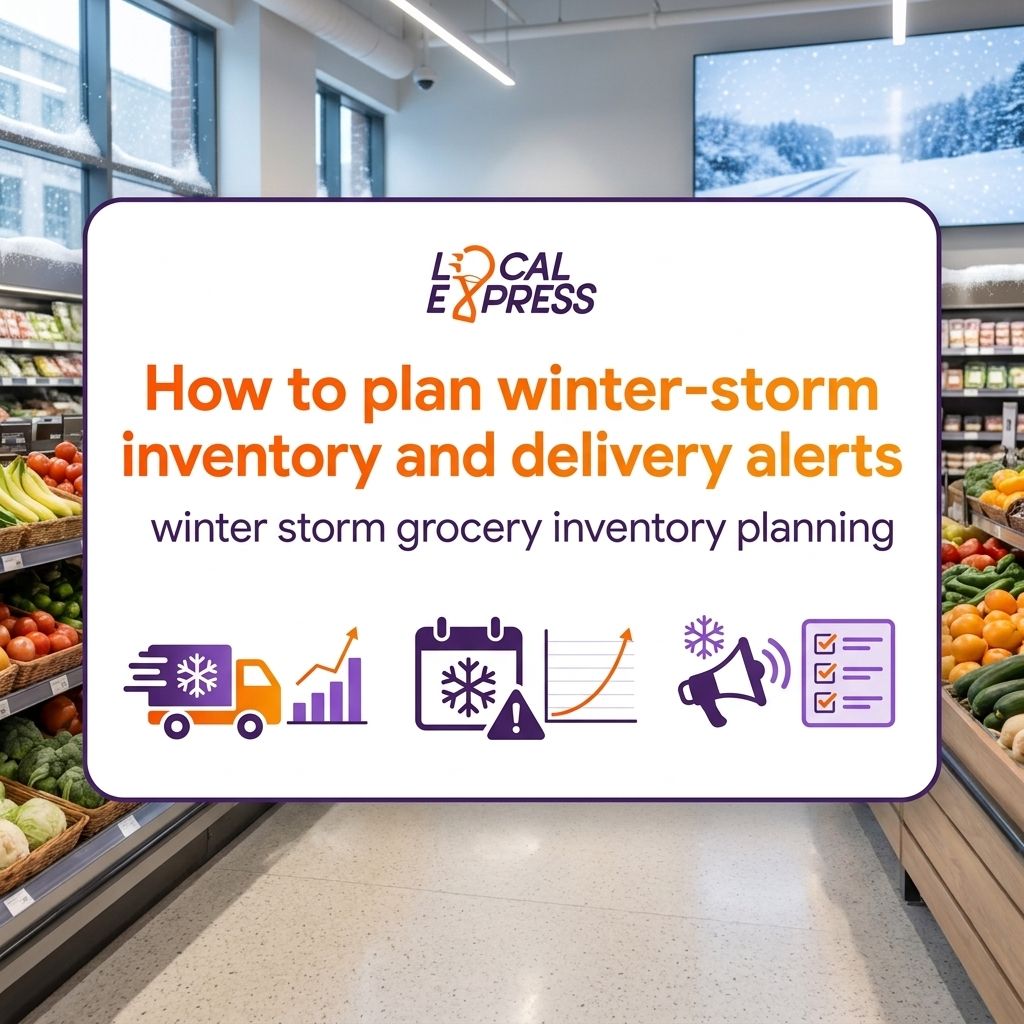
Winter storm grocery inventory planning means locking a storm SKU list, setting automated reorder triggers, and pushing delivery-zone alerts to customers 48 to 72 hours before a system hits — not the morning the first flakes fall. The number that gets skipped: staffing and route freezes need the same lead time as inventory, or a fully stocked store still can't get orders out the door.
- Winter storm grocery inventory planning starts 48-72 hours out with a locked storm SKU list and automated reorder triggers, not day-of scrambling.
- Local Express retailers push delivery-zone closures and delay alerts through one branded app and SMS workflow instead of five disconnected tools.
- Milk, bread, eggs, bottled water, salt, and pet food are the first categories to strip off shelves before a winter storm hits.
- A 12-24 hour NWS Winter Storm Warning window leaves almost no time to build a plan from scratch heading into 2026.
Why this matters
A winter storm doesn't just spike demand — it compresses the whole ordering-to-delivery cycle into a window most stores aren't staffed for. Shelves clear out on staple categories in hours, delivery routes hit road closures the store didn't plan around, and customers who can't get through on the phone go looking for another option.
Stores running an AI inventory replenishment workflow catch the demand curve before the shelf empties, because reorder points adjust automatically instead of waiting for a manager to notice. The stores that lose the least ground during a storm event are the ones that treat storm prep as a standing seasonal process, built well before the first watch is issued, not a scramble triggered by a weather alert.
How to plan winter-storm inventory and delivery alerts
Run these steps in order, starting no later than early November for the 2026 winter season:
- Build a storm SKU list. Pull the 30-50 items that always move first: water, milk, bread, eggs, canned goods, batteries, salt, and pet food. Tag them in your system so they're visible in one filtered view.
- Set higher reorder triggers on storm SKUs. Raise the reorder point and pack-out target for that list only, so the system flags a reorder before the shelf hits zero instead of after.
- Confirm supplier lead times ahead of the season. Ask distributors what fill rates look like during regional weather events, not during a normal week.
- Map delivery zones against storm risk. Flag rural routes, hill roads, and low-priority zones that get paused first when conditions turn.
- Draft alert templates before you need them. Write the closure, delay, and substitution messages now, so the only thing left to do during the event is hit send.
- Set a storm-day staffing and route-freeze plan. Decide in advance who calls the freeze, what triggers it, and how drivers get notified.
- Assign alert triggers to storm stages. Watch, Warning, and Emergency each get a different message and a different action.
Retailers running a multi-location inventory sync can shift stock between stores mid-storm instead of one location running dry while another sits fully stocked.
48 hours out: lock the storm SKU list and push the first alert
At the 48-hour mark, a Winter Storm Watch is typically already in effect. This is when the storm SKU list gets locked, reorder triggers activate, and the first customer-facing alert goes out: expect higher demand, expect possible delivery delays.
Send this alert through app push and SMS at the same time. A single-channel alert misses the customers who don't have notifications turned on.
12-24 hours out: freeze substitutions and confirm delivery zones
A Winter Storm Warning typically lands in this window. Freeze substitution rules on storm SKUs so out-of-stock items don't get swapped for something a customer didn't want during a high-anxiety shopping moment. Confirm which delivery zones are still active and which get paused.
This is also the point to push a second, more specific alert: named closures, confirmed delivery cutoff times, and any change to pickup hours.
Day-of: pause routes and confirm store status
Once conditions turn dangerous, pause routes rather than pushing drivers out on ice. Send a final alert confirming store hours, delivery status, and pickup availability. Retailers who plan delivery staffing and vehicle needs ahead of the season already know which drivers are on call and which routes get cut first, so this decision takes minutes instead of a scramble.
Build your 2026 storm playbook
See how Local Express automates storm reorder triggers and alerts.
Why storm demand surges vary
Not every storm hits inventory the same way. A handful of factors drive how hard a store gets squeezed:
- Storm category and duration. A two-day system pulls less demand than a multi-day event with a follow-up cold snap.
- Day of week the storm lands. A Friday storm compresses weekend shopping into a single panic-buy window; a midweek storm spreads it out.
- Time since the last resupply truck. A store two days from its next delivery starts the event already thin on staples.
- Regional storm experience. Areas that see winter storms every year restock faster than regions where a storm is a rare event and demand spikes harder.
- SNAP/EBT benefit issuance timing. When benefit disbursement dates overlap with a storm window, SNAP/EBT online ordering volume can spike alongside general storm demand.
- Alert reach. Stores that can only reach customers by phone or in-store signage lose time compared to stores pushing alerts through app and SMS at once.
“The store that sends the delivery-delay alert before the parking lot fills up keeps the customer next storm too.”
What should be on a winter storm grocery shopping list?
A winter storm grocery list is dominated by non-perishable staples: bottled water, milk, bread, eggs, canned soup, batteries, salt, and pet food consistently move first. Retailers that tag these SKUs for higher reorder triggers ahead of the 2026 winter season avoid the worst of the shelf gaps.
How much warning do grocery stores get before a winter storm?
Most grocery stores get roughly 48 hours of warning from a Winter Storm Watch, followed by a 12-24 hour Winter Storm Warning window as the event gets closer. That timeline is tight enough that a storm SKU list and alert templates need to already exist before the Watch is issued, not after.
How do you alert customers about grocery delivery delays during a storm?
Customers get storm delivery alerts fastest through app push notifications and SMS sent at the same time, not through phone calls or in-store signage alone. Stores using push notification and SMS tools built into their own branded app can send a single alert that reaches both channels instead of managing them separately.
FAQ
What is winter storm grocery inventory planning?
Winter storm grocery inventory planning is the process of locking a storm SKU list, raising reorder triggers on those items, and preparing delivery alerts before a storm hits. It runs on a set lead time, typically starting at the 48-hour Watch stage, rather than reacting once shelves are already empty.
How far in advance should a grocery store prepare for a winter storm?
A grocery store should have its storm SKU list and alert templates built at least 48 hours before a storm, matching the typical NWS Winter Storm Watch lead time. Waiting for the Warning stage, which can arrive with only 12-24 hours notice, leaves too little time to react.
What grocery items sell out first before a winter storm?
Bottled water, milk, bread, eggs, canned goods, batteries, salt, and pet food sell out first before a winter storm. These categories should carry higher reorder triggers year-round during winter months, not just when a storm is forecast.
Should grocery delivery routes pause during a winter storm?
Yes, grocery delivery routes should pause once road conditions turn dangerous, with rural and hill routes typically paused first. A pre-set route-freeze plan means the decision takes minutes instead of a live debate during the event.
How do independent grocers compete with Amazon Fresh during a storm?
Independent grocers compete during a storm by moving faster on local alerts and staying stocked on the categories big platforms can't restock as quickly at the neighborhood level. A first-party app and delivery setup, not a marketplace listing, is what makes fast local alerts possible.
Can small grocery stores automate storm inventory alerts?
Yes, small grocery stores can automate storm inventory alerts by tagging storm SKUs in their ordering system and setting reorder triggers that fire without manual review. This removes the dependency on a manager remembering to check stock during a high-stress event.
Does SNAP/EBT ordering change during a winter storm?
SNAP/EBT ordering volume can spike during a winter storm, especially if the storm window overlaps with a benefit disbursement date. Stores offering SNAP/EBT online ordering should expect that overlap and staff order fulfillment accordingly.
One last thing
The stores that come out of a winter storm looking good aren't the ones with the biggest storm SKU list — they're the ones whose alert templates already existed before the Watch was issued. Writing the closure and delay messages in November, instead of during a live event in 2026, is the single cheapest thing on this list and the one most stores skip.