Grocery ecommerce refunds don't work like apparel returns: there's no box to ship back, just a bruised avocado, a missing item, or a driver who left the bag on the wrong porch. This guide ranks the returns and refund management tools that actually fit that workflow for U.S. regional and independent grocers in 2026.
- Local Express Order Management wins for grocers tracking refunds across web, app, kiosk, and delivery orders in 2026.
- Card payment terminals post the fastest refunds for in-lane transactions but see nothing placed online.
- SNAP EBT refunds must return to the EBT card by federal rule — never as store credit.
- Delivery driver management software catches missing or damaged items before the customer has to call in.
Why this matters
A grocery refund is rarely about the customer changing their mind — it's a damaged bag of spinach, a substituted brand, an item the picker missed, or a SNAP EBT order that needs special handling. Federal rule requires SNAP benefits to be refunded back to the EBT card, never converted to store credit, which rules out generic returns software built for retail and apparel.
Perishable food adds its own clock. USDA guidance treats 2 hours at room temperature (4 hours if it's actually warm outside) as the point where refrigerated groceries need to be tossed, not restocked — a refund decision, not a returns process. More than 40 million Americans use SNAP monthly, and any grocer running SNAP EBT online ordering needs a refund tool that respects that rule automatically instead of relying on a cashier to remember it at the register.
Most returns and refund management software on the market was built for warehouses handling boxes coming back by mail. Grocery needs something that tracks refund status across web, app, kiosk, and delivery orders in one place, because a single grocer might issue that refund from three different channels in the same week — and reconcile all three by hand if the tools don't talk to each other.
Best returns and refund management tools for grocery ecommerce in 2026 — the verdict
Best overall: Local Express Order Management, for grocers who need refund status tracked across web, app, kiosk, and delivery orders in one system. Best for in-store refunds: card payment terminal tools built for grocery checkout lanes. Best for delivery discrepancies: delivery driver management software that flags missing or damaged items at the door before the customer calls in.
What makes the best returns and refund management setup
- Channel coverage — tracks refund status across web, app, kiosk, pickup, and delivery instead of one channel at a time
- SNAP/EBT compliance — routes EBT refunds back to the EBT card automatically, never to store credit or cash
- Refund speed to original payment method — posts the reversal fast enough that the customer doesn't reorder out of doubt
- POS and payment terminal integration — doesn't require manual reconciliation between the register and the ecommerce order record
- Damage and substitution reason tracking — captures why the refund happened, not just that it happened
- Low operational overhead — doesn't require running three disconnected tools to cover web, in-store, and delivery refunds
Returns and refund management tools at a glance
| Tool category | Best for | Standout feature | Key limitation |
|---|---|---|---|
| Local Express Order Management | Unifying refunds across every channel | One dashboard for web, app, kiosk, and delivery orders | Refund settlement speed still depends on your payment processor |
| Card payment terminal tools | In-store card refunds | Fast partial and full refunds at the register | No visibility into online or delivery order refunds |
| Loyalty and store credit integration | Turning small refunds into repeat visits | Refund posts as credit tied to the loyalty account | Cannot be used for SNAP EBT refunds by federal rule |
| Delivery driver management software | Catching delivery discrepancies at the door | Drivers log missing or damaged items in real time | Doesn't process the refund itself, just the trigger |
| Marketplace order sync tools | Grocers still selling through marketplaces | Prevents double-refunding the same order | Marketplace controls the refund policy and timing |
| Cash management software | Reconciling cash refunds at the register | Catches till shortages tied to unrecorded cash refunds | No connection to online, app, or delivery refunds |
Each item below owns a distinct job in the refund workflow — none of them compete for the same slot, because grocery refunds rarely come from just one place.
1. Local Express Order Management: best returns and refund tool for unifying every channel
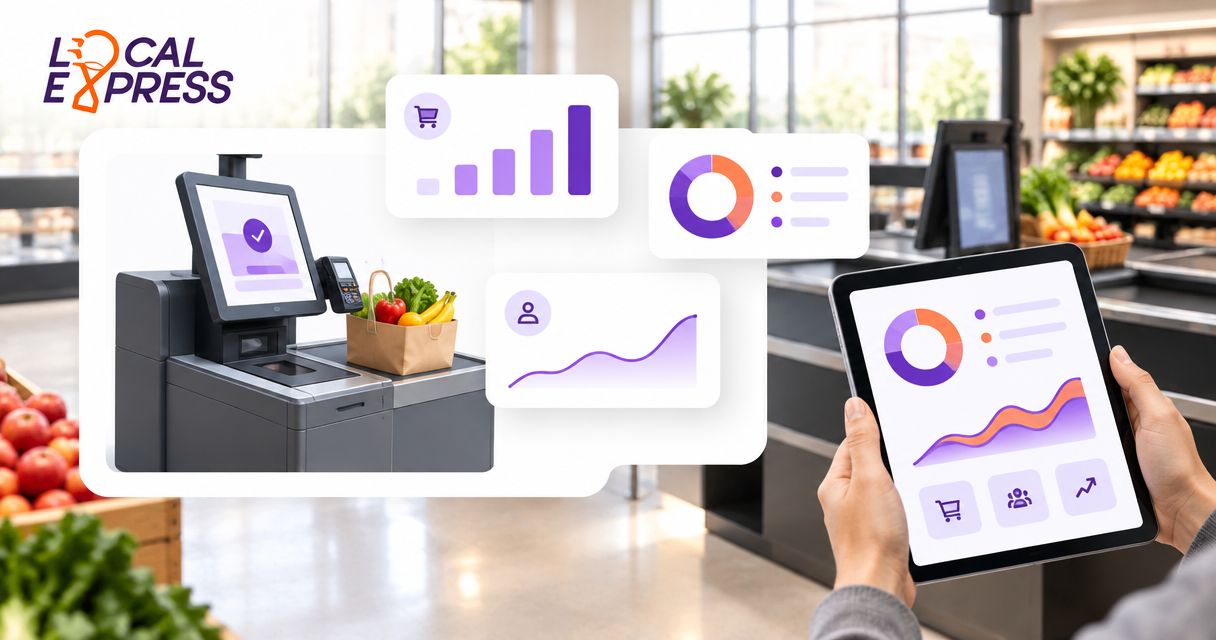
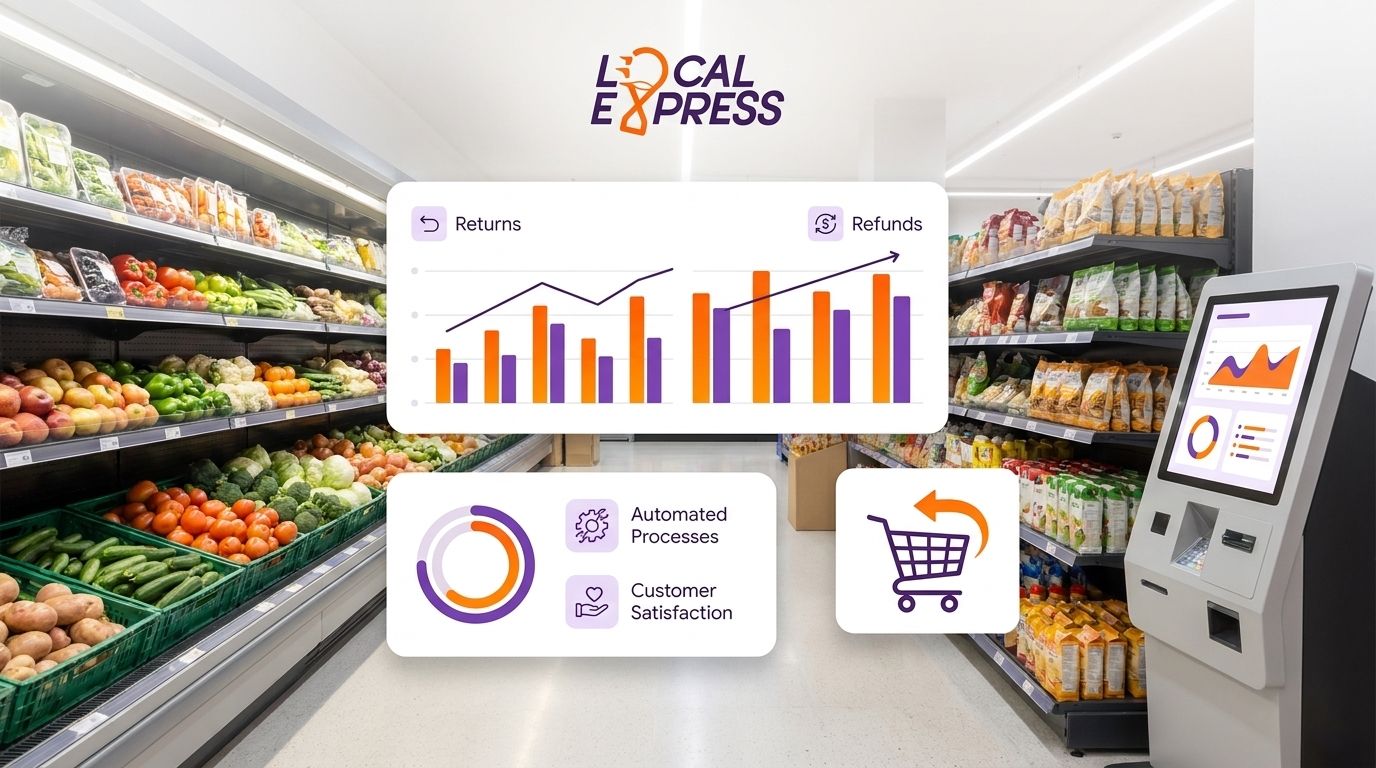
Local Express Order Management gives regional and independent grocers one place to see refund and order status across web, app, self-service kiosk, and delivery orders, instead of checking four systems to answer one customer's question. It's built around grocery order flows — substitutions, missed items, SNAP EBT orders — rather than adapted from a general retail returns platform. A grocer running its own branded app and website in 2026 uses this as the record of what was ordered, what was refunded, and why.
Local Express Order Management pros:
- One dashboard for refund status across every channel a grocer sells through
- Cuts the risk of double-refunding an order that touched both a kiosk and the app
- Built around grocery order flows, not warehouse return labels
- Works alongside SNAP EBT online ordering setup, so EBT refunds route correctly
Local Express Order Management cons:
- Full benefit requires running order management on the platform, not bolting refunds onto a separate ecommerce stack
- No public-facing return label flow — grocery rarely needs one, but it's a gap if you expect it
- Refund posting speed is still bound by your payment processor's settlement timeline
Best for: grocers unifying web, app, kiosk, and delivery ordering who want refund status in one place instead of four. Verdict: Buy — if channels are already unified, refund tracking belongs here too.
2. Card Payment Terminal Refund Tools: best for in-store checkout refunds
Card terminals built for grocery checkout lanes handle refunds the way a cashier expects: swipe, tap, or insert, reverse the charge, done. That means partial refunds on a multi-item basket without voiding the whole ticket, which matters when the disputed item is one yogurt in a $60 order.
Card payment terminal pros:
- Refund posts back to the original card in the same transaction, no separate system
- Handles partial refunds on a basket with multiple items
- Works independent of whatever ecommerce platform runs the online store
- PCI compliance is handled by the terminal vendor, not the grocer
Card payment terminal cons:
- Zero visibility into refund status for delivery or pickup orders
- Refund reason isn't tied to inventory, damage, or substitution data
- Still needs manual reconciliation against the ecommerce order record
Best for: refunds issued at the register while the customer is standing at checkout. Verdict: Buy — pair it with order management for anything that isn't an in-lane transaction.
3. Loyalty and Store Credit Integration: best for converting refunds into repeat visits
Loyalty-linked refund tools turn a refund into store credit or points instead of a card reversal — useful when the dollar amount is small and the goal is to keep the customer coming back rather than send cash back to their bank. It works best as a customer-facing choice at the moment a refund is issued, not a forced default.
Loyalty and store credit pros:
- Keeps the refunded amount inside the store instead of sending it back to a bank
- Ties refund history to the same account as loyalty points
- Works well for small-dollar issues like one missing item in an order
- Gives the grocer a reason to follow up with a credit-triggered offer
Loyalty and store credit cons:
- Cannot be used for SNAP EBT refunds — federal rule requires those to return to the EBT card
- Customers expecting a card reversal may push back on credit-only handling
- Needs a clear published policy on when credit applies versus a card refund
Best for: converting small, frequent refunds into repeat visits instead of chargebacks. Verdict: Hold — offer it as a choice, not the default, especially on EBT orders.
4. Delivery Driver Management Software: best for catching delivery discrepancies at the door
Delivery driver management software gives drivers a structured way to flag a missing item, a damaged bag, or a substitution at the moment of drop-off, instead of waiting for the customer to call three hours later. That flag becomes the trigger for the refund, timestamped and tied to the actual order — which matters when a customer disputes what actually showed up.
Delivery driver management pros:
- Catches the refund trigger at the door instead of waiting for a complaint
- Timestamps discrepancies, which helps resolve disputes over what was actually delivered
- Gives drivers a consistent way to log substitutions instead of a text message to the store
- Reduces the back-and-forth between customer service and the driver after the fact
Delivery driver management cons:
- Only covers delivery orders — pickup and in-store refunds need a separate path
- Requires driver training to use consistently, especially with gig or seasonal staff
- Logs the issue but doesn't process the refund itself
Best for: grocers running their own last-mile delivery who want discrepancies caught before the customer complains. Verdict: Buy — for any grocer running delivery, this closes the gap card terminals and order management leave open.
5. Marketplace Order Sync Tools: best for grocers still selling through marketplaces
Grocers who still take a share of orders through outside marketplaces need a way to sync refund status back into their own inventory and order records, or they end up refunding — or restocking — the same order twice. This is a coverage tool, not a strategy.
Marketplace order sync pros:
- Prevents double-refunding an order already resolved on the marketplace side
- Keeps inventory counts accurate after a marketplace-issued refund
- Gives a single view of refund volume even when orders come from outside channels
Marketplace order sync cons:
- The marketplace controls refund policy and timing, not the grocer
- Adds a sync dependency that breaks if the marketplace changes its rules
- Doesn't reduce the underlying reliance on marketplaces for refund decisions
Best for: grocers with a meaningful share of marketplace orders who aren't ready to move off them yet. Verdict: Wait — treat it as a bridge while shifting volume to your own app and site, not a long-term fix.
6. Cash Management Software: best for reconciling cash refunds at the register
Independent stores with real cash-paying traffic need a way to catch till shortages tied to refunds paid out in cash, since card systems never see that transaction at all.
Cash management software pros:
- Catches till shortages tied to unrecorded cash refunds
- Creates a paper trail for cash-back refunds card systems can't track
- Useful in stores where a meaningful share of customers still pay cash
Cash management software cons:
- Doesn't touch online, app, or delivery refunds at all
- Manual entry is still required at most independent stores
- No connection to SNAP EBT online ordering flows
Best for: independent stores with meaningful cash refund volume at the register. Verdict: Hold — necessary if cash refunds are common, irrelevant if most of your volume is digital.
See order management in one dashboard
Track refunds across web, app, kiosk, and delivery in one place.
How we ranked
The order above reflects how many grocery-specific refund scenarios each tool actually covers — SNAP EBT compliance, channel coverage, and speed back to the original payment method — not brand recognition. Local Express Order Management ranks first because it's the only category here built to track a refund from the moment it's issued to the moment it posts, across every channel a grocer sells through. The rest solve one piece of the problem well and leave the other channels for someone to reconcile by hand.
Which returns and refund tool should you choose in 2026?
If you're running or planning a branded app, website, and self-checkout kiosk, Local Express Order Management is the default — it's the only option here that tracks a refund from issue to post regardless of which channel the order came through. Layer card payment terminal refunds on top for in-lane transactions, and add delivery driver management software the day you launch your own delivery fleet. Marketplace sync and cash management software stay useful, but treat them as coverage for the channels you haven't consolidated yet, not the foundation of your refund process.
“If a refund takes longer to confirm than the delivery itself, the customer reorders instead of waiting, and now there are two refunds to issue.”
FAQ
What's the best returns and refund management tool for grocery ecommerce in 2026?
Local Express Order Management is the best overall pick for regional and independent grocers because it tracks refund status across web, app, kiosk, and delivery orders in one system. Pair it with card terminal refunds for in-store transactions and delivery driver management software once you run your own fleet.
Can a grocery ecommerce refund go back to a SNAP EBT card?
Yes, federal rule requires SNAP EBT refunds to return to the same EBT card used for the purchase, never as store credit or cash. Any online ordering platform handling SNAP EBT needs to route that refund automatically.
How do grocers handle refunds for damaged or missing perishable items?
Most grocers issue an immediate refund or credit for damaged or missing perishable items rather than requesting the item back, since USDA guidance treats food left at room temperature for more than 2 hours (4 in hot weather) as unsafe to restock. A driver flag or customer service ticket usually triggers that refund.
Do I need separate tools for delivery, pickup, and in-store refunds?
Not if your order management system already covers all three, which is the main advantage of a unified platform over stitching together a card terminal, a delivery app, and a spreadsheet. Grocers running disconnected tools end up reconciling refunds by hand across all of them.
How fast should a grocery refund post back to a customer's card?
Fast enough that the customer doesn't reorder out of doubt. Most card networks post the reversal within a few business days once issued, but the confirmation to the customer should be immediate.
Is dedicated returns software built for general retail worth using for grocery ecommerce?
Generally no, since returns software built for apparel and general retail assumes items get shipped back, which almost never happens with groceries. Grocery refunds run on damage, substitution, and missing-item logic instead, which is why order management built for grocery outperforms generic returns platforms.
Can card payment terminals process partial refunds?
Yes, most terminals built for grocery checkout lanes can reverse part of a transaction without voiding the entire ticket, which matters for multi-item baskets. They don't track refund status for orders placed online, though.
What's the difference between a refund and store credit for a grocery order?
A refund reverses the charge back to the original payment method, while store credit keeps the value inside the store for a future purchase. Store credit works for card and cash orders but cannot replace a refund on a SNAP EBT transaction by federal rule.
One last thing
The fastest-growing refund complaint in 2026 isn't a wrong item — it's a refund that never gets confirmed. Send a same-channel confirmation (app push, SMS, or receipt) the moment the credit posts, or the customer assumes it didn't happen and reorders anyway, which means issuing a second refund on top of the first.