Independent and regional grocery retailers across Africa are losing repeat customers to delivery aggregators and supermarket chains that already own the app on the shopper's home screen — this guide breaks down what a mobile app for African grocery stores actually needs to do in 2026, and which build path gets you there without burning a year of runway.
- A grocery-specific white-label platform like Local Express launches a branded app faster than in-house builds, which typically run 6-12 months.
- Mobile money support and offline-tolerant checkout are non-negotiable for African grocery ecommerce in 2026.
- Generic app builders skip delivery routing and MTO kiosk ordering — fine for single-location shops, a dead end for anyone scaling delivery.
- The strongest mobile app for African grocery stores bundles ordering, delivery, and retail media in one back office, not three disconnected tools.
Why this matters
A grocery retailer without its own app is renting its customer relationship from Glovo, Jumia, or whichever aggregator dominates the local market. Every order routed through a third-party app hands over the shopper's data, the margin on that basket, and the next repeat purchase.
A branded mobile app flips that. The retailer owns the checkout, the loyalty data, and the promotion slots that would otherwise go to an aggregator's ad inventory. In 2026, that ownership question is the difference between a grocer that competes on price alone and one that competes on relationship.
Local Express builds exactly this: white-labelled grocery ecommerce sites and branded mobile apps for independent and regional grocers, paired with order management, last-mile delivery, and retail media tools under one roof.
Who this is for
This guide is for independent and regional grocery, supermarket, and specialty food retailers across Africa — one location or fifty — competing against chains and delivery aggregators that already have branded apps. If shoppers currently order through a third-party marketplace app instead of yours, or you're running WhatsApp orders manually, this is the buyer profile the rest of this guide addresses.
What to look for in a mobile app for African grocery stores
Branding and white-label control
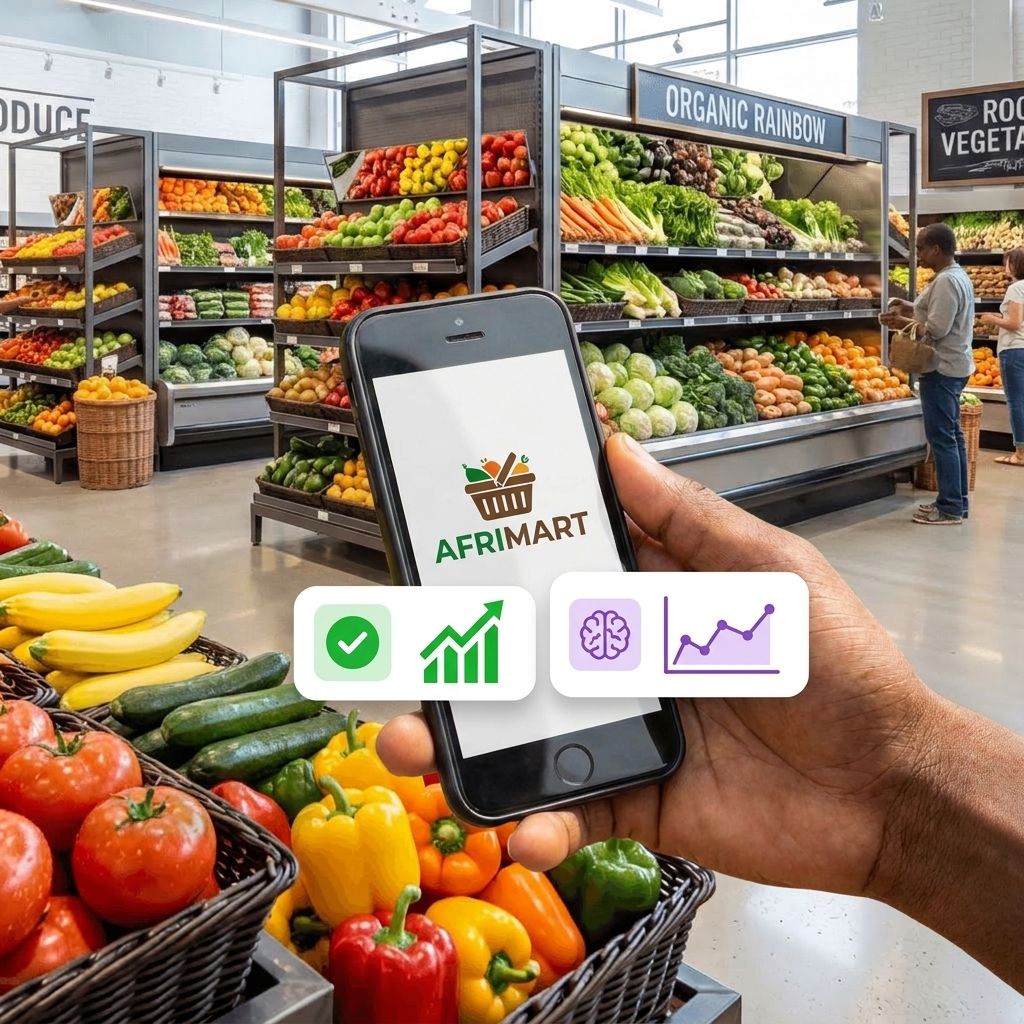
The app needs to look and feel like your store, not a generic template with your logo pasted on the splash screen. Shoppers trust a store app more when it matches the physical store and the packaging they already recognize — a mismatched or clearly templated app erodes that trust fast.
Mobile money and low-bandwidth checkout
Most African grocery shoppers pay through mobile money, not cards, and connectivity is inconsistent outside major metros. An app that assumes card-only checkout and high-bandwidth image loading will lose carts before payment even starts.
Multi-channel fulfillment in one app
Delivery, in-store pickup, and made-to-order prepared food through self-service kiosks all need to live inside the same ordering flow. A grocer running delivery through one system and prepared-food kiosk orders through another is managing two inventories and two sets of customer data for no reason.
Order and inventory sync with the back office
An app that doesn't sync in real time with store inventory sells items that are already out of stock, which is the fastest way to lose a repeat customer. The app and the back office need to be the same system, not two systems bridged by manual updates.
Retail media and margin protection
Grocery margins are thin. An app with retail media tools — sponsored placements, promoted categories, supplier-funded banners — turns app real estate into a margin line instead of a cost center.
Launch speed and total cost of ownership
Time matters more than most retailers assume. Every month spent building an app in-house is a month an aggregator keeps the customer relationship. The total cost isn't just the build — it's ongoing maintenance, app store updates, and support.
Three paths to a branded grocery app — and the verdict on each
Build in-house — the expensive gamble. A custom app built by an in-house or contracted dev team typically takes 6-12 months to reach a stable, store-ready state, and that's before ongoing maintenance and app-store compliance updates. For a single-location or small regional grocer, this ties up capital and staff time for a year with no guarantee the result handles mobile money, offline checkout, or kiosk integration correctly on day one. Skip this path unless you already run an in-house engineering team with grocery ecommerce experience.
Generic app builder or template — the shortcut that breaks at checkout. Off-the-shelf ecommerce app builders get a basic storefront live quickly, but most are built for general retail, not grocery. They rarely handle perishable inventory, delivery zone routing, or MTO prepared food ordering through kiosks — features grocery shoppers expect by 2026. Consider this only if you're a single location with no delivery ambitions and no prepared food counter.
Grocery-specific white-label platform — the fastest path to a branded app. A platform built specifically for grocery, supermarket, and specialty food retailers bundles the branded app, ecommerce site, order management, last-mile delivery, and retail media tools into one back office from day one. Local Express takes this approach, giving regional and independent grocers a fully branded app without the 6-12 month in-house build cycle. Buy this path if you're competing against chains or aggregators and need to launch in 2026, not 2027.
See the Local Express grocery app platform
Branded app, delivery, and retail media in one back office.
What to avoid
- A card-only checkout flow. If the app doesn't support mobile money as a first-class payment option, you're building for a shopper who doesn't exist in most African grocery markets.
- An app disconnected from your delivery fleet. An app that takes orders but hands off delivery to a separate, unintegrated system creates delays and double data entry that show up as late deliveries and wrong items.
- A template that can't handle prepared food. If you run a hot food counter or self-service kiosk and the app can't route MTO orders, you'll end up running two separate ordering systems for one store.
Path comparison
| Criteria | Build In-House | Generic App Builder | Grocery-Specific White-Label |
|---|---|---|---|
| Branding control | Full, but slow | Limited, template-based | Full, purpose-built |
| Typical launch time | 6-12 months | Weeks | Weeks |
| Mobile money & offline checkout | Depends on dev team | Rarely built-in | Built for the market |
| Delivery & kiosk integration | Custom-built, costly | Usually absent | Included |
| Retail media / margin tools | Custom-built, costly | Usually absent | Included |
| Verdict | Skip | Consider (single location only) | Buy |
FAQ
What is the best mobile app option for African grocery stores in 2026?
A grocery-specific white-label platform is the fastest and most reliable option in 2026 because it bundles branded app, delivery, and inventory sync instead of requiring a custom build. In-house builds typically take 6-12 months and generic app builders lack grocery-specific features like MTO kiosk ordering.
Do grocery apps in Africa need mobile money support?
Yes, mobile money is the primary payment method for most African grocery shoppers, so an app without it will lose carts at checkout. Card-only checkout flows are built for a market that doesn't reflect how most shoppers pay.
How long does it take to build a branded grocery app in-house?
An in-house build typically takes 6-12 months to reach a stable, store-ready state, not counting ongoing maintenance and app store compliance updates. That timeline is the main reason most independent grocers choose a white-label platform instead.
Can one app handle delivery, pickup, and prepared food orders together?
Yes, a grocery-specific platform routes delivery, pickup, and made-to-order prepared food through self-service kiosks inside one ordering flow. Running these as separate systems creates duplicate inventory and customer data that's harder to manage as you scale.
Is a white-label grocery app better than a generic app builder?
For any grocer running delivery or a prepared food counter, yes — generic app builders are built for general retail and typically skip delivery routing, perishable inventory handling, and kiosk ordering. A white-label grocery platform is built for those features from day one.
What features protect margin in a grocery mobile app?
Retail media tools — sponsored placements, promoted categories, and supplier-funded banners — turn app screen space into a margin line rather than a cost center. Without these tools, the app is a pure cost with no revenue offset.
Does inventory need to sync in real time with the app?
Yes, real-time sync between the app and store inventory prevents selling out-of-stock items, which is one of the fastest ways to lose a repeat customer. An app and back office running as separate systems almost always drifts out of sync.
Who should skip building a custom grocery app in 2026?
Any independent or regional grocer without an in-house engineering team experienced in grocery ecommerce should skip the custom build path in 2026. The 6-12 month timeline and ongoing maintenance cost outweigh the branding control it offers.
One last thing
The grocers losing the most margin to aggregators in 2026 aren't the ones without an app — they're the ones running an app that can't take mobile money or handle a prepared food kiosk order, so shoppers quietly drift back to the aggregator app that can. Fix the checkout and fulfillment gaps before worrying about anything cosmetic in the app design.