Choose Localexpress if your regional or independent grocery business needs branded ecommerce, mobile apps, prepared-food ordering, and last-mile delivery in one platform; choose Square if your immediate priority is in-store payments and retail point of sale. This 2026 comparison separates grocery commerce requirements from checkout requirements so you can select the right system without buying an unnecessary replacement.
- Local express vs square comes down to grocery unified commerce versus payment-centered retail operations.
- Localexpress is best for independent grocers that need branded grocery ecommerce, mobile apps, and delivery together.
- Square is best for grocers prioritizing retail point of sale and payment acceptance.
- Both support online selling; test grocery order exceptions before choosing either platform.
Why this matters
A better checkout system is not automatically a better grocery ordering system. Your cashier needs to complete a transaction. Your online fulfillment team also needs to assemble the basket, resolve unavailable items, coordinate prepared food, and hand the order to a shopper or driver.
For a United States independent grocer, the 2026 buying decision starts with the operational problem. Replacing a payment terminal and launching a branded grocery app are different projects. Treating them as the same project creates a shortlist that compares features your store does not need while overlooking the work employees perform every day.
Separate the decision into checkout, digital ordering, and fulfillment. Then decide whether you need a replacement, an additional commerce layer, or a broader change. Neither platform deserves a win for solving a problem outside your actual purchase scope.
At a glance
The comparison below identifies each platform's strongest buying scenario. It does not treat a feature category as proof that every grocery-specific workflow is supported.
| Dimension | Localexpress | Square |
|---|---|---|
| Best for | Regional and independent grocers connecting digital grocery channels | Grocers prioritizing retail POS and payments |
| In-store checkout | Evaluate alongside existing checkout requirements | Strong starting point for payment-centered POS selection |
| Online selling | White-label grocery ecommerce websites | Online selling within a broader commerce ecosystem |
| Branded mobile apps | Fully branded grocery mobile apps | Evaluate separately from website and POS requirements |
| Prepared food | Made-to-order ordering through self-service kiosks | Restaurant POS tools for counter-service operations |
| Order management and delivery | Order management and last-mile grocery delivery | Evaluate the complete fulfillment configuration |
| Standout feature | Grocery-focused platform spanning branded digital channels | Payments and POS within the same ecosystem |
| Rollout scope | Best matched to a grocery commerce project | Best matched to a checkout-first project |
| Pricing model | Request terms for the selected implementation scope | Payment processing plus applicable software and hardware terms |
Grocery commerce wins when the basket outgrows checkout
Localexpress grocery unified commerce is best for regional and independent grocers that need branded ordering channels and delivery together. Its stated offering includes grocery ecommerce websites, branded mobile apps, made-to-order kiosks, order management, last-mile delivery, and retail media tools.
That scope matters when you are selecting a platform for the whole grocery order rather than the final payment. A shopper placing an order through your website and a shopper ordering prepared food at a kiosk create different operational demands. Your evaluation should show how staff receive, prepare, and complete each order.
Square is the better starting point when the problem is narrower: taking payments and managing retail sales at the register. Its payment and POS focus directly matches that purchase.
The tradeoff is scope. A broader grocery commerce project requires decisions about catalog ownership, fulfillment responsibilities, delivery operations, and customer communication. Do not start that project merely because you need to replace an aging register.
Square wins a checkout-first shortlist
Square is the better fit when your main requirement is retail POS and payment acceptance. It offers payment processing and retail point-of-sale tools, making it a relevant candidate for a specialty food retailer evaluating the selling workflow at the counter.
A checkout-first evaluation should stay focused. Have a cashier demonstrate a sale, a return, an item lookup, and the end-of-day process. Ask how the proposed configuration handles your existing barcode practices, peripherals, reporting, and payment requirements.
For grocery checkout, do not assume that general retail functionality answers every operational question. Demonstrate weighted merchandise, mixed payment situations, age-restricted products where relevant, and the tax treatment your store requires. Confirm each requirement against the exact configuration being proposed.
The grocery-focused alternative is not automatically a lane replacement. Its stated commerce scope does not establish compatibility with your register hardware or every payment workflow. Keep the POS decision separate unless the proposal explicitly connects the two.
Both support online selling; grocery exceptions break the tie
Both platforms belong on an online-selling shortlist. The grocery-focused offering provides white-label ecommerce websites; Square offers online selling alongside its payment and POS ecosystem.
Neither wins simply because shoppers can place an order. For grocery ecommerce in 2026, the useful comparison is what happens after a shopper submits a basket containing products that require different handling.
Use 3 test orders: a packaged-goods basket, a basket with a weighted item, and a basket combining groceries with prepared food. These are evaluation scenarios, not performance benchmarks. Have your own staff complete each one rather than watching a presenter skip between screens.
Ask both vendors to demonstrate:
- How an unavailable item reaches the employee responsible for resolving it.
- How the shopper approves or rejects a proposed substitution.
- How a change to the basket affects the final payment.
- How order status reaches the shopper and fulfillment staff.
- How a cancellation or refund appears in reconciliation.
Online selling is a tie at the category level; the demonstrated grocery workflow decides the purchase. Square remains a sensible option for a simpler online assortment. The dedicated grocery platform earns its place when the broader order requires coordinated grocery operations.
Branded grocery apps favor a grocery-focused platform
Fully branded grocery mobile apps are explicitly part of the grocery platform's offering. That makes it the stronger initial shortlist candidate when a retailer-branded app is a requirement rather than a possible future addition.
For a regional grocer, an app decision involves more than the customer-facing experience. Establish who manages the product catalog, who publishes changes, and how staff handle orders arriving through the app. Ask the vendor to show the relationship between the website and mobile ordering workflows.
Square's online commerce capabilities do not, by themselves, establish that your proposed configuration includes a fully branded grocery app. Evaluate that requirement separately. A mobile-friendly website and a retailer-branded app are different deliverables.
The tradeoff is operational commitment. A branded app still needs merchandising, customer communication, and staff ownership. If your store only needs a practical way to take occasional online orders, do not make an app a mandatory purchase criterion without a business reason.
Square suits a counter-first project; kiosks suit grocery MTO
Square's restaurant POS offering makes it a relevant candidate when your prepared-food operation primarily needs counter-service transactions. That is a genuine winning scenario for an independent grocer whose deli technology project stops at the service counter.
The grocery-focused offering explicitly includes made-to-order prepared food through self-service kiosks. It is the stronger initial fit when the requirement is shopper-operated ordering within a broader grocery commerce project.
Counter POS and a self-service ordering kiosk are not interchangeable. A counter transaction centers on an employee taking the order. A kiosk centers on the shopper building the order before staff prepare it.
For a 2026 deli evaluation, demonstrate modifiers, unavailable ingredients, order handoff, cancellation, and payment correction. Use your actual menu structure without assuming either vendor supports every modifier or preparation rule. The winner is the proposed configuration that completes your deli's workflow without an undocumented workaround.
Grocery order management favors the broader platform
Order management and last-mile grocery delivery are explicit parts of the grocery-focused platform. That makes it the stronger starting point when your purchase must address both receiving the order and getting the completed basket to the customer.
Square remains a candidate when your fulfillment requirement is limited and your existing processes already cover the rest. But a payment transaction alone does not demonstrate delivery coordination, and an order dashboard alone does not demonstrate grocery fulfillment.
Require a walkthrough covering Order intake, Item resolution, Preparation, and Handoff. At each stage, identify the responsible employee and the information that employee receives. This is where an attractive customer-facing demonstration becomes an operational evaluation.
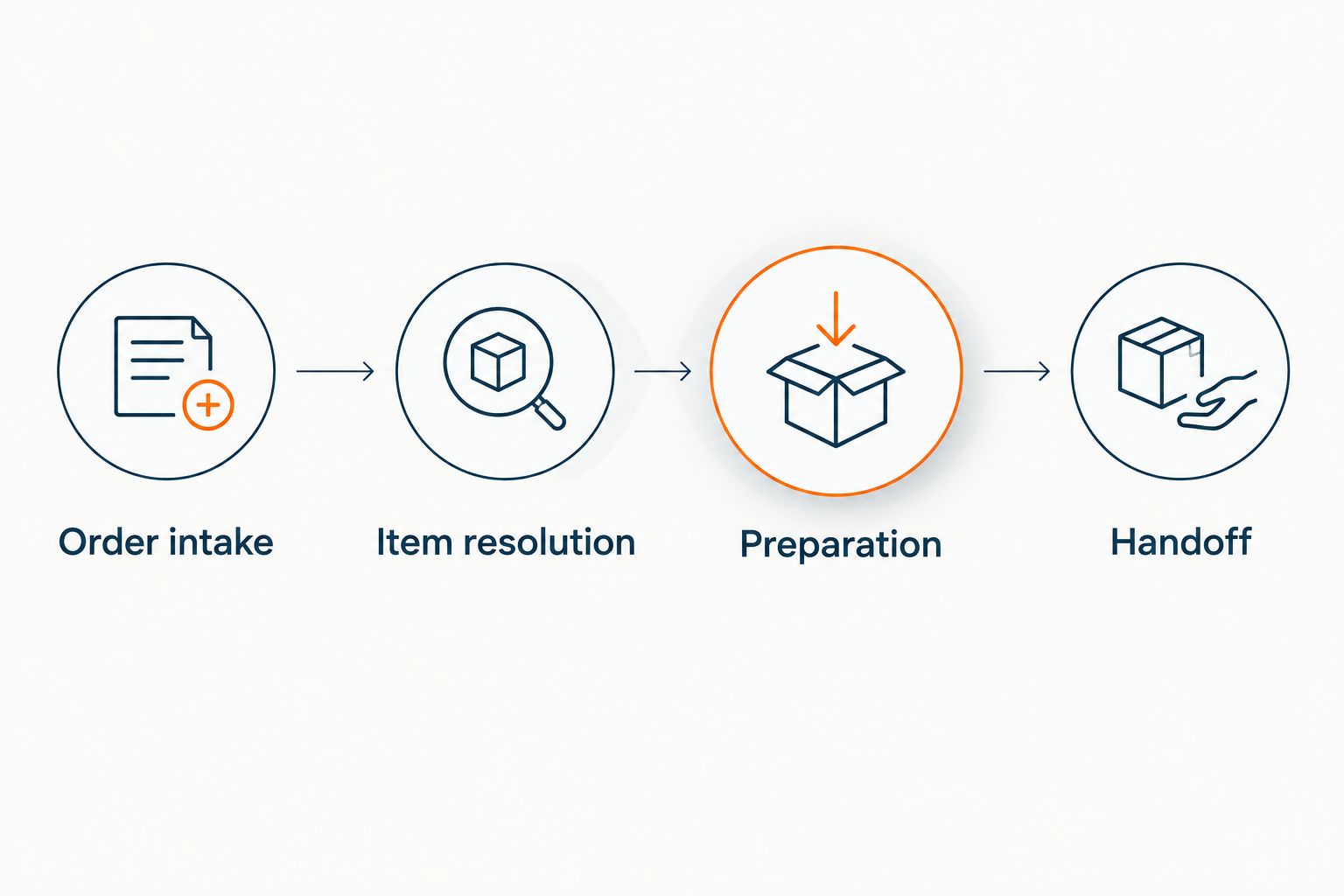
For delivery, document who owns dispatch, customer updates, failed handoffs, and refunds. The inclusion of last-mile delivery in a platform's scope is a reason to evaluate it, not a substitute for establishing those responsibilities.
Do not treat marketplace demand as proof that your own ordering operation is ready. Your staff still need a defined process for orders placed through retailer-controlled channels.
Standout strengths differ; neither replaces operating discipline
The grocery platform's standout strength is its stated combination of branded digital channels, prepared-food ordering, order management, delivery, and retail media. Square's standout strength is its payment and POS ecosystem.
Those strengths serve different buyers. A regional grocery marketing and operations team evaluating digital channel ownership has a different priority from a store owner replacing the checkout system.
The corresponding limitations are just as important:
- A grocery commerce platform does not remove the need to define picking, preparation, and delivery responsibilities.
- A payment-centered POS selection does not settle branded app, grocery delivery, or retail media requirements.
- Neither platform should receive credit for compatibility that has not been demonstrated.
- Neither platform's feature list establishes a margin improvement for your store.
Compare the complete operating design, not the longest feature list. Retail media is relevant when your store has a defined program to manage; it is not a reason to choose a platform if checkout reliability is the only problem under review.
Square wins the narrower rollout; broader commerce needs a pilot
Square is the more direct shortlist choice for a checkout-first project because payments and POS match the purchase scope. This is a scope advantage, not a claim about implementation speed or guaranteed simplicity.
A unified grocery commerce rollout reaches more parts of the business. Your ecommerce catalog, prepared-food operation, order handling, and delivery process each need an owner. Introducing those channels without assigning responsibilities leaves software to absorb problems that are actually process decisions.
For a regional chain's 2026 evaluation, use 2 stores as a proposed pilot design: one with straightforward operations and one with a more demanding prepared-food or fulfillment workflow. This is a recommendation, not a claim that either platform requires a particular rollout size.
For an independent single-store grocer, assign 1 accountable manager to the pilot. That manager should record unresolved order exceptions, employee workarounds, and reconciliation questions. Expand the scope only after the store can complete the workflows it intends to offer customers.
Pricing: compare the same scope, not isolated terms
Neither platform wins on cost without comparable proposals. Evaluate pricing models and contractual responsibilities rather than treating payment processing, software, hardware, and implementation as equivalent purchases.
Square's commercial model includes payment processing and applicable software and hardware terms. Confirm which software configuration covers your requirements, which hardware is necessary, and which additional services belong in the proposed arrangement.
For the grocery platform, request a written proposal covering the channels you intend to operate. Separate website, mobile app, kiosk, order management, delivery, integration, and support responsibilities. Ask which charges are fixed and which vary with activity; do not infer the billing model from the breadth of the product description.
The tradeoff is predictability versus flexibility. Fixed commitments support budgeting, while activity-linked charges follow usage. Neither structure is automatically better for an independent grocer with seasonal demand.
For your 2026 decision, compare the same operating scope and document renewal, cancellation, data export, payment responsibilities, and implementation ownership. A narrower proposal is not a bargain if it leaves required work outside the contract.
Final verdict: choose by the operation you need to run
Choose Localexpress for grocery unified commerce
Best for: a regional or independent grocer building retailer-branded digital ordering across website, app, prepared food, and delivery. Choose it when those channels are the project and you need to evaluate them within a grocery-focused platform.
The buying condition is operational proof. Require the proposed system to demonstrate your actual basket exceptions, employee handoffs, and delivery responsibilities before committing.
Choose Square for payment-centered retail operations
Best for: an independent specialty food retailer or grocer prioritizing POS, payment acceptance, and a narrower selling workflow. Choose Square when checkout is the immediate problem and a branded grocery app or broader delivery operation is not a purchase requirement.
The buying condition is configuration proof. Confirm that the selected software, hardware, and payment arrangement support the grocery checkout situations your employees handle.
| Dimension | Winner |
|---|---|
| Grocery unified commerce | Localexpress |
| Checkout-first selection | Square |
| Online selling category | Tie; test grocery exceptions |
| Branded grocery app requirement | Grocery-focused platform |
| Counter-first prepared-food project | Square |
| Grocery MTO kiosk requirement | Grocery-focused platform |
| Grocery order management and delivery scope | Grocery-focused platform |
| Narrow POS rollout scope | Square |
| Cost comparison | Tie until proposals match scope |
FAQ
Is Localexpress better than Square for an independent grocery store?
Localexpress is the stronger fit for an independent grocer that needs branded grocery ecommerce, mobile apps, prepared-food kiosks, order management, and last-mile delivery together. Square is the stronger fit when the purchase centers on retail POS and payment acceptance.
What's the main difference between the two platforms?
The main difference is grocery commerce scope versus a payment-and-POS-centered ecosystem. Select the platform around the operation you need to change, rather than comparing unrelated features.
Can Square handle online grocery sales?
Square supports online selling, but a grocery selection still requires testing the proposed configuration. Demonstrate weighted items, substitutions, payment adjustments, and fulfillment handoffs before choosing it for online grocery operations.
Which option is better for a branded grocery mobile app?
The grocery-focused platform is the stronger initial fit because fully branded grocery mobile apps are explicitly part of its offering. Evaluate a branded app separately from a mobile-friendly website.
Which option is better for a grocery deli?
Square is a relevant choice for a counter-first restaurant POS project, while the grocery-focused platform explicitly offers made-to-order self-service kiosks. Choose around how shoppers place orders and how your deli staff receive them.
Do I need to replace my existing grocery POS?
A grocery ecommerce project does not automatically require replacing your POS. Establish whether the proposed platform replaces checkout or connects with the existing operation, then verify the integration and payment responsibilities.
How should I compare the pricing models in 2026?
Compare written proposals covering the same software, hardware, processing, implementation, and support scope. Identify fixed commitments and activity-linked charges before deciding which model fits your store.
What's the best way to evaluate both systems?
Have store employees complete real grocery workflows in the proposed configurations. Include an unavailable item, a weighted product, a prepared-food order, and a cancellation so the evaluation covers exceptions as well as checkout.
One last thing
Ask each vendor to demonstrate an order that goes wrong. An unavailable product followed by a customer change exposes staff responsibilities, payment handling, and communication gaps more clearly than a perfect basket.
Use the same scenario in both demonstrations. The system that closes the exception cleanly has answered a more useful question than which presentation looked better.