Product substitution rules for grocery orders tell your ecommerce platform what to do the second a picker can't find an item on the shelf: swap it for the closest match, hold the line item and refund it, or text the shopper and wait. Set the rule by category, not storewide — a produce swap and a frozen-meat swap carry different risk and need different logic. Get this wrong in 2026 and you're processing refunds and losing repeat orders over a $3 substitution nobody asked for.
- Product substitution rules for grocery orders work best set by category, not storewide — produce, meat and alcohol each need different logic.
- Four policies cover most grocers: allow, no substitutions, ask-first, and manager's choice — each trades speed for accuracy.
- Perishables and limited-time seasonal items drive most out-of-stock substitutions; packaged goods rarely need one.
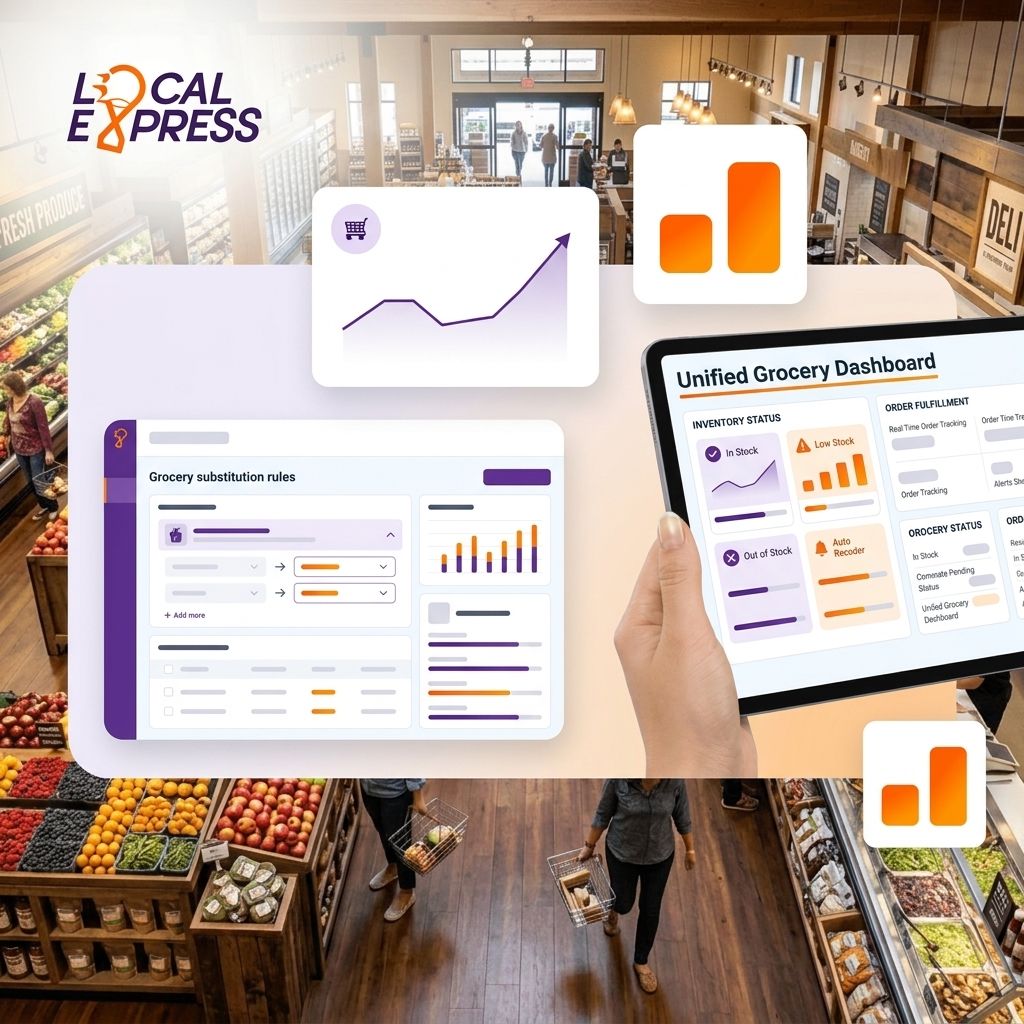
- Centralized order management syncs substitution approvals across web, app and kiosk so pickers aren't guessing in 2026.
Why substitution rules matter for your bottom line
A bad substitution is the fastest way to lose a repeat shopper — worse than an out-of-stock, because the customer paid for something they didn't want. Independent and regional grocers running their own centralized order management system can set rules once and apply them across web, app, and kiosk orders instead of leaving it to picker judgment on the floor.
Substitution logic also protects margin. A picker who swaps a $4 store-brand item for a $9 name-brand item without a rule in place eats that difference — multiply that across a few hundred orders a week and it shows up on the P&L by month's end.
How do you set product substitution rules for grocery orders?
Setting substitution rules is a five-step process most grocers can complete in an afternoon:
- Segment your catalog by substitution risk. Produce, dairy, and bakery need automatic-swap logic; alcohol, tobacco, and prescription-adjacent items need a strict no-substitution flag.
- Pick a default policy per category. Most grocers default to "allow with picker judgment" for packaged goods and "ask first" for anything over a set price threshold or in a sensitive category.
- Define the swap hierarchy. Same brand, different size beats different brand, same size — set the priority order so pickers and any AI-assisted picking tool aren't guessing.
- Build the customer-facing prompt. Decide whether the shopper sees a text, an app push notification, or a checkout-time opt-in before the order is placed.
- Route refunds automatically. If a customer declines every substitution offered, the line item should refund without a manager needing to touch it.
The table below breaks down the four policies most U.S. grocers run in 2026, what each one costs in speed versus accuracy, and who should use it.
| Substitution Policy | How It Works | Best For | Main Risk |
|---|---|---|---|
| Allow substitutions | Picker swaps automatically to closest match | High-volume stores, packaged goods | Wrong brand or size annoys repeat shoppers |
| No substitutions | Item is refunded if unavailable, no swap offered | Alcohol, tobacco, prescription items, allergen-flagged SKUs | Higher refund rate, smaller average order |
| Contact customer first | Text or app push asks shopper to approve or decline | Specialty and higher-ticket items | Slows down picking, needs fast customer response |
| Manager's choice | Store staff manually decides case by case | Small independents without full catalog data | Inconsistent, doesn't scale past one location |
Allow substitutions: the default for packaged goods
Verdict: use as your storewide default, then carve out exceptions. This policy keeps pick times fast and order completion rates high, which matters most during a winter storm or holiday rush when inventory and delivery alerts are already stretching staff thin. It fails when the swap logic is sloppy — a picker substituting 2% milk for oat milk on an allergy order is a real problem, not a hypothetical one.
No substitutions: mandatory for regulated and sensitive items
Verdict: mandatory for alcohol, tobacco, and allergen-flagged SKUs — skip it everywhere else. A no-substitution flag on regulated items keeps you compliant and keeps a customer with a nut allergy from getting a "close enough" swap. Applying it storewide, though, tanks your order completion rate for no real benefit on standard groceries.
Contact customer first: best for higher-ticket and specialty orders
Verdict: use it selectively, not as a default. Ask-first substitution protects order accuracy on specialty cheese, craft beverages, or bulk orders where the wrong item is a real loss, but it adds friction — a shopper who doesn't respond fast holds up the whole pick. Reserve it for orders above a price threshold or for specialty categories where a wrong swap actually matters to the customer.
Manager's choice: fine for one store, breaks at scale
Verdict: workable for a single independent location, replace it before opening a second store. Manual, staff-judgment substitution works when one manager knows the regulars and the shelf. It falls apart the moment you're running multi-location inventory sync across a regional chain, because every location applies a different standard and customers notice.
Why substitution rates vary store to store
Substitution frequency isn't random — a handful of factors drive most of it:
- Perishability. Produce, bakery, and dairy generate the most substitutions because shelf life and delivery timing don't always line up.
- Seasonality. Limited-run holiday items and seasonal produce run out faster than the catalog updates.
- SKU depth. Stores with a narrower catalog have fewer backup items to swap to, which pushes more orders toward refund instead of substitution.
- Pick time of day. Early-morning picks against a stale overnight inventory count show more mismatches than afternoon picks.
- Staffing at pick time. A rushed picker during peak hours is more likely to default to "closest thing on the shelf" instead of following the rule hierarchy.
- AI-driven replenishment accuracy. Stores running an AI inventory replenishment workflow see fewer stockouts in the first place, which means fewer substitution decisions to make at all.
“A substitution policy that guesses wrong twice in a row loses the order for good, not just the sale.”
What happens if a customer doesn't respond to a substitution request?
Most platforms default to auto-refunding the line item after a set window, typically 15 to 30 minutes, if the customer never replies to an ask-first prompt. That protects the order from stalling at pack-out and keeps the delivery window on track. Some grocers instead default to "no substitution" after the window closes, which is safer for allergen-sensitive categories.
Do substitution rules affect refunds?
Yes — every declined or unavailable substitution should trigger a line-item refund, not a full-order cancellation. Grocers running clean refunds and replacements for missing delivery items workflows tie the refund trigger directly to the substitution decision so nothing needs manual reconciliation later.
Can substitution rules differ by item or category?
They should — a single storewide rule is the most common mistake independent grocers make when setting this up. Alcohol and prescription-adjacent items need a hard no-substitution flag, produce and packaged goods can run on auto-swap, and specialty or high-ticket items are a good fit for an ask-first prompt.
Sync substitution rules across every channel
Set the rule once and apply it to web, app, and kiosk orders in 2026.
FAQ
What is the best default substitution rule for a grocery store?
Allow substitutions is the best default for packaged goods and most produce because it keeps order completion rates high in 2026. Carve out a strict no-substitution flag for alcohol, tobacco, and allergen-flagged items.
Should alcohol orders ever be substituted?
No, alcohol orders should never use automatic substitution because age-restricted and regulated SKUs require exact-item fulfillment. A no-substitution flag on these categories keeps the store compliant.
How long should a customer have to approve a substitution?
A 15 to 30 minute response window is standard before the platform defaults to auto-refund or auto-substitute. Shorter windows work for time-sensitive delivery slots; longer windows fit scheduled pickup orders.
Do substitution rules slow down order picking?
Ask-first substitution rules slow picking because the picker waits on a customer response before finishing the order. Auto-substitute rules keep picking speed close to normal, which is why most grocers use it as the default and reserve ask-first for high-ticket items.
Can substitution rules be set per store in a multi-location chain?
Yes, substitution rules can and should vary by store when local inventory, catalog depth, or regional demand differs across a chain. Centralized order management lets a regional grocer set a base rule set and override it per location instead of relying on manager's-choice inconsistency.
What happens to a declined substitution at checkout?
A declined substitution triggers a line-item refund, not a canceled order, so the rest of the delivery or pickup proceeds normally. This keeps customer experience intact even when a specific item can't be fulfilled.
Do substitution rules reduce cart abandonment?
Clear substitution rules reduce abandonment at the point of frustration, not at initial checkout, by preventing surprise swaps that make a shopper cancel a repeat order. Combined with other checkout fixes, tightening substitution logic is one lever in a broader plan to reduce cart abandonment.
One last thing
The grocers who get the fewest substitution complaints in 2026 aren't the ones with the most generous policy — they're the ones who set the rule at the category level and never touch it manually again. Manager's-choice substitution feels flexible, but it's the single hardest policy to scale past one location, and it's usually the first thing regional chains rip out when they move to a real order management platform.