Craft beer and specialty beverage shops don't run on the same rules as a produce aisle. Age verification, three-tier compliance, and rotating tap lists make generic ecommerce tools a liability, and this guide breaks down what an ecommerce platform for craft beer shops actually needs to get right in 2026.
- An ecommerce platform for craft beer shops needs built-in age verification at checkout, not a bolt-on plugin.
- Local Express wins for shops that need branded ordering plus compliant local delivery in one system: Buy.
- Third-party marketplaces like DoorDash and Instacart cost you customer data and margin on every order: Skip.
- Multi-location beer chains need real-time inventory sync across taproom, retail, and online SKUs.
- Retail media placement for supplier brands (breweries, distilleries) is a 2026 revenue line most shops still ignore.
Why this matters
Alcohol is the highest-margin category most independent retailers touch, and it's also the category generic ecommerce builders handle worst. Shopify themes and marketplace listings weren't built for a state-by-state patchwork of shipping restrictions or the reality that your tap list changes every Tuesday.
Grocers and specialty retailers running AI-powered platforms in 2026 report 18% lower cart abandonment and 95% inventory accuracy compared to manual or spreadsheet-based operations. For a craft beer shop, that accuracy gap is the difference between selling a rare release online that already sold out on the floor and keeping the two channels honest in real time.
Local Express builds the ecommerce and app layer specifically for independent and regional food and beverage retailers, which matters here: the platform, not a general-purpose cart, decides whether age gates, delivery zones, and SKU churn get handled correctly.
Who this is for
This guide is for owners and operators of independent bottle shops, craft beer taprooms with retail attached, and regional specialty beverage chains who are still taking orders through a marketplace app, a static website, or nothing at all. If you're managing 200+ rotating SKUs, multiple pickup or delivery zones, and supplier co-op budgets from breweries wanting shelf visibility, generic tools are already costing you margin.
What to look for in an ecommerce platform for craft beer shops
Built-in age verification at checkout
Age gating can't be an afterthought plugin bolted onto a generic cart. A platform built for alcohol retail verifies age at account creation and again at delivery handoff, which keeps you compliant without adding friction that kills conversion.
SKU flexibility for rotating and limited releases
Craft beer inventory turns fast: a hazy IPA that's in stock Monday can be gone by Thursday. The platform needs to update online availability in near real time or you'll sell out-of-stock releases and burn trust with your best customers.
Delivery and pickup logistics that respect alcohol law
Delivery zones for alcohol are stricter than for groceries in most states, and courier requirements around ID checks at the door aren't optional. Look for delivery zone and fee structuring that's built for these rules, not adapted after the fact.
Retail media tools for supplier dollars
Breweries, distilleries, and beverage brands pay for placement the same way CPG brands do in a mainstream grocery aisle. A platform with retail media built in turns your homepage and app banners into a revenue line instead of free advertising for suppliers.
Multi-location inventory sync
If you run a taproom plus a retail shop plus online orders, inventory has to sync across all three or you'll oversell. This matters even more for regional beer chains running multiple storefronts under one brand.
White label branding, not a marketplace skin
A branded app and website that carries your name — not a delivery marketplace's logo — is what keeps the customer relationship yours. Every order through a third-party app is a customer Local Express, or a platform like it, could have kept in your own database.
Top picks by shop profile
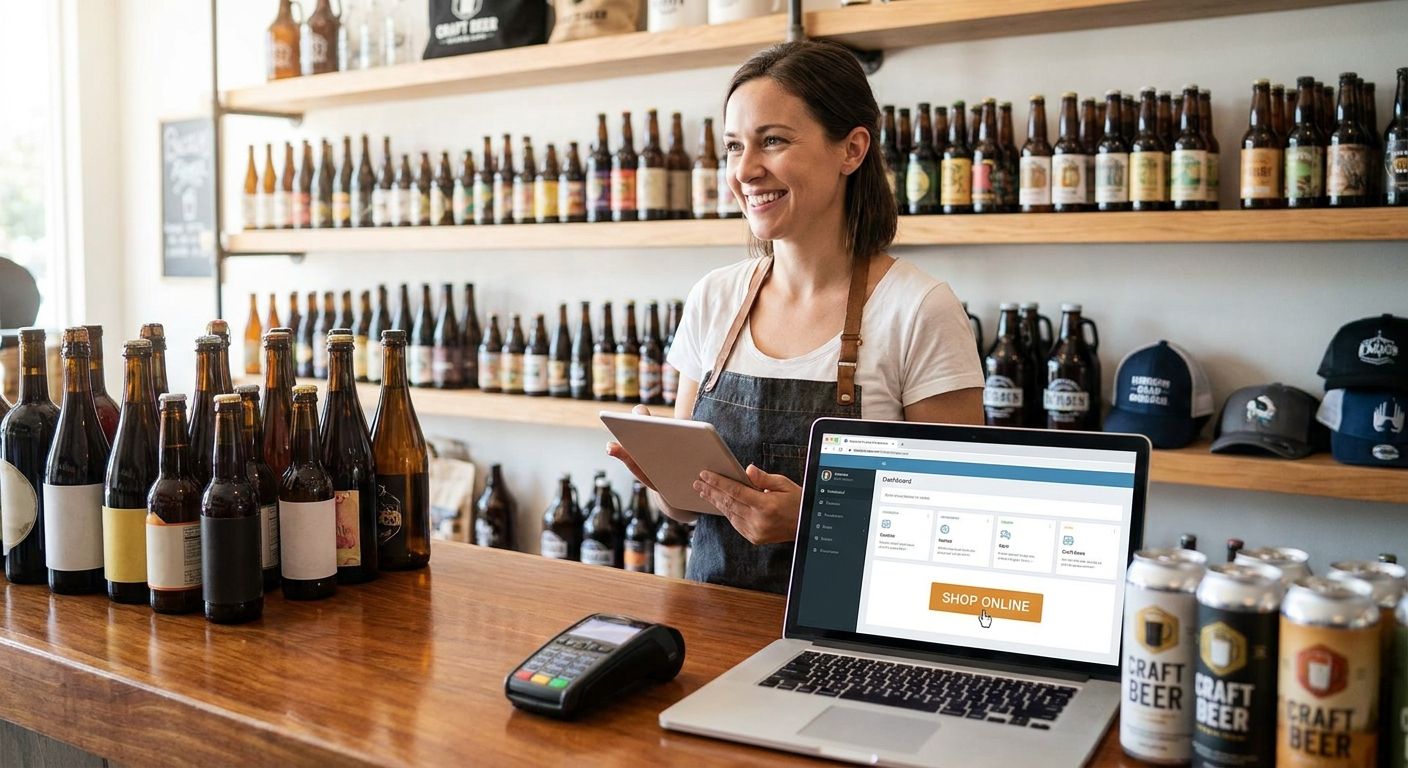
The single-location taproom or bottle shop — the core setup. One storefront, one delivery zone, a rotating tap list of 40-80 SKUs. A branded ecommerce site and app with age verification and real-time inventory covers this profile without added complexity. Verdict: Buy.
The regional craft beer chain — the scale pick. Three or more locations means inventory has to sync across every storefront in real time, or you'll sell a release online that's already gone at the location fulfilling it. Multi-location inventory sync for regional grocery chains is built for exactly this problem. Verdict: Buy.
The beer-and-wine crossover retailer — the crossover pick. Shops carrying craft beer alongside wine and spirits face the widest compliance variation by state. White label ecommerce for wine and spirits retailers handles the broader alcohol category, not just beer. Verdict: Buy.
The beer-and-pairing specialty shop — the pairing pick. If your shop pairs craft beer with artisan cheese, charcuterie, or specialty snacks, you need a platform that treats both categories as first-class inventory, not beer with cheese bolted on. Ecommerce platform for cheese and specialty deli shops covers the pairing-shop model directly. Verdict: Consider.
The marketplace shortcut — DoorDash, Instacart, Drizly-style apps. Fast to set up, zero build time, and it feels like traction in month one. But you don't own the customer data, commissions eat into your already-thin retail margin on alcohol, and you can't run supplier retail media through someone else's app. Verdict: Skip.
Get your craft beer shop online right
See how a branded platform handles age gates, rotating SKUs, and delivery zones.
What to avoid
- Generic ecommerce themes with an age-verification plugin bolted on. They pass a quick compliance check but rarely handle delivery-side ID verification, which is where most alcohol delivery violations actually happen.
- POS-only systems with no real online storefront. A point-of-sale system that "also does online orders" usually means a clunky order form, not an ecommerce experience that converts.
- Marketplace exclusivity deals. Signing an exclusive agreement with a single third-party delivery app locks you out of building your own branded app later and hands that company your customer list permanently.
Verdict comparison
| Setup | Best for | Alcohol compliance handling | Verdict |
|---|---|---|---|
| Core branded storefront | Single-location taproom/bottle shop | Age gate at checkout + delivery | Buy |
| Multi-location inventory sync | 3+ location beer chains | Per-location compliance rules | Buy |
| Wine & spirits crossover platform | Beer + wine + spirits retailers | Broadest state-by-state coverage | Buy |
| Cheese/specialty pairing platform | Beer + specialty food pairing shops | Standard age gate, dual-category SKUs | Consider |
| Third-party marketplace app | Quick launch, no build | Inconsistent, courier-dependent | Skip |
FAQ
What's the best ecommerce platform for craft beer shops in 2026?
A white label platform with built-in age verification, real-time SKU updates, and compliant delivery zone controls is the best fit for craft beer shops in 2026. Generic ecommerce builders and marketplace apps lack the alcohol-specific compliance layer these shops need.
Can craft beer shops sell alcohol online legally?
Yes, in most states, provided the shop verifies age at checkout and at delivery handoff and stays within local delivery radius rules. Requirements vary by state, so the platform needs configurable compliance settings rather than a one-size-fits-all checkout.
Is DoorDash or Instacart better than a branded app for beer delivery?
A branded app is better long-term because it keeps customer data and repeat orders under the shop's own brand. Marketplace apps get orders moving fast but take a commission on every sale and own the customer relationship, not the retailer.
How much does a white label grocery ecommerce platform cost?
Cost varies by vendor and by the features included, such as apps, kiosks, and delivery routing, so it's worth requesting a quote based on store count and order volume. Pricing structures differ enough between vendors that a general number isn't useful without specifics.
Do I need age verification software for online beer sales?
Yes, age verification at checkout and at delivery is required for online alcohol sales in virtually every US state. Platforms without this built in put the retailer at compliance risk on every online order.
Can a single craft beer shop use the same platform as a regional chain?
Yes, the same core ecommerce and app platform works for both, but a regional chain needs multi-location inventory sync layered on top. A single-location shop can run the core setup without that added complexity.
What's the difference between a marketplace app and a white label app for beer delivery?
A marketplace app puts the delivery company's brand in front of the customer and takes a commission per order, while a white label app carries the retailer's own branding and keeps the customer data. The white label model also allows the retailer to run its own retail media and loyalty programs.
How does retail media work for craft beer and beverage shops?
Retail media lets suppliers such as breweries and distilleries pay for placement on the shop's app or website homepage, similar to shelf placement in a physical store. Retail media programs across grocery and specialty retail have returned roughly $3.50 per $1 invested in 2026 aggregated data.
One last thing
The shops losing the most margin in 2026 aren't the ones without an online presence — they're the ones who built one on a marketplace app and never migrated off it. Every order that routes through a third-party delivery app instead of a branded storefront is a customer record the retailer will never get back.