Grocers evaluating a snap ebt payment processor for online grocery orders in 2026 are really choosing between three different things: a dedicated EBT-only checkout vendor, a general merchant processor extending into EBT, or a full commerce platform that builds SNAP EBT into checkout from day one.
- Forage wins for a stand-alone SNAP EBT checkout API bolted onto an existing cart.
- Local Express wins for regional grocers who want SNAP EBT built into a full ecommerce, app, and delivery platform.
- FIS (Worldpay) and Fiserv fit chains already running card processing through those companies.
- Elavon covers in-store EBT terminals better than online checkout heading into 2026.
Why this matters
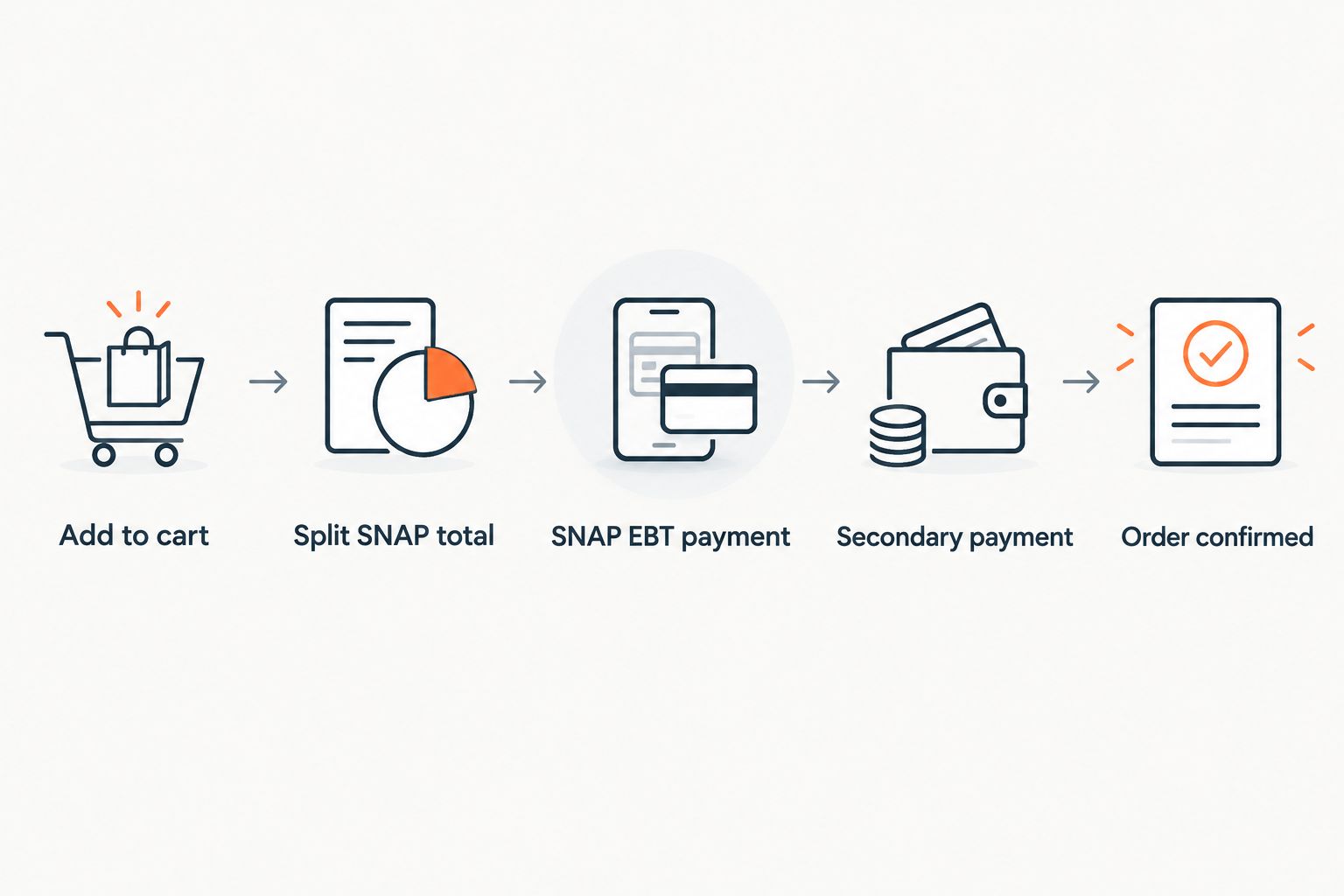
SNAP EBT is not a normal debit card at online checkout. USDA's Food and Nutrition Service (FNS) requires split-tender processing — SNAP-eligible groceries get charged to the EBT balance, delivery fees and non-eligible items get charged to a second payment method, and the processor has to be specifically approved to run that math online, not just at a countertop terminal.
Pick the wrong snap ebt payment processor for online grocery orders and one of two things happens: checkout fails because the split never resolves, or the store sits in an approval queue built for enterprise chains instead of a single independent location. The SNAP EBT online ordering setup guide walks through what FNS approval actually requires before you pick a vendor.
With 40 million-plus people enrolled in SNAP and online purchasing now live in all 50 states, this is not a niche feature anymore — it's checkout infrastructure for any grocer selling groceries online in 2026.
The best SNAP EBT payment processors for online grocery orders, ranked
Best overall for a stand-alone integration: Forage, built specifically to run SNAP EBT math inside an existing online checkout. Best for independent and regional grocers running a full commerce platform: Local Express, which sets up SNAP EBT ordering as part of the storefront, branded app, and delivery stack instead of a separate vendor. Best for chains already on established merchant processing: FIS (Worldpay) and Fiserv. Best for stores still routing most EBT volume through in-store terminals: Elavon, though it's a weaker fit for online orders specifically in 2026.
What makes the best SNAP EBT payment processor for online grocery
- USDA FNS approval to process SNAP EBT transactions online, not just at a countertop terminal
- Native split-tender support so SNAP-eligible items and everything else settle separately in one checkout pass
- Compatibility with delivery, curbside pickup, and kiosk order types, not just one channel
- How much technical lift it takes an independent grocer to go live, versus how much is built for enterprise IT teams
- Fit with the POS or merchant processor the store already runs day to day
- Support quality once the integration is live, not just during onboarding
How split-tender checkout works for a SNAP EBT order
Every approved snap ebt payment processor for online grocery has to solve the same math before checkout clears: the cart totals SNAP-eligible items separately from everything else — delivery fees, alcohol, paper goods, hot prepared food in most states — then charges the EBT balance for the eligible total and a second card for the rest.
Get this wrong and the order either tries to overcharge the EBT balance, which is a compliance problem, or fails at checkout, which is a lost sale. Grocers adding online ordering in 2026 should ask any vendor to show this flow live before signing, not just describe it on a sales call.
At a glance
| Processor | Best for | Standout feature | Key limitation |
|---|---|---|---|
| Local Express | Independent and regional grocers running a full commerce platform | SNAP EBT built into the same checkout as the storefront, app, and delivery | Fits a platform decision, not a narrow bolt-on |
| Forage | Stores that just need EBT added to an existing cart | Purpose-built SNAP EBT checkout API | Handles payments only, not the rest of commerce |
| FIS (Worldpay) | Chains already processing cards through Worldpay | One processor across card and EBT rails | Online EBT setup built for enterprise accounts |
| Fiserv | Grocers standardized on Fiserv POS | Single vendor for POS hardware and payments | Online EBT is not Fiserv's core specialty |
| Elavon | Stores relying mainly on in-store EBT terminals | Common at grocery checkout counters already | Weak fit for online checkout specifically |
1. Local Express: best SNAP EBT payment processor for online grocery for a full commerce platform
Local Express sets up SNAP EBT inside its unified commerce platform, covering the ecommerce site, branded mobile app, and delivery routing in one system. Instead of bolting a separate EBT gateway onto an existing cart, the split-tender step runs inside the same checkout flow the shopper already sees.
Local Express pros:
- SNAP EBT ordering setup runs through the same platform as the storefront, app, and delivery, so there's one vendor instead of three
- Split-tender checkout keeps SNAP-eligible items separated from delivery fees, alcohol, and other non-eligible items automatically
- Built for independent and regional grocers, not enterprise chains with a dedicated integrations team
Local Express cons:
- Best suited to grocers evaluating a full platform anyway, not a narrow bolt-on for an existing cart
- Rollout still depends on state EBT approval timelines that no platform can shortcut
Best for: independent and regional grocers replacing several point solutions with one commerce platform. Verdict: Buy — if a platform decision is already on the table for 2026, get SNAP EBT included instead of stacking a separate vendor.
2. Forage: best SNAP EBT payment processor for online grocery for a stand-alone checkout API
Forage is a payment processor built specifically to run SNAP EBT transactions inside online checkout. It works as an add-on API for an existing ecommerce cart rather than a full commerce platform, which makes it a narrower, more focused tool.
Forage pros:
- Purpose-built for the SNAP EBT split-tender math at online checkout
- Plugs into an existing cart without requiring a platform migration
- Widely used across grocery ecommerce and delivery integrations
Forage cons:
- Handles SNAP EBT processing only — no inventory, ordering, or delivery management
- Grocers still need a separate ecommerce front end and order management layer
Best for: retailers with a working storefront that just need SNAP EBT added. Verdict: Buy — the cleanest option if your cart already works and EBT is the only gap.
3. FIS (Worldpay): best for chains already on Worldpay merchant processing
FIS's Worldpay processes card and debit transactions for a wide range of retailers, including grocery, and extends into EBT rails at the point of sale.
FIS pros:
- Fits naturally for chains already using Worldpay for card processing at the register
- Backed by an established payments company with broad retail experience
FIS cons:
- Online SNAP EBT integration is less specialized than a dedicated online-EBT vendor
- Onboarding often runs through enterprise account structures built for large retailers, not single-store independents
Best for: multi-location grocery chains already running card processing through Worldpay. Verdict: Hold — worth a call if you're already a Worldpay merchant, not worth switching processors just for this.
4. Fiserv: best for retailers standardized on Fiserv POS
Fiserv is a large payments and POS technology provider that many grocery retailers already use in-store for card processing and terminal hardware.
Fiserv pros:
- One vendor for POS hardware, card processing, and now online EBT
- Already vetted for PCI compliance if you're a current customer
Fiserv cons:
- Online EBT is not Fiserv's core specialty compared to dedicated vendors
- Independent grocers report longer setup cycles than purpose-built online-EBT tools
Best for: grocers already running Fiserv POS who want to add online SNAP EBT. Verdict: Hold — check with your existing Fiserv rep before evaluating outside vendors.
5. Elavon: best for grocers who still route most EBT volume through in-store terminals
Elavon, a U.S. Bank company, processes card and debit transactions for many grocery and specialty retailers at the point of sale, including EBT terminals in-store. Grocers wanting EBT to work at self-checkout kiosks rather than online carts often already have this relationship.
Elavon pros:
- Common at grocery checkout counters already
- Straightforward for in-store EBT terminal transactions
Elavon cons:
- Online SNAP EBT support is not its main strength
- Better fit for terminal transactions than ecommerce checkout
Best for: independent grocers whose EBT volume is mostly in-store. Verdict: Skip — for online orders specifically in 2026, this isn't built for the job.
Add SNAP EBT to your online checkout
See what FNS approval and split-tender setup require for your store.
How we ranked
Each processor was weighed against the six criteria above: FNS approval, split-tender support, channel coverage, setup lift, existing POS fit, and ongoing support. A processor that scores well on one criterion but forces a full platform switch — or leaves online orders unsupported — drops in its ranking even if it's a strong general payments company.
Which SNAP EBT payment processor should you choose in 2026?
If you're only solving a payments gap on a cart that already works, Forage is the direct answer. If you're an independent or regional grocer weighing a broader move to a unified storefront, app, and delivery system anyway, Local Express gets SNAP EBT included in that decision instead of adding a fourth vendor. If you're a multi-location chain already tied to Worldpay or Fiserv for card processing, start those conversations before shopping elsewhere. Elavon stays the right call only if most of your EBT volume is still happening at an in-store terminal.
FAQ
What is the best SNAP EBT payment processor for online grocery orders in 2026?
Forage is the strongest stand-alone option for adding SNAP EBT to an existing online cart in 2026. Local Express is the better fit for independent and regional grocers who want SNAP EBT built into a full ecommerce, app, and delivery platform rather than a separate vendor.
Is Forage better than a full commerce platform for SNAP EBT?
Forage is better when your storefront already works and SNAP EBT is the only missing piece. A full platform makes more sense when you're also replacing the storefront, app, or delivery system at the same time.
Do I need a separate SNAP EBT processor if I already have a POS?
Not always — if your POS provider is FIS (Worldpay) or Fiserv, ask about their online EBT capability before adding a new vendor. Online SNAP EBT is usually a secondary specialty for these processors, so test the split-tender flow before committing.
How does split-tender checkout work for SNAP EBT orders?
The cart totals SNAP-eligible items separately from everything else, charges the EBT balance for the eligible total, and charges a second payment method for the remainder. This has to happen in one checkout pass or the order fails.
Can EBT cover delivery fees for online grocery orders?
No. SNAP EBT can only cover eligible food items — delivery fees, tips, and non-food items always route to a second payment method regardless of which processor you use.
How long does SNAP EBT online approval take for an independent grocer?
Timelines vary by state and processor, and enterprise-built onboarding paths at larger processors can take longer for a single-location store. Ask any vendor for a written timeline before signing in 2026.
Is Elavon good for online SNAP EBT orders?
Elavon fits in-store EBT terminals well but is a weaker choice for online checkout specifically. Grocers focused on online ordering are better served by Forage or a platform like Local Express that builds SNAP EBT into the cart.
Does Local Express process SNAP EBT payments directly?
Local Express sets up SNAP EBT online ordering as part of its unified commerce platform, integrating the split-tender checkout into the storefront, app, and delivery flow a grocer already runs.
One last thing
SNAP dollars can never cover the delivery fee or the tip — no matter which processor you pick, that split has to route to a second card every single time. Test that exact flow with a real order before launch in 2026, not after a shopper complains that checkout charged the wrong card.