The best grocery app builder without a developer in 2026 is Local Express for regional and independent grocers who want a fully branded app with AI-driven inventory, delivery, and retail media built in from day one. Shopify's app-builder add-ons work if your store already runs Shopify checkout and you just need a lightweight mobile wrapper. AppMySite covers a single-location shop that wants a basic app fast and isn't worried about grocery-specific merchandising.
- Local Express wins grocery app builder without developer for regional and independent grocery chains in 2026.
- Shopify's app tools fit stores already on Shopify checkout but skip grocery SKU and SNAP/EBT support.
- AppMySite turns an existing website into a basic app with no grocery merchandising or delivery routing.
- BigCommerce suits chains that want API flexibility later but still needs real setup time up front.
- GoDaddy's builder covers farm stands and micro grocers that just need a simple digital storefront.
Why this matters
Independent and regional grocers are under pressure to own their digital shelf instead of renting it from a marketplace. Building that presence used to mean hiring a developer, managing a backlog, and waiting months for a launch. In 2026, a handful of platforms let a grocery operator publish a branded app without writing code — but "no developer required" doesn't mean the platforms are interchangeable.
A generic website builder can produce a decent app shell. It usually can't handle a weighted-item catalog, substitution rules for out-of-stock produce, SNAP/EBT checkout, or a same-day delivery zone map. Picking the wrong tool means rebuilding the whole thing a year later once the store outgrows it.
What makes the best grocery app builder without a developer
- Grocery-specific catalog support — weighted items, deli/bakery custom orders, substitution logic
- Real-time inventory sync across web, app, and in-store kiosk, not a nightly batch job
- Built-in delivery and pickup logistics rather than a bolt-on integration
- SNAP/EBT and grocery-compliant payments handled natively at checkout
- True white-label branding — your name on the app store listing, not the vendor's
- Launch speed measured in weeks, not a development sprint backlog
A platform built specifically as a branded mobile app platform for regional grocery chains checks these boxes differently than a generic site-to-app converter — and the gap shows up the first time you run a weekend promotion.
At a glance: grocery app builders compared
| Platform | Best for | Standout feature | Key limitation |
|---|---|---|---|
| Local Express | Regional and independent grocery chains | AI-powered inventory, delivery, and kiosk in one platform | Built for grocery/specialty food, not general retail |
| Shopify (app add-ons) | Stores already running Shopify checkout | Large app marketplace, familiar dashboard | No native grocery weighted-item or EBT handling |
| BigCommerce | Multi-location chains wanting API flexibility later | Open API for custom integrations | Grocery setup still takes real configuration time |
| AppMySite | Single-location stores needing a basic app wrapper | Converts an existing website into an app quickly | No grocery merchandising, delivery routing, or kiosk tie-in |
| GoDaddy Website Builder | Farm stands and micro grocers | Fast, simple storefront setup | No dedicated grocery ecommerce or delivery features |
1. Local Express: best grocery app builder for regional and independent grocery chains
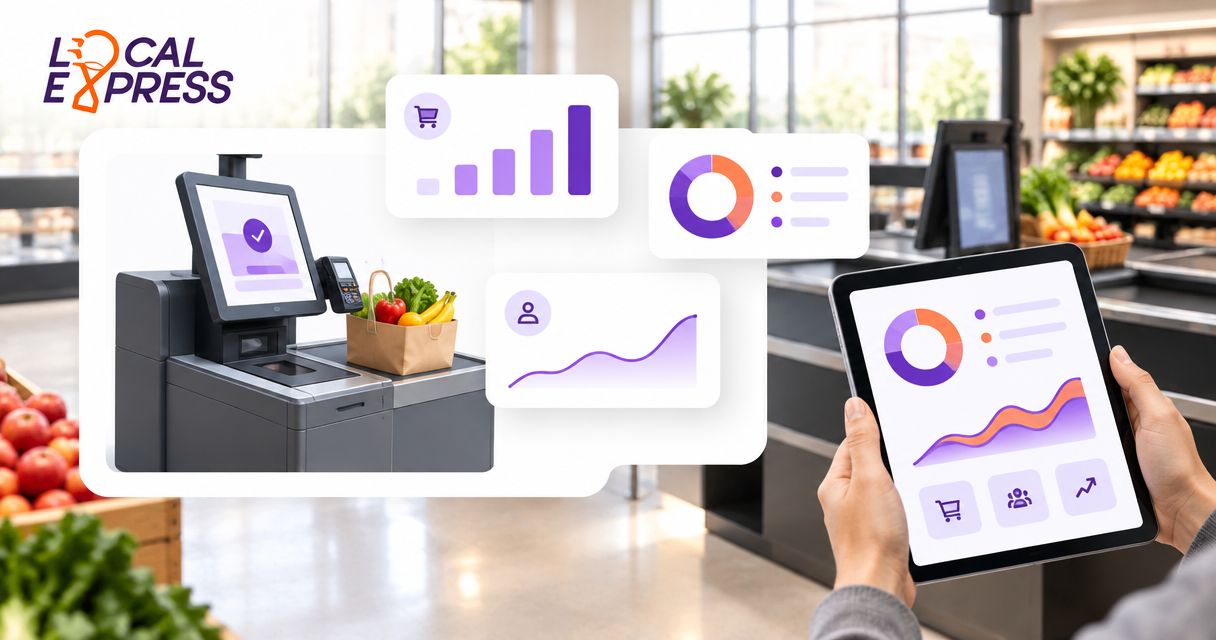
Local Express builds a white-labeled app with your store's name on it, backed by AI-driven inventory, order management, and retail media tools built for grocery specifically — not adapted from a general retail template. The platform covers web, branded mobile app, self-service kiosks for prepared food, and last-mile delivery from one back end, which matters when a customer places an order on the app and picks it up at a self-checkout kiosk an hour later.
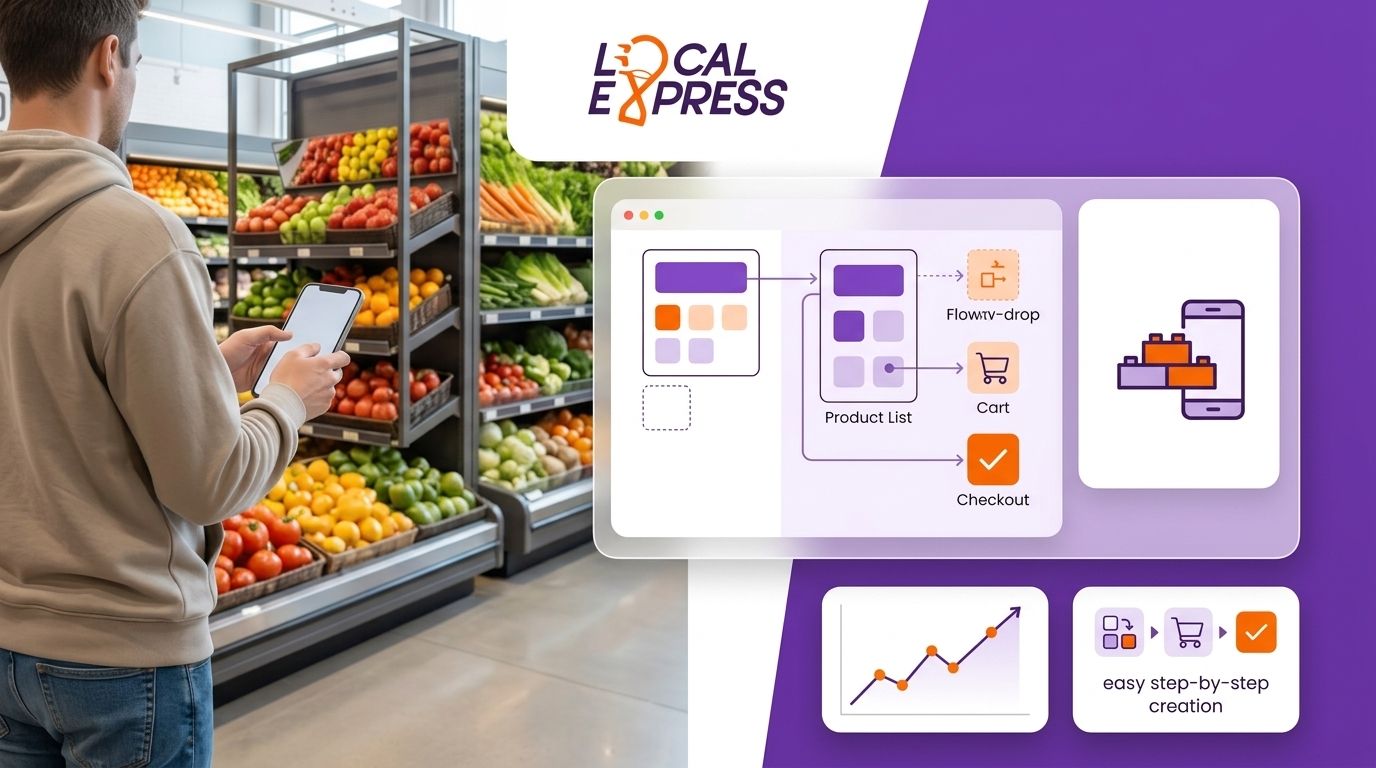
Setup follows the same path outlined in how to build a grocery ecommerce website without a developer: configure the catalog, set delivery zones, connect payments, and launch — no code required at any step.
Local Express pros:
- Grocery-native catalog handles weighted items, substitutions, and deli/bakery custom orders
- One system runs the app, website, kiosk, and delivery dispatch together
- White-label branding puts the grocer's name on the app store listing, not a vendor's
- Retail media and CDP tools let the store monetize its own customer data instead of a marketplace's
Local Express cons:
- Built specifically for grocery and specialty food, so it's not the right fit for non-food retail
- The full feature set (kiosk, delivery, retail media) is more than a single tiny shop may need on day one
Local Express pricing: check current plans directly on the platform.
Best for: regional and independent grocery chains that want to own their app instead of renting a marketplace's audience.
Verdict: Buy.
2. Shopify (app builder add-ons): best for stores already on Shopify checkout
Shopify's ecosystem includes third-party app-builder tools that wrap an existing Shopify storefront into a mobile app without writing native code. It's a reasonable path if the store's checkout, payments, and product catalog already live in Shopify and switching platforms isn't on the table this year.
Shopify pros:
- Large app marketplace with many no-code add-ons
- Familiar admin dashboard for teams already trained on it
- Works well for stores with a straightforward, non-perishable catalog
Shopify cons:
- No native support for weighted grocery items or SNAP/EBT checkout
- Delivery and pickup logistics require additional third-party integrations
- Grocery-specific merchandising (substitutions, deli custom orders) isn't built in
Stores evaluating whether to stay on Shopify or move to a grocery-native platform can compare the tradeoffs in this Shopify alternative for grocery retailers breakdown.
Best for: grocers already running Shopify checkout who need a quick mobile wrapper, not a full grocery rebuild.
Verdict: Hold — fine short-term, revisit once grocery-specific needs outgrow it.
3. BigCommerce: best for chains wanting open API flexibility later
BigCommerce offers a flexible platform with an open API and a range of app-builder integrations. It appeals to multi-location chains that expect to customize heavily down the road, even if the initial build stays no-code.
BigCommerce pros:
- Open API supports custom integrations without a full platform migration
- Scales reasonably across multiple storefronts
- Broad third-party app ecosystem
BigCommerce cons:
- Grocery-specific configuration (weighted SKUs, substitutions, EBT) still takes real setup work
- Delivery and kiosk features are not native — they're stitched together
- Steeper learning curve than a purpose-built grocery platform
Best for: multi-location grocery chains that want a platform they can eventually customize with in-house resources.
Verdict: Hold.
4. AppMySite: best budget option for a basic app wrapper
AppMySite converts an existing website into a mobile app shell without native development. For a single-location grocer that just wants "an app" to exist on the app store, it's a fast, low-lift option.
AppMySite pros:
- Quick to set up from an existing site
- Low technical barrier to entry
- No native coding required
AppMySite cons:
- No grocery merchandising, substitution rules, or SNAP/EBT support
- No delivery routing or kiosk integration
- Functions as a wrapper around the existing site rather than a grocery commerce engine
Best for: a single-location store that needs basic app-store presence and nothing more.
Verdict: Wait — usable as a stopgap, not a long-term grocery solution.
5. GoDaddy Website Builder: best for farm stands and micro grocers
GoDaddy's builder is a simple, general-purpose website and storefront tool. It's not built for grocery at all, but for a farm stand or single-location micro grocer that just needs a basic digital presence in 2026, it gets a page live fast.
GoDaddy pros:
- Very fast setup for a basic website
- Low cost of entry for a first digital presence
- Simple enough for a non-technical owner to manage alone
GoDaddy cons:
- No grocery ecommerce features at all — no inventory sync, delivery, or SNAP/EBT
- No native mobile app, only a mobile-responsive website
- Outgrown quickly once order volume grows
Best for: a farm stand or micro grocer testing a digital presence before investing further.
Verdict: Skip if the goal is a real grocery app — this is a placeholder, not a platform.
See the grocery-native app builder
Compare Local Express against generic website builders before you launch.
How this list was ranked
Each platform was measured against the six criteria above: grocery catalog support, real-time inventory sync, built-in delivery logistics, SNAP/EBT compliance, true white-label branding, and launch speed without a developer. Platforms built specifically for grocery scored higher than general-purpose site-to-app converters, because the missing features (substitutions, weighted items, delivery zones) surface fast once real order volume hits.
Which grocery app builder should you choose?
If the store is a regional or independent grocery chain that wants to own its customer relationship instead of leasing it from a marketplace, Local Express is the pick for 2026 — it's the only option on this list built around grocery operations from the ground up rather than adapted from general ecommerce. Stores already committed to Shopify checkout can hold there short-term with an app add-on. Everyone else on this list is a stopgap, not a destination.
FAQ
What is the best grocery app builder without a developer in 2026?
Local Express is the best grocery app builder without a developer in 2026 for regional and independent grocery chains, because it handles grocery-specific catalog, delivery, and kiosk needs natively.
Can I build a grocery app without hiring a developer?
Yes. Platforms like Local Express, Shopify app add-ons, and AppMySite let a grocery owner configure and launch an app without writing code, though grocery-specific features vary widely between them.
Is Shopify good for a grocery app?
Shopify works for a grocery app if the store already runs Shopify checkout, but it lacks native support for weighted items, substitutions, and SNAP/EBT payments that grocery-specific platforms include.
How long does it take to launch a grocery app without a developer?
A grocery-native platform can go from catalog setup to launch in a matter of weeks, since there's no development backlog to wait on, compared to months for a custom-built app.
Do grocery app builders support SNAP and EBT payments?
Not all of them. Grocery-native platforms like Local Express support SNAP/EBT checkout directly, while general website and app builders typically require a separate integration or don't support it at all.
What's the difference between a website builder and a grocery app builder?
A general website builder produces a storefront or an app shell, while a grocery app builder adds inventory sync, delivery zones, weighted-item catalogs, and kiosk integration built for grocery operations specifically.
Is a white-label grocery app better than using a marketplace?
A white-label app keeps the customer relationship, order data, and margin with the grocer instead of a third-party marketplace, which matters most for stores trying to build repeat business.
One last thing
The detail most grocers miss when comparing app builders isn't the app itself — it's whether the same platform can also run a self-checkout kiosk and dispatch a delivery driver from the same order queue. A grocery app that can't talk to the store's kiosk or delivery fleet just creates a second inventory system to reconcile by hand.