Grocery click-and-collect locker vendors fall into two camps in 2026: hardware companies that build the physical pickup units, and the order management software that has to talk to them. Get the vendor match wrong and you're stuck with a locker bank that can't hold a frozen pizza or a system nobody can integrate with your existing checkout.
- Bell and Howell (Apex Order Pickup Solutions) is the best overall click and collect locker vendor for grocery because it supports ambient, refrigerated, and frozen zones in one unit.
- Cleveron fits high-volume regional chains that want robotic retrieval instead of static compartments.
- Quadient (Parcel Pending) only handles ambient dry goods, so it can't cover a full grocery basket.
- Smiota is the pick for independent grocers piloting locker pickup before a multi-store rollout.
- The locker hardware matters less than the order management system feeding it accurate pickup windows.
Why this matters
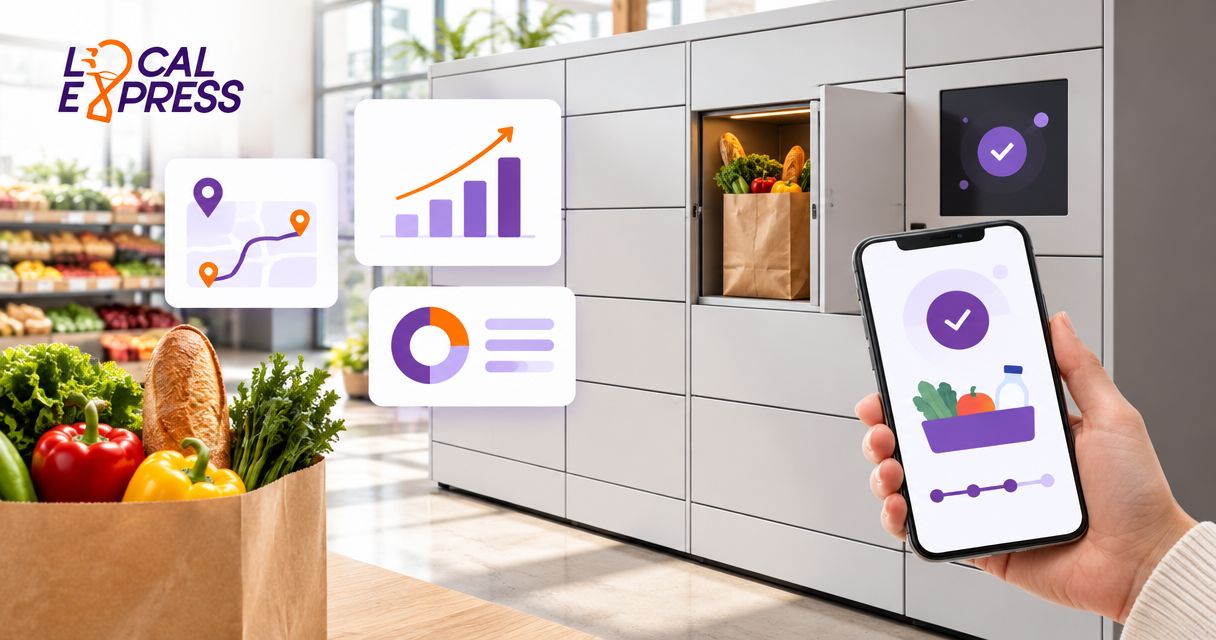
Curbside pickup eats labor hours. Someone has to walk orders to a car, confirm the name, and load the trunk during the exact window when the store is also running register lanes and delivery picks. A locker bank removes that person from the loop entirely: the shopper scans a code, the compartment door opens, and the store never staffs the parking lot.
The catch is that a locker is only as good as what feeds it. If your order management system can't tell the locker which compartment holds a rush order versus a same-day pickup, you end up with a bank of empty lockers and a backroom full of frustrated pickers. That's the real reason to shop locker vendors by integration first and compartment count second.
Regional and independent grocers evaluating lockers in 2026 are also weighing them against plain curbside pickup, which needs no hardware investment at all. A unified commerce platform that already runs your web, app, and kiosk ordering can route pickup either way — lockers where footprint and staffing justify it, curbside everywhere else.
Best overall: Bell and Howell (Apex Order Pickup Solutions). Best for high-volume automated retrieval: Cleveron. Best for ambient-only dry goods: Quadient (Parcel Pending). Best for independent stores piloting lockers: Smiota. Best for tapping an existing multi-retailer network: InPost.
What makes the best click-and-collect locker vendor for grocery
- Temperature zone support — ambient, refrigerated, and frozen compartments in the same unit, not a bolt-on
- Order management integration — the locker has to receive real-time compartment assignments, not a nightly batch file
- Compartment sizing — big enough for a full basket order, not just a single parcel
- Access hours — 24/7 self-service versus store-hours-only pickup
- Footprint and install requirements — indoor versus outdoor, power and network drops, ADA clearance
- Contract flexibility — single-store pilots versus chain-wide rollouts
Click-and-collect locker vendors at a glance
| Vendor | Best For | Standout Feature | Key Limitation |
|---|---|---|---|
| Bell and Howell (Apex Order Pickup Solutions) | Full grocery basket pickup | Ambient, refrigerated, and frozen zones in one unit | Larger footprint than parcel-only lockers |
| Cleveron | High-volume automated retrieval | Robotic compartment assignment instead of fixed slots | Overbuilt for single-location independents |
| Quadient (Parcel Pending) | Ambient dry-goods add-on | Widely deployed parcel locker network already in apartment and retail settings | No refrigeration, can't take a full grocery order |
| Smiota | Independent grocers piloting lockers | Modular units sized for a single storefront | Smaller compartment counts limit peak-hour volume |
| InPost | Tapping an existing locker network | Locker footprint already exists in some US markets | Built for parcels, not built specifically for perishables |
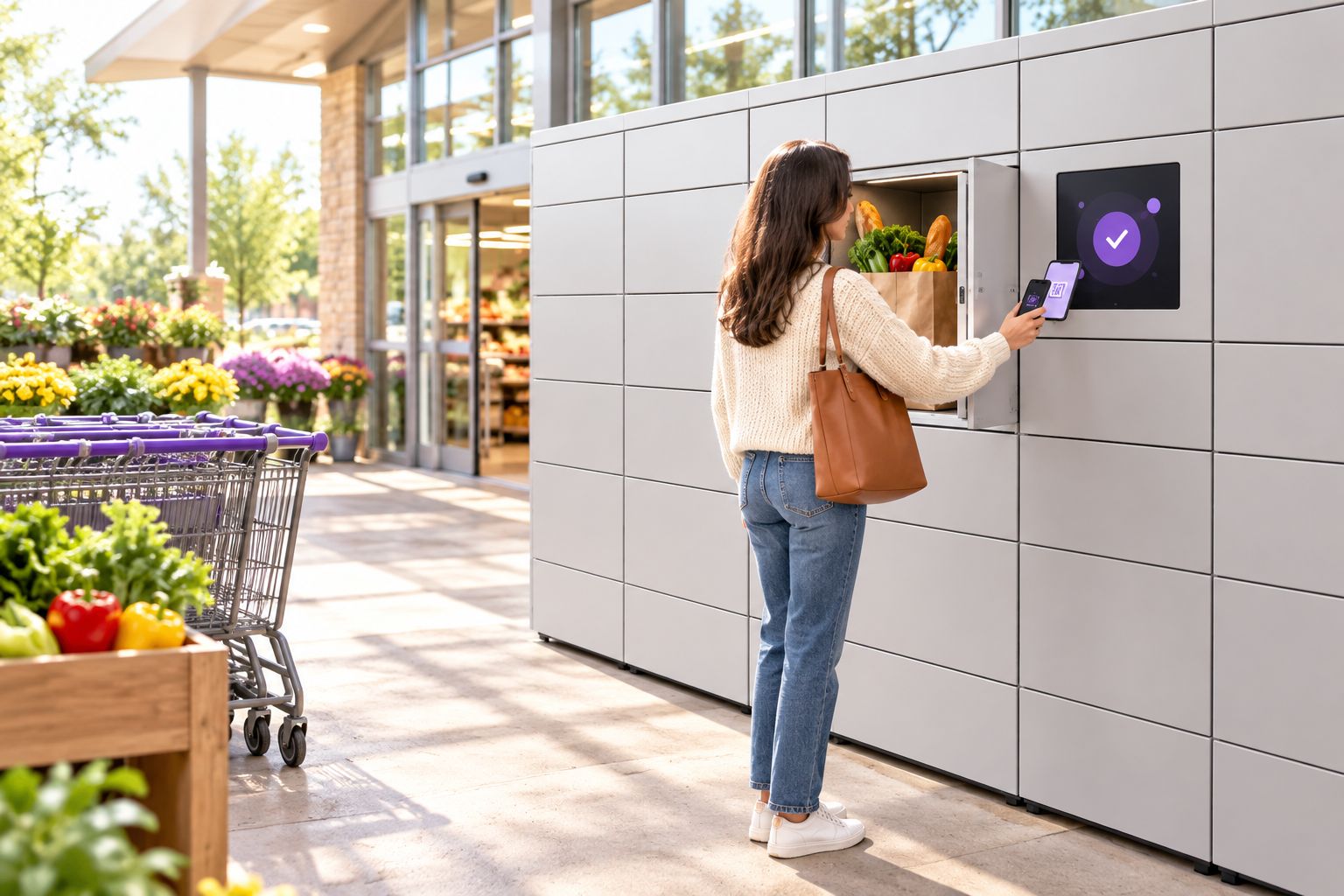
1. Bell and Howell (Apex Order Pickup Solutions): best click and collect locker vendor for full basket pickup
Bell and Howell's order pickup line, now sold as Apex Order Pickup Solutions, builds locker banks with separate ambient, refrigerated, and frozen compartments in the same footprint. That's the difference between a locker that can take a real grocery order and one that only handles shelf-stable items.
Bell and Howell (Apex Order Pickup Solutions) pros:
- Handles a mixed grocery basket, including frozen and cold items, in one unit
- Deployed at large-format grocery and big-box retailers already, so the hardware is proven at scale
- Compartment sizes run larger than typical parcel lockers
Bell and Howell (Apex Order Pickup Solutions) cons:
- Larger physical footprint than ambient-only units, which matters for smaller storefronts
- Installation typically requires dedicated power and network runs
Bell and Howell (Apex Order Pickup Solutions) pricing: not publicly listed; quotes are built around locker bank size and store count.
Best for: regional chains running full grocery pickup orders, not just add-on items. Verdict: Buy if you have the footprint and the order volume to justify a temperature-controlled bank.
2. Cleveron: best for high-volume automated retrieval
Cleveron builds robotic locker systems where a conveyor mechanism assigns and retrieves compartments rather than fixing one order to one slot for the day. That raises throughput per square foot compared to static lockers, which matters when a single location is running hundreds of pickups a day.
Cleveron pros:
- Robotic assignment increases compartment turnover versus static locker banks
- Handles high daily pickup volume without adding floor space
- Built for grocery and general retail, not just parcels
Cleveron cons:
- The mechanical complexity is overkill for a single independent store
- Maintenance requirements are higher than a static locker bank
Cleveron pricing: not publicly listed; sized to store volume and locker count.
Best for: high-volume regional chains where one location processes enough daily pickups to justify robotic throughput. Verdict: Hold for single-store independents — revisit once volume grows across multiple locations.
3. Quadient (Parcel Pending): best for ambient dry-goods add-on
Quadient's Parcel Pending division runs one of the more established locker networks in US apartment and retail settings, but the units are built for parcels and dry goods, not temperature-sensitive groceries. It's a fit if you're adding a pickup option for shelf-stable items or online orders that don't include cold product.
Quadient (Parcel Pending) pros:
- Established locker network already present in many US multifamily and retail locations
- Straightforward for ambient-only product lines like specialty dry goods or gift baskets
Quadient (Parcel Pending) cons:
- No refrigerated or frozen zones, so it can't take a full grocery basket
- Doesn't solve the core click-and-collect use case for most grocers
Quadient (Parcel Pending) pricing: not publicly listed; contact the vendor directly.
Best for: stores that want a locker option strictly for ambient add-ons, not full grocery orders. Verdict: Skip if your goal is full-basket grocery pickup — this covers a narrower slice.
4. Smiota: best for independent grocers piloting lockers
Smiota sells modular smart lockers sized for a single storefront rather than a chain-wide deployment, which makes it the lower-commitment option for a store testing whether locker pickup earns its keep before rolling it out further.
Smiota pros:
- Modular units scale to a single-store footprint without over-building
- Lower commitment for a pilot than a multi-location rollout
Smiota cons:
- Smaller compartment counts cap peak-hour capacity
- Less proven at large-chain scale than Bell and Howell or Cleveron
Smiota pricing: not publicly listed; sized to unit count.
Best for: an independent grocer running a single-location pilot before committing to a chain-wide locker program. Verdict: Buy for a pilot, Hold before scaling to multiple stores.
5. InPost: best for tapping an existing locker network
InPost runs a parcel locker network that has expanded into some US markets, and a grocer near an existing InPost footprint can plug into locker capacity that's already installed rather than building from scratch. It's built for parcels, though, so it isn't the right fit for a full cold-chain grocery order.
InPost pros:
- Existing locker footprint in some markets reduces installation lead time
- Familiar to shoppers who already use the network for parcel pickup
InPost cons:
- Not built specifically for perishables or multi-temperature grocery orders
- Availability depends on whether the network already reaches your market
InPost pricing: not publicly listed; availability and terms vary by market.
Best for: grocers in markets where the network already exists and the use case is ambient or shelf-stable pickup. Verdict: Wait until you confirm coverage in your specific market.
How this ranking works
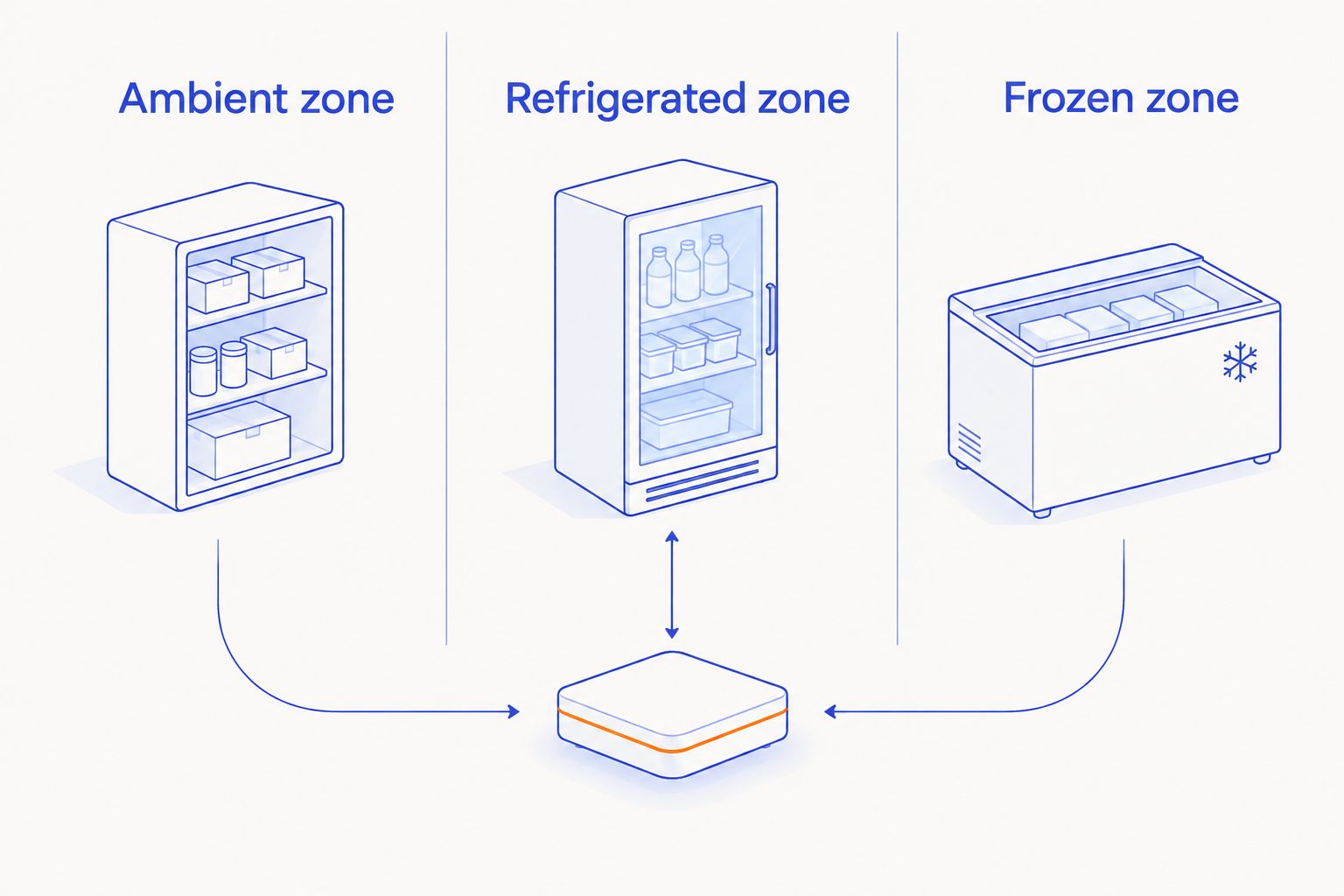
Each vendor is scored against the six criteria above: temperature zone support, order management integration, compartment sizing, access hours, footprint, and contract flexibility. A locker that can't hold frozen and refrigerated items drops out of contention for full-basket grocery pickup, no matter how good its software integration looks.
“If the locker doesn't hold frozen and refrigerated zones, it can't handle a full grocery order.”
Which click and collect locker vendor should you choose?
If you're running a regional grocery chain with real pickup volume, Bell and Howell (Apex Order Pickup Solutions) is the default pick in 2026 because it's the only vendor here built for a mixed-temperature basket at scale. If your single location already runs hundreds of daily pickups, evaluate Cleveron's robotic throughput against the added maintenance cost. Independent grocers testing the waters should start with Smiota's smaller footprint before committing to a chain-wide install.
Whichever hardware you pick, the locker only works if your order management system can push accurate compartment assignments and pickup windows in real time — that's the software layer most stores underestimate when they start shopping lockers.
Compare lockers against curbside pickup
See the software that runs pickup logistics either way.
FAQ
What is the best click and collect locker vendor for grocery in 2026?
Bell and Howell, sold as Apex Order Pickup Solutions, is the best overall pick for 2026 because it supports ambient, refrigerated, and frozen compartments in one unit. That combination is what lets a locker hold a full grocery basket instead of just shelf-stable items.
Do grocery pickup lockers need refrigeration?
Yes, if the goal is full-basket pickup. A locker with only ambient compartments, like Quadient's Parcel Pending units, can't hold frozen or refrigerated groceries, which limits it to dry goods or add-on orders.
Is Cleveron better than a static locker bank?
Cleveron's robotic retrieval increases pickup throughput per square foot compared to a static locker bank, which matters for high-volume locations. For a single independent store with modest daily pickup volume, the added mechanical complexity usually isn't worth it.
Can independent grocers afford a locker pilot?
Smiota and similar modular vendors are built for single-store pilots rather than chain-wide rollouts, which lowers the commitment for an independent grocer testing locker pickup before scaling. Pricing for any locker vendor isn't publicly listed and depends on unit count.
Do click-and-collect lockers replace curbside pickup?
Lockers remove the staffing requirement that curbside pickup carries, since shoppers retrieve orders themselves instead of a staff member walking the order out. Many regional grocers run both, using lockers where footprint allows and curbside everywhere else.
How does a locker vendor integrate with a grocery ecommerce platform?
The locker needs real-time compartment assignments tied to each order, which comes from the store's order management system, not the locker hardware itself. Without that integration, lockers sit empty or get assigned incorrectly during peak hours.
What's the difference between InPost and a grocery-specific locker vendor?
InPost runs an existing parcel locker network that covers some US markets, but the units are built for ambient parcels, not multi-temperature grocery orders. A grocery-specific vendor like Bell and Howell builds refrigeration into the compartments from the start.
How many temperature zones does a grocery pickup locker need?
A full-basket grocery order needs three zones: ambient, refrigerated, and frozen. A locker missing any of the three can only take a partial order, which pushes the rest of the basket back to curbside or in-store pickup.
One last thing
The locker hardware decision gets all the attention, but the failure point in most 2026 rollouts is time-slot capacity — a locker with three zones and robotic retrieval still jams up if the delivery time slot capacity feeding it isn't managed against picker throughput. Fix the scheduling layer before signing a locker contract, not after.