Card payment terminals for grocery checkout lanes range from countertop EMV readers built for a six-lane front end to Android-powered smart terminals built for a single self-checkout kiosk, and picking the wrong form factor slows down every transaction behind it. This guide ranks six terminals used across U.S. grocery and specialty food retail in 2026, each matched to the checkout format it actually fits.
Best overall: Verifone P400 for staffed grocery lanes running EMV, tap-to-pay, and PIN debit through most processors. Best for large multi-lane supermarkets: Ingenico Lane/3000. Best for POS replacement: Clover Station Solo. Best budget, no-contract option: Square Terminal. Best for curbside and mobile checkout: PAX A920. Best for self-checkout kiosk lanes: Poynt Smart Terminal.
- Verifone P400 wins overall for card payment terminals for grocery checkout running EMV, tap, and PIN debit.
- Poynt Smart Terminal is the strongest fit for self-checkout kiosk lanes needing a customer-facing screen.
- Square Terminal suits independent single-location grocers who don't want a long processor contract.
- PAX A920 is the only terminal here built for curbside and mobile checkout, not just the register.
- Clover Station Solo replaces a register and terminal in one unit for grocers standardizing their front end.
Why this matters
A grocery checkout lane lives or dies on speed. A terminal that hangs on a chip read, drops a contactless tap, or can't process SNAP EBT at the register creates a line, and a line at 5 PM on a Thursday costs more in abandoned baskets than most owners track. Independent and regional grocers running contactless payment setup for grocery self-checkout kiosks alongside staffed lanes need terminals that don't fight the rest of the front-end stack — POS, loyalty, EBT, and order pickup all have to talk to the same payment layer.
The terminal itself is only half the equation. The software connecting it to inventory, loyalty points, and online orders is what actually determines whether a checkout upgrade in 2026 pays for itself or just adds another vendor contract to manage.
What makes the best card payment terminal for grocery checkout
- EMV chip, contactless NFC, and PIN debit support in a single device — no swipe-only fallback for daily volume
- Processor flexibility — the terminal works with more than one payment processor, not locked to a single reseller
- Integration depth with existing POS, loyalty programs, and SNAP EBT workflows
- Durability rated for daily lane volume, not just occasional or seasonal use
- Total cost of ownership beyond the sticker price — software fees, PCI compliance, and replacement parts
- Fit for the checkout format — staffed lane, self-checkout kiosk, curbside, or mobile cart
Card payment terminals for grocery checkout at a glance
| Terminal | Best for | Standout feature | Key limitation |
|---|---|---|---|
| Verifone P400 | High-volume staffed lanes | Broad processor support | Dated interface vs. newer smart terminals |
| Ingenico Lane/3000 | Large multi-lane supermarkets | Commercial-grade build | Needs an integrator for setup |
| Clover Station Solo | POS replacement | Register and terminal in one unit | Software fees tied to processor agreement |
| Square Terminal | Independent single-location grocers | Fast setup, no long lock-in | Percentage fees add up at high volume |
| PAX A920 | Curbside and mobile checkout | Cellular and WiFi handheld | Small screen for complex interfaces |
| Poynt Smart Terminal | Self-checkout kiosk lanes | Dual-screen, app marketplace | Fewer processor options than Verifone or Ingenico |
1. Verifone P400: best card payment terminal for grocery checkout for high-volume staffed lanes
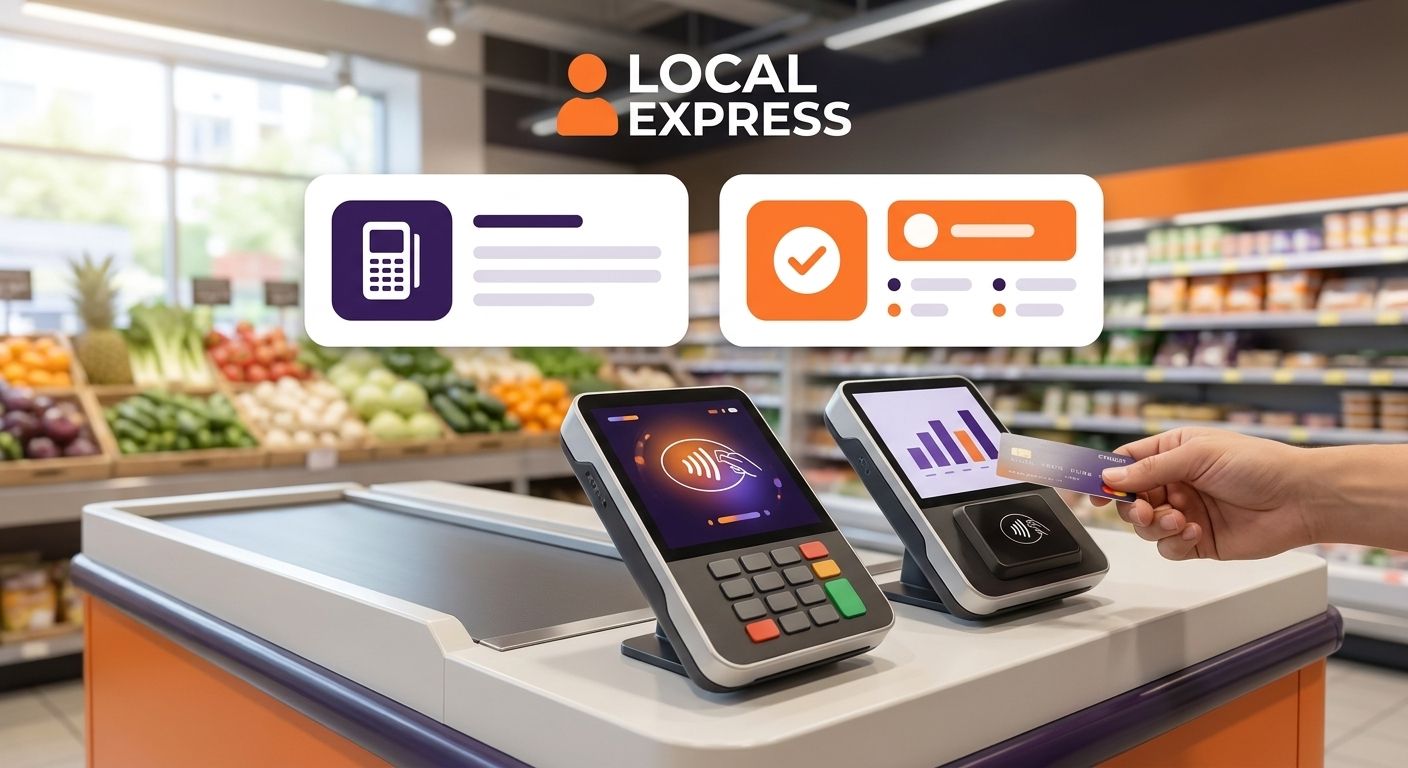
The Verifone P400 is the countertop terminal most U.S. grocery checkout lanes have run for years, and in 2026 it's still the default recommendation for a store standardizing five or more registers. It handles EMV chip, contactless tap, and PIN debit in one unit and connects to nearly every major payment processor without a proprietary lock-in.
Verifone P400 pros:
- Works with most processors already serving grocery accounts
- Handles high daily transaction counts without slowdown
- Familiar interface for cashiers trained on legacy Verifone hardware
Verifone P400 cons:
- Interface feels dated next to Android smart terminals
- Setup for a new processor still typically needs an integrator
Verifone P400 pricing: bundled through the payment processor or reseller — confirm current terms directly with your processor.
Best for: grocers standardizing multiple staffed checkout lanes. Verdict: Buy.
2. Ingenico Lane/3000: best card payment terminal for grocery checkout for large multi-lane supermarkets
Ingenico's Lane series (now under Worldline) is built for the commercial abuse a busy supermarket front end delivers daily — dropped units, spilled coffee, constant use. It's a common sight in regional supermarket chains running eight or more lanes where hardware durability outweighs interface polish.
Ingenico Lane/3000 pros:
- Rugged build rated for continuous daily use
- Large installed base in U.S. grocery, so staff training resources exist
- Supports EMV, contactless, and PIN debit
Ingenico Lane/3000 cons:
- Deployment across many lanes usually requires a systems integrator
- Not designed as a standalone register replacement
Ingenico Lane/3000 pricing: processor-bundled, varies by reseller agreement.
Best for: regional supermarket chains with large multi-lane front ends. Verdict: Buy.
3. Clover Station Solo: best card payment terminal for grocery checkout for POS replacement
Clover Station Solo combines the register and the payment terminal into a single unit, which matters for independent grocers who'd rather standardize on one vendor for POS, inventory, and payment than stitch three systems together. It's a Fiserv product, and it plugs into loyalty and reporting tools out of the box.
Clover Station Solo pros:
- One device for POS and payment acceptance
- Built-in cloud reporting and inventory hooks
- Faster staff onboarding than separate register-plus-terminal setups
Clover Station Solo cons:
- Software fees run separate from the hardware cost
- Typically tied to a Fiserv-affiliated processor agreement
- Larger counter footprint than a standalone terminal
Clover Station Solo pricing: hardware plus a recurring software plan, confirmed at signup with the processor.
Best for: independent grocers replacing an aging register-and-terminal combo. Verdict: Buy.
4. Square Terminal: best card payment terminal for grocery checkout for independent single-location grocers
Square Terminal is the fastest path from unboxing to accepting a card for a single-location grocer or specialty food shop that doesn't want a multi-year processor contract. It ships with a built-in receipt printer and gets a lane running the same day.
Square Terminal pros:
- Minimal setup time, no long-term contract required in most cases
- Built-in printer, no separate receipt hardware needed
- Straightforward reporting for a single-location owner
Square Terminal cons:
- Percentage-based fees can add up fast at grocery-level transaction volume
- Limited depth for a multi-lane or multi-location chain
Square Terminal pricing: transaction-fee based, check current published rates directly with Square.
Best for: independent single-location grocers and specialty food retailers. Verdict: Buy.
5. PAX A920: best card payment terminal for grocery checkout for curbside and mobile checkout
The PAX A920 is a handheld Android smart terminal with cellular and WiFi connectivity, which makes it the only terminal on this list built to leave the counter. Grocers running curbside pickup or a mobile pop-up stand use it to take payment where the customer is instead of routing them back inside.
PAX A920 pros:
- Untethered from a fixed lane — works curbside or in a parking lot
- Cellular connectivity means it doesn't depend on in-store WiFi
- Android base supports a wider range of payment apps
PAX A920 cons:
- Small screen limits complex checkout flows
- Battery charging adds an operational task staff have to manage
PAX A920 pricing: bundled through processor or reseller, varies by agreement.
Best for: curbside pickup counters and mobile checkout carts. Verdict: Buy for curbside operations; skip for a fixed staffed lane.
6. Poynt Smart Terminal: best card payment terminal for grocery checkout for self-checkout kiosk lanes
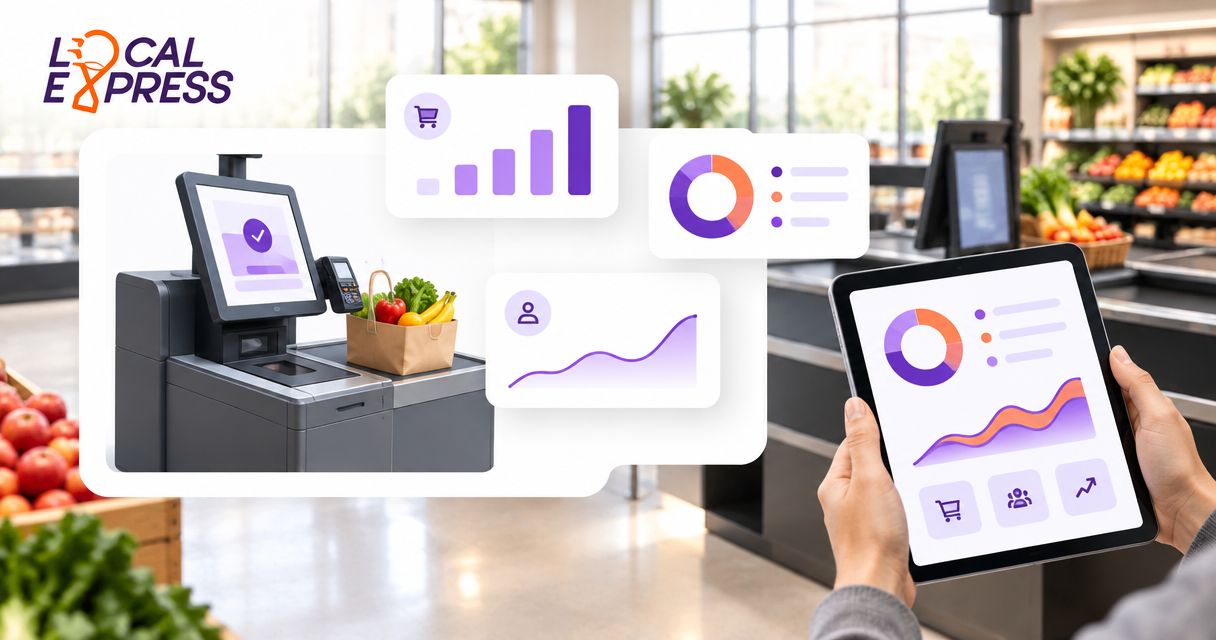
Poynt Smart Terminal (now under GoDaddy Payments) pairs a merchant-facing screen with a customer-facing display, which is exactly the setup a self-checkout bank needs. Grocers building out self-checkout kiosks use terminals like this to keep the payment step unattended but still legible to the shopper.
Poynt Smart Terminal pros:
- Dual-screen design fits unattended self-checkout flows
- Open app marketplace for adding loyalty or receipt features
- Compact footprint for kiosk enclosures
Poynt Smart Terminal cons:
- Smaller U.S. grocery deployment base than Verifone or Ingenico
- Fewer processor options, migration needed for some existing agreements
Poynt Smart Terminal pricing: processor-bundled through GoDaddy Payments or an affiliated reseller.
Best for: self-checkout kiosk lanes needing a customer-facing display. Verdict: Buy.
How this list was ranked
Each terminal was weighed against the six criteria above — chip/contactless/PIN support, processor flexibility, integration depth, durability, total cost of ownership, and fit for the checkout format. The ranking deliberately avoids naming one universal winner: a supermarket running eight staffed lanes and a specialty shop running one self-checkout kiosk need different hardware, not the same terminal in different quantities.
Which card payment terminal should you choose?
For most independent and regional grocers standardizing staffed lanes in 2026, the Verifone P400 remains the safest default — broad processor support and a large installed base mean fewer surprises during setup. If the front end is shifting toward self-checkout, the Poynt Smart Terminal fits the kiosk format better than any countertop unit on this list. Single-location owners testing the waters should start with Square Terminal and reassess once transaction volume outgrows percentage-based fees.
The terminal is the last three feet of a much longer checkout chain. SNAP EBT compliance, for example, still needs its own setup regardless of terminal choice — see how to accept SNAP EBT payments at a self-checkout kiosk before finalizing hardware.
Connect your checkout to one platform
See how payment, loyalty, and orders sync across lanes and kiosks.
FAQ
What's the best card payment terminal for grocery checkout lanes in 2026?
The Verifone P400 is the best overall pick for staffed grocery checkout lanes in 2026 because of its broad processor support and installed base. Stores moving toward self-checkout should look at the Poynt Smart Terminal instead.
Is Clover better than Square for a grocery store?
It depends on store size — Clover Station Solo suits grocers replacing a full register with a combined POS-and-terminal unit, while Square Terminal fits single-location shops that want fast setup without a long contract.
Do grocery checkout terminals need to support SNAP EBT?
Most independent and regional grocers need SNAP EBT compatibility at checkout, since it's a standard requirement for stores serving benefit customers. Confirm EBT certification with your processor before finalizing any terminal.
How much does a grocery payment terminal cost?
Pricing is almost always bundled through the payment processor or reseller rather than sold as a flat hardware price. Confirm current rates directly with the processor tied to each terminal on this list.
Can one terminal work for both staffed lanes and self-checkout kiosks?
Generally no — staffed-lane terminals like the Verifone P400 are built for cashier-operated checkout, while kiosk terminals like the Poynt Smart Terminal are built for unattended, customer-facing use. Most grocers run different hardware for each format.
What's the difference between a smart terminal and a traditional countertop terminal?
A smart terminal like the PAX A920 or Poynt Smart Terminal runs an open operating system that supports additional apps, while a traditional terminal like the Verifone P400 runs fixed firmware focused on payment processing alone.
Do these terminals process online grocery orders too?
No — card payment terminals only handle in-person transactions at the register or kiosk. Online and delivery orders route through a separate ecommerce and order management stack.
One last thing
None of the six terminals on this list touch a single online order — that's handled entirely by the ecommerce and order management layer behind the register, not the hardware in front of it. Grocers who upgrade the terminal but leave loyalty, SNAP EBT, and online pickup running on disconnected systems usually find the checkout line moves faster while the back office gets messier. Match the terminal to the lane first, then check whether the software behind it can actually talk to everything else running the store in 2026.